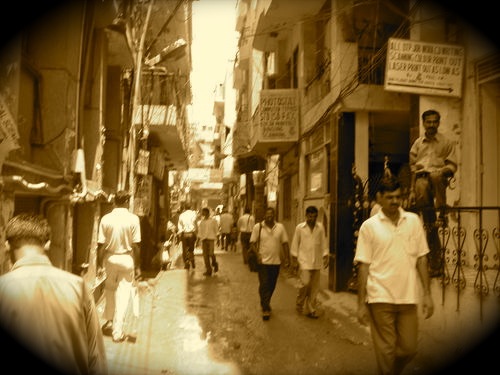
The same son

It’s not easy to find out how someone died in India. You invariably receive the most meager explanation. Sometimes simply a body part. “Stomach,” or “Heart” or “Liver.”  So, when I asked Sunil how Rakesh’s father died, he didn’t feel the need to say anything more than, “Alcohol.”

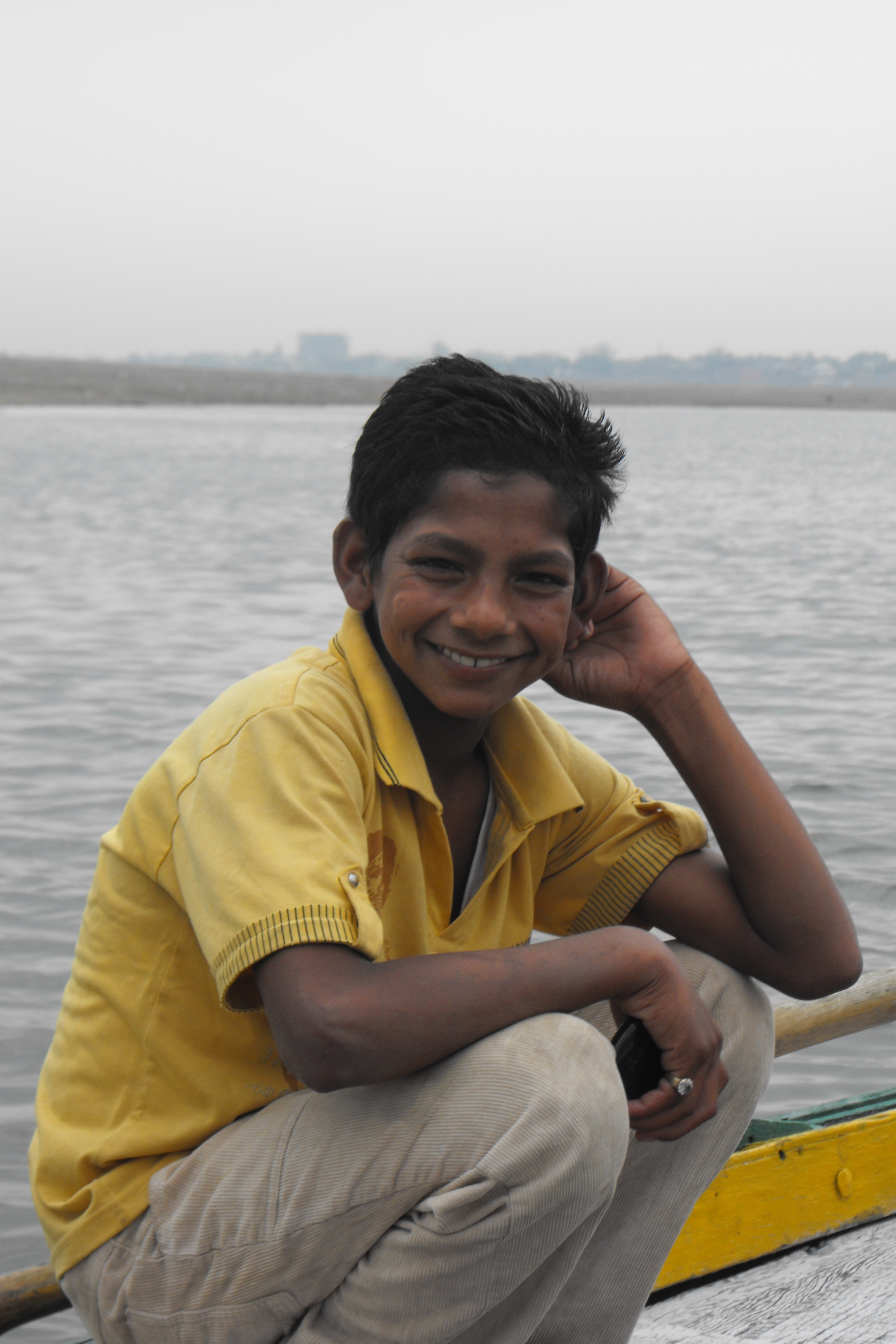
Two months before, Sunil had called with the news. When Rakesh came on the phone his twelve-year-old voice was strained, and an octave higher than usual from the strain of hiding it. I had met Rakesh two years back when I first came to Varanasi. He was the youngest boatman on the Ganges. At first I felt it was sending the wrong message to hire him, and I could tell that other tourists were not hiring him for the same reason. But our trips on the river soon became more than business as usual. He was an impish thing, who seemed as yet unsmeared by the coarse and careless varnish expected of Indian men. His heart was still tender and bursting for human affection. Rakesh often got distracted on the boat while practicing his broken English. We would swirl around in slow-moving circles for a few minutes before he noticed, and grabbing the oars with his tough skinny arms, struggle to straighten us up. He never asked me for anything above and beyond his fare. And though small for his age, he had the biggest smile I’ve ever seen.

He lived in a one hundred square foot room with his mother, father, elder brother and younger sister. He had pointed it out to me once; a dull glow from a tiny window a stone’s throw from the ghat where the fair and privileged silk clad Brahmins perform their evening services. But he never invited me there. He preferred to sleep on his father’s boat. I suspected that in the arms of Mother Ganga, Rakesh found some solace that was absent from his family home.

“It’s either the eldest or youngest son who leads the funeral. The family chose Rakesh.”
Sunil and I were sitting on a narrow balcony sipping at bottles of beer. A mounted wall fan whirred noisily above us, the relief it offered hardly worth the investment made for its existence.
“How did he do?”
“It was very hard for him. You know I did this too, a few years before. But I was much older.”
I remembered that Sunil’s father had also died from ‘alcohol.’
Sunil had been the one to persuade Rakesh’s father to allow him to go to school. He’d agreed on the condition that Rakesh worked the boats in the mornings and evenings. Rakesh never complained. For him school was a privilege, not a right. I had tried to teach him the days of the week in English, but he could never get through all seven. I worried he had some kind of learning disability. Two weeks after he joined the local school, he had called me up to shout “Monday! Tuesday! Wednesday!” etc. down the phone. Getting all the way through the week for the very first time.

“So you helped him.”
“Yes. I told him everything. I helped him to shave his head and cut his nails.”
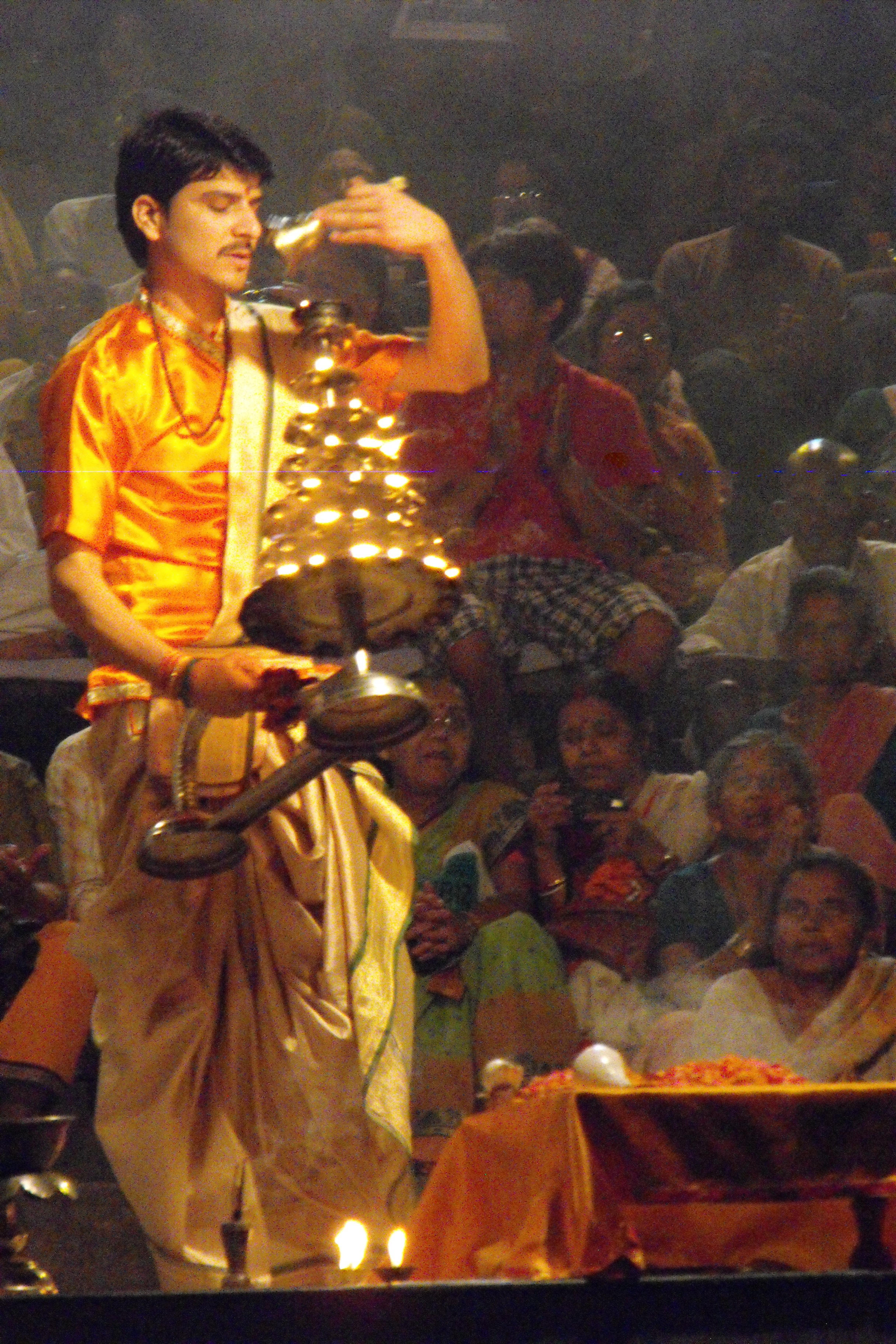
The electricity had cut out while Sunil was talking, and his gentle face was now wrapped in shadow. The performers of the evening puja continued to blast messages to the gods without missing a beat, for the gods live off the grid, and so, at heart, does everyone who abides here. Beneath us the watery flanks of India’s great matriarch glimmered in the ancestral light from the ceremonial and funeral fires. Those flames transporting the souls of the dead and the ones transporting the supplications of the living. Varanasi has a habit of stepping out of time, but when it’s face is lit only by fire, the city relapses to its natural state where time is only the changing face of water as it moves towards the sea.
“So tell me. What happens when someone dies here?”
“We call all family members to the house.
Everyone bring one piece of cloth. Gold with  red border. Each one puts the cloth on the body. The women stay near the body for some time and they cry a lot. Women are not allowed to go to the funeral at the burning ghat.”
“Why’s that?”
“Because they cry too much, Rebecca-ji and it disturb the spirit that is trying to….trying to…”
“Leave the body?”
“Yes. Yes, that’s right. So then the people they bring the body to ghat. But only close family members can carry the body.”
I thought of all the times I’d met this procession of four heavy-hearted men bearing a bamboo stretcher, ferrying a shimmery red and gold-draped mound, with the solemn chant of Ram Nam Satya Hai–the name of God is truth. The usual shoving bustling crowds momentarily humbled to hush and stand aside as it passed solemnly through the clogged arteries of the old city.

“They take the dead person straight to the steps of the Ganga and give them a last bath. Then they arrange the wood and all the special herbs and everything.”
“What did Rakesh have to do?”
“He got fire from the dom.” (Dom is the collective name for the people who tend the funeral pyres. Their caste is the absolute bottom rung, and no one dares to even touch them.) “Then he helps them make a bed from wood and put the body on top.”
I found the use of ‘bed’ both jarring and touching.
“Rakesh put five pieces of wood on top of his father body.”
“Why five?”
“For the elements. Earth, water, air, fire and space. Then he walks around the body five times, the opposite way of clock. Then he lights the wood.”
Sunil kept flitting between tenses. Now in the present, it was as if he was reliving his own experience of five years ago, when he was twenty-one.
“After half the body burns Rakesh broke the skull with a big piece of bamboo.”
“He had to break the skull? Why?”
“To let out the soul so it can move on,” Sunil said, as if this was all a matter of fact.

It hurt to imagine Rakesh, his little head shaved and bright in the fiery glow, having to crush his dead father’s skull with a force that must have felt like violence. It seemed so brutal. I never did understand why Rakesh’s brother wasn’t the one to do all this.
“It’s not that hard,” said Sunil, as if hearing my thoughts. “The fire makes the bone quite soft.” His words were strong, but his voice was smaller and thick with emotion.

With the buzz of electricity and the spluttering fan stilled, the city’s sounds were now full-throated with the river as a natural amplifier. A shout from the burning ghats was startling in its clarity. “Kapal kriya!”
“That’s the sound, Rebecca-ji. That’s what we shout. Someone’s skull has just been broken.”

If the story had made Rakesh’s and Sunil’s father one and the same, Rakesh and Sunil were now the same son.

That afternoon we had all bought cokes and snacks and taken a boat on the river. Rakesh had kept looking downstream, not catching my eye. He didn’t smile so easily nowadays, and when he did, it didn’t stretch as wide. Immersed in such thoughts it was some time before I noticed that Sunil had gone quiet. I decided not to ask anything else. But he told me the rest, as if his story, like the funeral, needed to be completed.

He told me that it takes an hour and a half for a body to burn. That afterwards, Rakesh and his family threw water on the fire. That Rakesh made an offering of black Amba seed to Mother Ganga, that he was given a handful of ashes, that he walked to the edge of the river and crouched down so that the water lapped over his small hands, and carried the remains of his father downstream.

“After that,” said Sunil. “He is not allowed to look back. Ever.”
The lights of the city spluttered on again, but Sunil’s face stayed dark and he said it again.
“He’s never allowed to look back.”

Posted in Kashi, Rose Apple Island | Tagged , , , , , , , , , , , , , , , , | 4 Comments

The bucket bath….millions do it, so can you!

wondercoolA LESSON FOR NON-INDIANS IN 20 EASY STEPS.

YOU WILL NEED:

1 ten litre plastic bucket at 225 INR (or 300 depending on whether you or your Indian friend buys it)
1 plastic jug at 50 INR (or 100 depending on whether you or your Indian friend buys it)
1 short-legged plastic stool at 300 INR (or 350 INR depending….)
1 electric immersion rod (a water heating device with a coiled metal end and a cord like an electric iron (think hair curling device for Frankenstein’s monster’s girlfriend).
Cost should be around 450 INR. TIP: Haggle over the bucket NOT over the rod. Check for the ISI (Indian Standards Institute) mark which indicates that it is slightly less dangerous than the others. For example, you could try the WONDER COOL brand (don’t let the name throw you) which has the reassuring ‘special feature’ of ACCURATE ELEMENT CENTRIRCATION BY THE PROCEDURE OF LATEST TOCOLOGY.

DIRECTIONS:

1. Fill the bucket to approximately 3 inches below the rim
2. Hang the immersion rod in the bucket from the lip near the coil.
3. If you hang the rod on the edge of the bucket, forget steps 4 to 20 since your bucket will have melted when you got distracted on gchat. Hang it on a stick placed across the top instead.
3. Realize you don’t have a stick, so go outside to look for one and then have the brainwave to use a metal hangar.
4. Spend a few minutes recovering from the shock you received after putting the immersion rod on the metal hangar and wish you’d paid more attention in physics class. Go look for a stick again.
5. Turn on the immersion rod at the wall. NOTE: Don’t turn it on before you put it in the water (or do and then immediately regret it).
6. Wait 15 to 20 minutes which is the time everyone tells you it takes to heat the water in a 10 litre bucket. NOTE: Do not check the temperature of the water unless the immersion rod is switched off (or do and regret it even more).
7. Discover after 20 minutes that you should have asked the shopkeeper to test that the immersion rod was working because the water is still stone cold OR discover that you didn’t fill the water to a high enough level and the coil has burned out OR discover that the rod’s 20 amp plug draws more power than the 13 amp socket can support and has burned out/flipped the fuse/caught on fire OR discover that because you used a metal bucket you are now dead OR go to number 8.
8. Turn off the immersion rod by switching off the power at the wall. NOTE: There is no automatic shut off on an immersion rod.
9. Take out the immersion rod, and spend a few moments in quiet terror while you wonder what to do with it, then hang it on a hook.
10. If you are lucky enough to have an electrical socket in your bathroom, continue to step 11 – otherwise, lug the bucket into the bathroom being careful not to spill any/scald your hands/knock yourself unconscious after slipping on the tile.
11. Undress and position yourself on the plastic stool while trying to retain a modicum of dignity.
12. Find out too late (naked on your little stool) that only the top 4 inches of the water is hot and the rest is lukewarm to actually cold.
13. Consider and then dismiss the idea of getting dressed and trying to reheat it, instead seek inspiration from WWII evacuation stories and survival adventure books.
14. Using the plastic jug, rapidly pour water over your shivering body with one hand (inspirational image: bailing a sinking lifeboat)
15. With the other hand, either run the soap over yourself that you wet in the bucket occasionally steadying yourself when your bottom begins to slide around on the plastic stool.
16. Realize that the bucket water is now all soapy and there’s not enough left of it to wash your hair.
17. Throw the plastic jug against the wall with expletive of your choice.
18,  Lift up the bucket and rinse yourself off with the last of the tepid soapy water.
19. Wipe the rest of the dirt and soap off your body with a towel.
20. Get dressed.

That’s all there is to it!

Posted in Moving on...., Rose Apple Island | Tagged , , , , , , | 2 Comments

The Delhi police, the CIA, and…me

I visualized bodacious diplomats in double-breasted suits shinnying down ropes from black helicopters, flashing their business cards and saying things like, “We’ll take it from here, ma’am.”

The knock had the tone of entitlement. So I was only mildly surprised when I opened the door to find two policemen in starched khaki standing briskly in the Delhi sun.
“You have to leave Katwaria Sarai,” the taller one said, clearly not a fan of introductions.
“Excuse me?”
“There are no foreigners here.”
I was tempted to point to my face with a sarcastic expression, but thought better of it. They were both in my living room now, and I’m not sure how that had happened. The way that authority can move you along in the wake of its own presumptions. The second officer was carefully studying the first. I was studying my body language, determined not to look as intimidated as I felt.
Why do I have to leave?”
The policeman sighed and his forehead creased, causing a uni-brow to form like a drawbridge above his nose.
“There are no foreigners here,” he repeated. And then added. “You’re not comfortable here,” as if feeding me a reason to vacate.
“Actually, I’m quite comfortable.”
“You must come to station.”
He was referring to the hut (chowki being the local term) that stood on the main road at the entrance to the neighborhood. There was little point arguing. I knew enough to know that he wasn’t the one I needed to persuade. I told him I’d be there in a few minutes. I didn’t like the idea of walking the streets in broad daylight flanked by cops. He paused and we looked silently at each other.
“I’ll come, don’t worry,” I assured him.
“Okay,” he said, and they left.

Ten minutes later, winding my way through the narrow criss-crossing streets of Katwaria Sarai, as usual I drew more attention than a pink giraffe. The only Westerner in ten city blocks, and a middle-aged woman living alone, dynamited all traditional social convention. My every was move scrutinized by multiple pairs of eyes. The women looked at me accusingly; the men, hopefully. I squirmed under the gaze of both.

I was ushered into the police hut by the same officer who’d come to my apartment. He looked relieved to see me, his unibrow now relaxed and parted into two furry hyphens. What next? I wondered. Once inside, in a area the size of a slightly larger than average garden shed, an officer who appeared to be the other’s superior, invited me to sit. Around me were five plastic chairs, a calendar with a painting of the blue-skinned god, Shiva, a rickety desk upon which lay a large dog-eared log book. I counted seven policemen while I was there, but as they couldn’t all fit inside at the same time, they took turns strutting in and out like cuckoos in a constabulary cuckoo clock.

It was at least ten minutes before anyone spoke to me. I amused myself by guessing the chain of command through observing the thrust of a chest, the speed of gesture (the higher in rank the more leisurely he will move), and—the ultimate measure of the Indian civil servant —the size and grandeur of the moustache. Outside the window, the commercial life of Katwaria Sarai was in full bustle. Indian police are notoriously corrupt and I wondered how much this was going to cost me. I began to think about what had led me to this place, in a city that choked me half to death on its fumes and clobbered my senses with a sledgehammer. Cheap rent had been one reason. A friend nearby. A decent landlord. And the area had proved better than its reputation. Katwaria Sarai is like a village within the city, populated mainly by Jats from Haryana, who own and supervise most of the apartment buildings. Haryana Jats tend to make the news for things like female foeticide, their support of honour killings, and the high incidence of rape (one blogger calling Haryana ‘a rapist’s Republic’). A middle-class Punjabi friend once eagerly pointed out that the British had labeled Jats a ‘criminal class’ when he came to pick me up for dinner one day. He refused to park his SUV anywhere near my house, insisting on picking me up on the main road because he was so nervous about the “thugs” that hung around my apartment building. But apart from the pink giraffe stares, I hadn’t had a problem. Until now.

I’d become so absorbed in my own thoughts that when the officer who had been studying the log book finally said something, at first I wasn’t sure he was addressing me.
“Passport.”
He looked at me only after he had spoken, one eyebrow raised. I handed it over.
“American?” he said, leafing through it.
This didn’t seem to require an answer.
The other and younger officer in the room leaned forward in his chair, his carefully greased moustache twitching with vigilance.
“How long have you been living here?” he barked.
“Two months.”
“What are you doing here?”
“I’m studying.”
“Where?”
“Well, it’s over the internet. It’s a correspondence course.”
“How do we know you’re not working for the CIA?”
“Um….”
I was actually lost for words.
“Do you have any proof that you’re studying here?”
“Well, yes, but not on me right now.”
“Hah!” he exclaimed, apparently delighted by my reply. “How do we know you’re telling us the truth?”

There was something in the way he said this – a smug petty relish in imposing his authority on me – that got my goat. I was suddenly convinced that he had little more authority than a traffic cop. I decided to trust my instincts. And I’d had enough.
“You don’t have the authority to ask me these things,” I said, surprised by my own firmness. “I’m going to call the American Embassy to get this sorted out.”
Though I didn’t actually have the embassy’s number, I stood up as if I meant it.
“Wait. Wait.”
He gestured lazily for me to sit back down. I remained standing, sensing the energy in the room shift with the invocation of possible American intervention. I visualized bodacious diplomats in double-breasted suits shinnying down ropes from black helicopters, flashing their business cards and saying things like, “We’ll take it from here, ma’am.”

Sergeant CIA left the room and returned almost immediately with a large civilian man with a huge paunch, sporting a Russian Ushanka hat and cream-coloured polar-neck sweater two sizes too small. Three officers almost fell over themselves getting him a chair. This was clearly the real authority on the block. I found out later that he was an influential local politician. He spoke to me quickly, as if he wanted to wrap things up.
“Your landlord is in trouble. He didn’t submit the proper forms when he rented the apartment to you. He’s in danger of going to jail. I’m sure you don’t want him to go to jail.”
I had only met my landlord twice but I didn’t want him to go to jail, and certainly not on my account.
“We can find a way to avoid this, don’t worry. But it would be better if you leave Delhi for a few days.”
Now, strange coincidence that it seems, I had actually planned to visit Jodhpur in Rajastan that weekend.
“Okaaaay,” I said, not understanding the logic of any of this. “I guess I can do that.”
“Where will you go?” snapped Sergeant CIA.
“Erm…I think maybe I’ll go to Jodhpur.”
“What business do you have in Jodhpur?” he asked searchingly, throwing a glance at the guy in the hat that begged to impress.
“I don’t have business in Jodhpur,” I said exasperated (biting back my desire to add ‘you toadying twat!), “You just told me I should leave Delhi.”
But he couldn’t help himself. His dormant penetrating interrogation skills had awoken from their thirty-five year slumber.
“And what do you plan to do in Jodhpur?”
“I don’t know!” I exclaimed. “Visit the ancient fort and marvel at the famous blue city. What would you suggest?”
They all fell about laughing. Except Sergeant CIA.

As I walked back to my apartment, trying to figure out what had just happened, my landlord rushed up to me, grabbed my hand and shook it profusely. His breath reeked of hard liquor. Maybe they had threatened him with jail after all. Why they needed me to leave the city was beyond me. Perhaps so the jokers in uniform didn’t lose face. Why hadn’t they asked me for money? Was it my imagination, or were the looks being lobbed my way even more suspicious than before? Now I wasn’t just the only Western woman in the vicinity. I was a suspected agent for the CIA.

The next time the laundry wallah loses one of my blouses, I thought, he’s in serious trouble.

Posted in epoche, Rose Apple Island | Tagged , , , , , , , , | Leave a comment

Close encounters with my mother

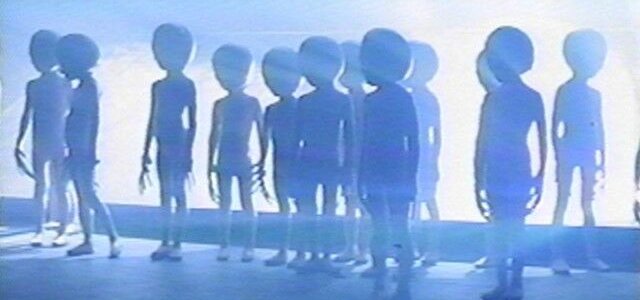
It was the scene where Richard Dreyfuss sees the aliens for the first time as they half-float out of the spaceship that’s landed behind Devil’s Tower National Monument in Wyoming. Everyone in the cinema was in a hushed awe-filled silence. Everyone, that is, except my mother, who was snoring. I nudged her gently in the ribs with my elbow, to my immediate regret, because it caused her to wake up with a loud truncated honk. Then, looking blearily up at the dwarfish light-filled spacelings filling the screen, exclaimed, “Good god!” I was 14 years old. I was mortified.

As she spun us out of the multi-storey car park, making dangerously close calls with the concrete divider (my mother was a famously bad driver), she complained that the film wasn’t “realistic” because “people wouldn’t really act that way.” Clutching the door handle as she took us up onto a curb on the way out of the exit, I protested and contended that aliens arriving from another planet is a pretty big deal. “Why is it such a big deal?” she said. Exasperated, I shot back with, “Well, what would you do if aliens landed their spaceship in your back garden?”
My mother thought for a moment and then replied matter-of-factly, “I would invite them in for tea.”
At the time, I’d imagined it as a dismissive retort to a question that she’d sensed was borne more from frustration than genuine curiosity. But later, much later, I realized that her answer was exactly, precisely—her.

The only times I ever saw my mother express anything resembling fear was when one of her four daughters fell out of a tree, hit a diving board with our head, or (in my case) broke a leg in a motorbike crash. It was as if fear was a muscle that had never developed in her, or had simply atrophied from lack of use. Her reaction to danger, or things that others perceived as dangerous, was hijacked by a potent mixture of obstinacy and inquisitiveness long before anything resembling fear could get a foot in the door. But with this refusal to fear also came a resistance to anything resembling awe. My mother’s generation viewed awe as a superfluous and even potentially dangerous emotion.

A milkman does his rounds in the rubble…

Hitler announced his plans to invade Britain on July 16th 1940, but the fact was that the German military had been expecting Britain to surrender, particularly since the resounding defeat of British forces in Europe in the first few months of the war. In an attempt to soften up the Brits to make an invasion easier, the Luftwaffe began strategic air attacks on British cities. Londoners were bombed for seventy-six consecutive nights, bringing down over a million homes and taking over 40,000 lives. But these attacks neither demoralized the British into surrender nor put much of a dent in their war economy. Significantly un-awed, they simply carried on. In fact, an unknown clerk at the Ministry of Information came up with a motto to encourage national morale in the event of a German invasion – KEEP CALM & CARRY ON. It was never used at the time (though now is printed in tee-shirts and fridge magnets the world over). People like my mum just naturally did that anyway. They couldn’t imagine what else anyone could do. Panic wasn’t an option. It was also unseemly.

A London library during the ‘Blitz’

There were times when this attitude infuriated me. When she came to visit me in Los Angeles, my mother would wander off to the 7/11 by herself at all hours, impervious to the dangers of inner-city gangs, armed with her M&S handbag and 76 years of stubbornness. I gave her a mobile phone that she refused to answer or use. More than once she walked through the front door with the phone still ringing from inside her bag. When she insisted that I teach her to drive in America because she wanted her independence, she resolutely refused to acknowledge that she was weaving out of her lane. When other drivers began gesticulating, honking and cursing—my mum simply ignored them, as if they were the ones who should be chastised for not being hospitable enough to accommodate an elderly English lady and her eccentric motoring ways. In her mind, the fact that we might have been killed had little bearing on the matter. For my mother, death had nothing on making a point.

But back to my mum’s close encounter. Nowadays, I have found my myself in virtual attendance at the tea party with her and the unsuspecting aliens. It goes something like this….

My mother gestures to the three aliens who emerge from the spaceship to come inside the house. At the threshold, she imparts in pantomime the request that they first wipe their feet, (or their equivalent ambulatory devices) on the mat, and merrily leads them into to the living room where they settle awkwardly into the velveteen armchairs.

After a brief respite to the kitchen she re-emerges with a tea set and a plate of digestive biscuits, and asks them whether or not they take sugar. “Shoo-gaaaar” she repeats slowly and loudly, and they glance at one another while the slime from their epidermises begins to glob onto the cream-colored shag carpet.

One of them attempts to cover up the stain the slime is beginning to make with one of his many cephalopodic sucker-like appendages, while my mum gets comfortable and begins the interview that she always happily mistook for conversation. “Do you get colds on your planet?” “Do you keep bees?” “How long is your gestation period?”

Inevitably, the subject of my mother’s probing turns to romance. Annapavlova, the youngest of the three, gets a severe eyeballing from the other two for admitting that he has fallen for a girl from Shirleymarinus and that his parents have not approved the match. Not only that, but she is from a far better family and more highly educated, having the equivalent of 12 earth PhD’s.

My mother loads and fires questions that leave no room for bashfulness or error (she never saw the point in tact, much the same way that drivers in the American south feel about turn signals). After a particularly pointed question about the mechanics of alien sex, Annapavlova begins to turn from racing green to cherry red, a transition that causes my mum to exclaim, “Oh, aliens blush! I never knew that!” (As if it were something that every self-respecting Englishwoman should know.) After an awkward slime-sucking pause, my mother turns her attention to Drobrovolsky with a “And what do you do?” He explains that he is a space-time quantum engineer, to which my mum replies without a hint of irony, “Is that interesting?”

Taking the opportunity of my mother suddenly being called to a ringing telephone from the neighboring room, the aliens hold a hurried pow wow to plan their exit strategy. They are interrupted by my mother’s re-entrance and her announcement (with a surety that the information would take a paramount seat in their concerns) that someone called ‘Emily’ is on her way over, because she “always stops in on her way back from the colonic,” to which Annapavlova asks, “What’s a colonic?” even while his senior, Dobrovolsky, is shaking his head and staring searchingly into his tea like a mariner into a sea fog.

After my mother has delivered a description of a colonic thorough enough to make even sailors blush, Emily arrives at the front door. She gives a weak squeal of surprise at the presence of three slime-drenched alien life-forms slurping out of china cups in my mother’s living room. Finding it all a “bit much”, soon rushes off to get supper ready for her husband and three young boys, who are momentarily distracted from their ipods by a series of outbursts from their uncharacteristically effusive mother that all end with “you wouldn’t believe it!”

Back at my house, while my mother is offering to give a reflexology session to Annapavlova who has been complaining of lower back pain, and telling him not to worry as true love will always win out in the end, Khvorostovsky, the senior ranking alien who has so far remained taciturn, suddenly exclaims that he has forgotten a very “important appointment” on planet Solzhenitsyn (minor planet 4915).

“Isn’t that a writer?” my mother inquires, to which Khvorostovsky explains that many of the minor planets in the galaxy have been named by inhabitants of the former USSR, since the Russians were dominant in the earlier days of astronomy.
“You may have wondered why we all have Russian sounding names,” he ventures. To which my mother responds, that no, actually she hadn’t, which is the God’s own truth.
“Shirleymarinus isn’t a Russian name”, of course, Khvorostovsky continues, as someone used to discourse built on logical progressions, “and in fact, planetary nomenclature is a particular field of study of ours in understanding nation-based earth-space power thresholds.”

Now, it’s not that my mother had anything against earth-space power thresholds or the understanding thereof, but the fact was that time was getting on, and the final of Master Chef was about to start on the telly (It was down to a chubby 20 year old Indian telemarketer and a single mum and part-time stripper from Dorking, My mother was rooting for the stripper). I imagine Khvorostovsky politely taking his leave, making a mental note to ban all tea drinking from the rituals of inter-stellar diplomacy, while my mother says how nice it was to meet them all.

In the hallway, Annapavlova, who is missing home is gripped by a sudden desire to stay the night and watch Master Chef with my mum. He gives her a gift—a black diamond formed in the heart of a supernova. My mother accepts it gracefully and he returns her smile, though she can’t really tell through the grill of seaweed-like tentacles that dangle in front of his mouth orifice. ‘You can come over any time you like,” she reassures him. “Now off you go.”

If someone had asked her, weren’t you afraid of alien life forms invading your house, she would have answered truthfully, that yes, she did wonder if she’d ever get the stains out of the carpet.

That—was my mum.

Posted in epoche | Tagged , , , , , , , | 1 Comment

Surrealism in motion

No, it wasn’t like this…

I went to find the masseuse that Mee, my guesthouse manager, had recommended. “Her name is Da Da,” said Mee, writing it down like someone used to catering to tourist infants. Well, it was certainly the most surreal massage I’ve ever had in my life.

I ordered a Thai traditional massage and foot massage from the yummy massage menu. My mum had been a reflexologist and I used to love the way she would always ‘do’ my feet whenever I visited and we’d chat away about this and that; and I’d grown tired of Indian massages that are generally rather feeble, smother you in oil and leave you all slippery like a cod at a Saturday night fish fry.

Da Da was short and burly with a broad smile and formidable thumbs. This is more like it, I thought. The massage parlour was also her home. The place was decorated in what I was coming to understand is typical Thai female taste, in the style of a very tidy crèche. There were violet and pink sponge daisies stuck to the walls, a herd of glittery purple elephant stickers, and a Winnie the Pooh door hanging. The bathroom smelled like babies.

It started innocently enough with a firm rubbing of the soles of my feet followed by some gentle pummeling of my calves. But then it began to get a bit wild. Soon she was sitting on top of me pushing my legs back towards my ears then pulling them over her shoulder. When my leg refused to go any further, she gave it a firm tug. “No go,” I explained as politely as I could while trying to be clear that I did not have the hips of a Chinese gymnast. “No go?” she tugged it again. “No. No go,” I repeated, to which she laughed in such a impish way that I couldn’t stop myself from joining in.

At times the pain was excruciating. Just when I was about to insist that she stop, she would move on to some other unsuspecting body part. Then there might be 5 or 10 seconds of an almost pleasant sensation as she rubbed something or other, but she was only working her way up to one of her massage crescendos where she would use all her strength (and it was plentiful) to dig either her elbows or knees into various muscles of my body. If you’re the kind who thinks of a massage as something that makes you feel floaty and relaxed, Da Da isn’t for you. If you don’t actually want every bone in your body realigned, then Da Da isn’t for you either. There is nothing relaxing about Da Da’s massage. It’s like being grappled by an overly affectionate gorilla.

“You ok?” she said on hearing my subdued grunts. “Um. Bit painful.” More chuckles of delight. Pooh grinned at me from the doorway, a little sadistically. At one point, when she was actually kneeing me in the groin and I wasn’t in a Bradford pub fight, I tried to distract myself. I began thinking about what I was going to have for lunch back at Bailan Bay Resort. I visualized the menu. Red curry soup; green curry soup; orang soup. I’ve had the green curry, maybe I should try the Ouch! orang. Or perhaps the red curry. I wonder what the difference is between the Ow! red curry and the orang curry?  I could just have the Jesus! spicy papaya salad again but this time with less chilli. Holy Moly! What is she doing?

It was more like this…

I was in an actual Half Nelson. “If this massage thing doesn’t work out,” I managed to splutter through a half-crushed larynx, “you could have a great career in Pro Wrestling.” More squeals of laughter.

I tried to work out how much longer it was going to go on for, and figured I had to endure at least another forty minutes. It never crossed my mind to call things to a halt. I sort of imagined that if I tried she would just laugh again and carry on, regardless. “No stop. No stop,” she would chuckle. Things calmed down a bit when it came to my neck and shoulders, a particularly tight area that even she was hard-pressed to tenderize. And then she moved on to my face, gently rubbing either side of my nose. I tried to relax for like the forty-eighth time, and was just thinking this is actually nice when my cheeks were grabbed with the force of a visiting Italian aunt and twirled furiously like little pizza doughs.

She then told me to sit up and nestled in behind me, arms firmly around my waist, grinding her knees into every space between my vertebrae. This was way more painful than anything else so far, but somewhere between my coccyx and thoracic curve, I simply surrendered. The chuckling gorilla could have its way with me and take me for its bride. I will decorate our lair with glitter and sponge daisies. We would surprise the world with our happiness and the handsomeness of our children. My reverie was broken when, without any warning, she tossed me up in the air, rammed her knees into my middle back and stretched my arms up over my head. Unsure of exactly what had happened, I was more than a bit startled to feel her Adam’s Apple pulsating against the top of my forehead. As my spine arched triumphal, her knees bore into my sternum like a jackhammer. I let out a shriek of surprise mixed with mild panic. Her laughter rumbled through my spinal cord.

On a calm day, when the wind blows softly from the south, I think I can still hear it….

Posted in Moving on...., Thailand dreaming | Tagged , , , , , , | 1 Comment

Accidental paradise

Koh Chang island, Thailand.
Tail end of monsoon, September 2012

This slideshow requires JavaScript.

Posted in Moving on...., Thailand dreaming | Tagged , , , , , , , , | Leave a comment

Lonely bitch

1a. Without companions; lone.
b. Characterized by aloneness; solitary.
2. Unfrequented by people; desolate: a lonely crossroads.

3.a. Dejected by the awareness of being alone. b. Producing such dejection.

As the ferry chugged away from the mainland, I studied the map that the nice ladies at the ticket office had handed out as we boarded. Treasure Island Map of Koh Chang, it read, clearly catering to the pirate crowd. I checked the booking reference and saw that my guesthouse was in a place called ‘Lonely Beach’. I envisaged it positioned snugly between ‘Forlorn Sands’ and ‘Hopeless Bay’. Then, in small print in the insert box. Parties go on until late. My heart sank as Koh Chang, the second largest island in Thailand grew from a bump on the seascape to a gently curving coconut-palmed bosom.

Of the four taxi trucks that met the ferry, two had signs to ‘Lonely Beach’. They were both so packed by the time we pulled away that one of the passengers had to stand on the running board. Lonely Beach was looking less lonely by the minute. These must be the partiers alluded to by my trusty treasure map. Polite, youthful, long-limbed Europeans. I groaned inwardly at the thought of nights of Eurovision-trance music and politically-correct bong-induced chatter.

“Lonely bitch!!” the driver shrieked and we all dutifully disembarked. I looked around for signs of my guesthouse and then asked the driver who ushered me back in the truck. “Your guest house more far!” he squealed. “Oh! That’s great!” I found myself squealing back.

Of towels and butterflies….

Cabin No. 19

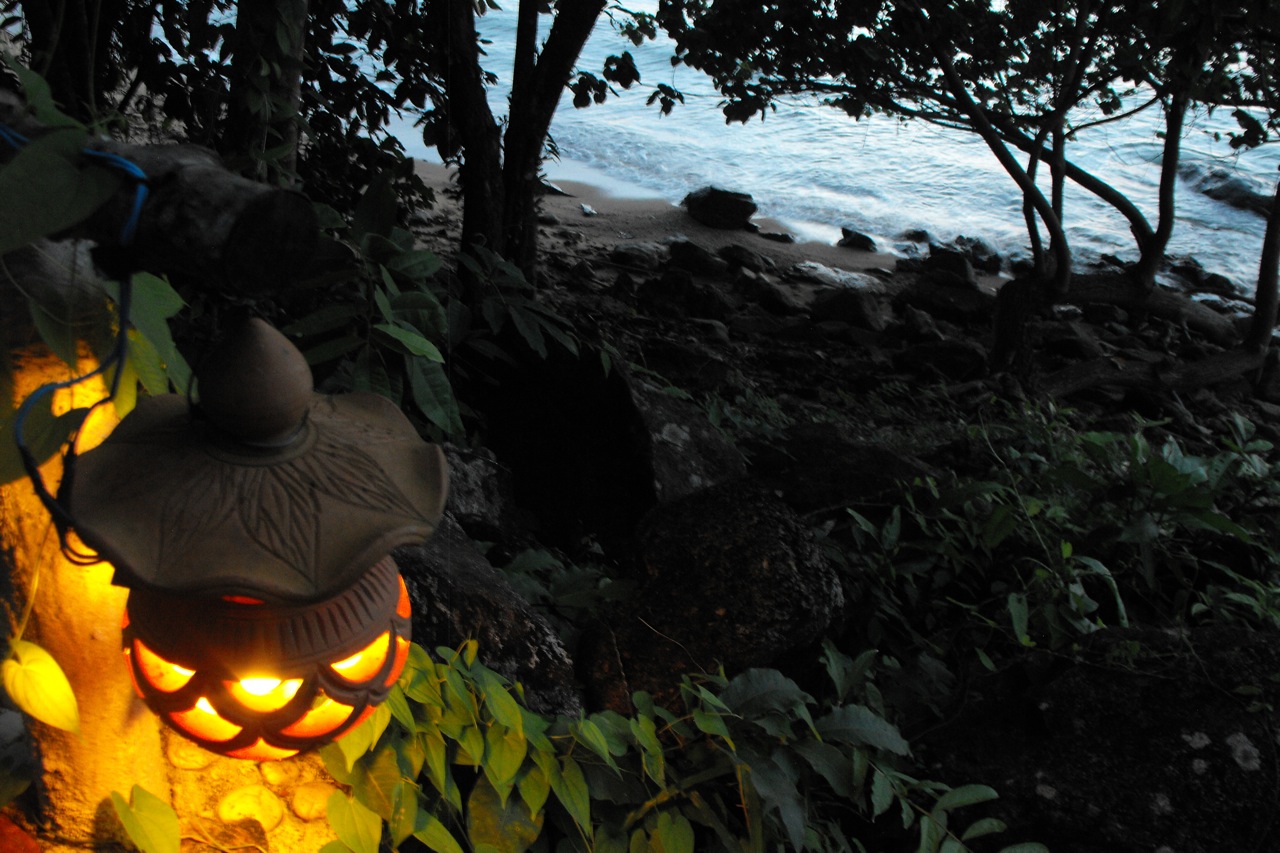
My guesthouse is comprised of twenty cabins, many of them on stilts, strung along a stony deserted beach. When I arrive at Number 19, a butterfly the size of a robin and black as the Ace of Spades pokes its black tongue at me as I try to photograph it. I watch one of the ten best sunsets of my life, and eat the all-time best spicy papaya salad. I marvel at a lizard licking drops of spilled coconut juice off the table as I sip mine out of a nut the size of a football helmet. I’m waited on by a staff of petite beautiful girls with Minnie Mouse bows in their hair. A black and yellow butterfly flits by, wings beating time to an orchestral version of The Hills are Alive with the Sound of Music over the speakers (I’m really not kidding). And I return to my cabin by a winding staircase lit by the glow of magic lanterns….you get the idea.

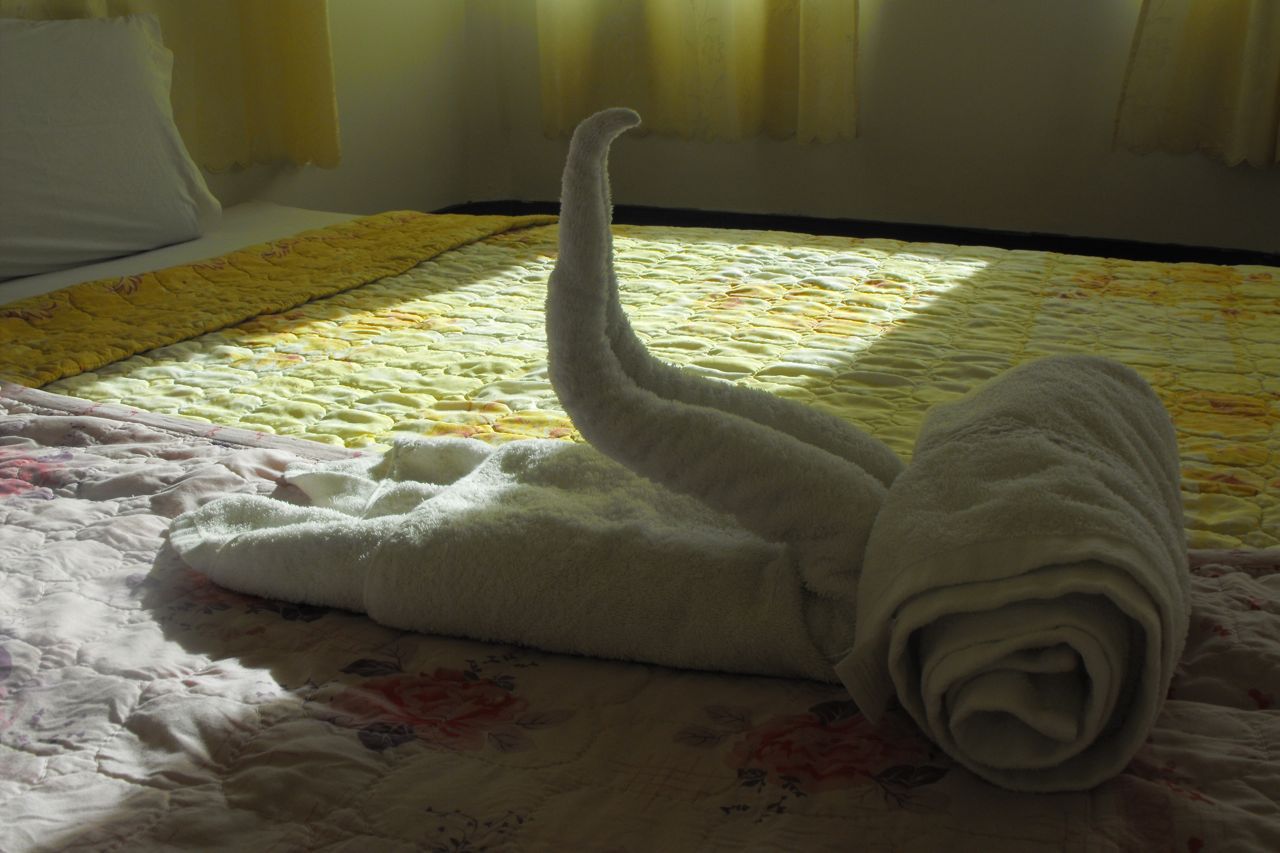
It’s getting late now and all the traveling of the past weeks has caught up with me. I’m lying exhausted but happy on my cheerful covers. Someone has twisted my towels into the shape of a swan. Or maybe it’s a duck. Whatever it is, it’s delightful.

There is some creature that makes a call like a toddler saying “Fuck off” four or five times through a rubber horn in a decreasing range of decibels. It is always proceeded by a run of mini-honks. I can’t imagine what it is. When I do, it’s something like a Dodo playing a plastic trumpet.  I drift off to the soft lapping of the waves; the sound a giant might make while taking a sponge bath.

Sometimes I have absolutely no idea how to navigate this interface between my sense of self and the world around me. But one thing I do know. I need to start appreciating this life of mine again. Because by some bizarre twist of fate I have landed in something close to paradise. My sad, surly mind emerges like that hermit crab on my doorstep, easing its way from its shell, feelers first. Assuming the worst, naturally…

Screen capture of the 1993 CD-Rom game, Myst

The ‘Myst’ Factor

This place I’ve landed is all strangely reminiscent of that whimsical Jules Vernesque mid-90’s interactive CD-Rom game, Myst. Except with creepy crawlies. One of the scenes was a jungle island not unlike this one. Like in Myst, I seem to be the only occupant (apart from a chain-smoking German who I fantasize is on the run from Interpol). The soundtrack of my cabin is also eerily Myst-like, with the constant losh-losh of the tide, and the craake craake craake of the turning fan like the groan of old rigging.

The wooden steps leading up to the road are imprinted with the patterns of ferns and leaves. There are little palm parasols on tiny jetties decked with wooden seats a few feet into the sea. A broken lamp stand is a sign, or a handle to the door of the next level. A monsoon churn of banana and other leaves above the corrugated roof of my bathroom looks like a work of art….

Comfortably Alone

I slept for two days straight, ostensibly from a combination of a virus and jet-lag. But there’s a lurking sense of some other underlying condition. Something I can only call life-lag. A disorienting gap between experience and the digestion of that experience. The information coming to me in this present moment and my sense of that same present feel completely out of synch. Like someone still screaming a month later from a close shave on the freeway. It’s like living in a time delay. Reeling from punches delivered by the dead.

Recovery from jet-lag only requires enough external cues to synchronize internal rhythms with the environment. Your biological rhythms are entrainable, meaning that they can be adjusted to match the local time. The adjustments for life-lag require a kind of cognizant adaptation. But this must also be entrainable, no? If not, then I’m in serious trouble…..

An ugly dwarf snagged my mojo and scarpered to the Underworld. I’m on a Mission to get it back.

In my early 20’s, when I was living in a log cabin six miles down a dirt road with the nearest neighbours ten minutes walk away, my sister asked if I ever got lonely. I vividly recall not being able to understand the question. I do now.
But what is this elusive noun, loneliness?

1a. Without companions; lone.
But being alone doesn’t necessarily imply loneliness. I’ve had some of my happiest moments solo.

b. Characterized by aloneness; solitary.
Fine. Same thing.

2. Unfrequented by people; desolate.
OK, desolate is getting warmer, ‘in a state of bleak and dismal emptiness’, like marshlands in Winter. But this place is also ‘unfrequented by people’ and it’s not bleak or dismal at all.

3.a. Dejected by the awareness of being alone.
Ah. Now we’re getting somewhere….

b. Producing such dejection.
Is there anything that is inherently dejection-producing I wonder?

And I find it interesting that the definition doesn’t include ‘missing company’. I like ‘dejected by the awareness of being alone’ much better, because although it implies the same thing as missing company, it hints at the possibility that one could not be dejected by the awareness of being alone. I think for me, loneliness involves losing the capacity to enjoy my own company. This is the darker and messier side of loneliness. It is a feeling of not being complete. That something is always missing. Not a companion, but a comfort of mind.

I’d begun to think that being alone was bad for me. ‘Time to think’ to me meant ‘time to obsess’, to run over the same sore spots again and again with my mental thumbs, checking that they still hurt, but only getting in the way of the healing. And now? I have all this time alone. Why I’m not using it to rub those old wounds, I don’t know. But my neurons are making cooing noises and doing Cirque du Soliel moves in my head. And I’m writing and smiling. Every day.

After a week in my private paradise, I must admit I did hanker a little for a conversation with someone, other than myself. But that didn’t seem like loneliness really. Just normal human stuff. When other occupants slowly began to arrive, it felt like a minor invasion.

It is so enchanting and glorious, that to not be alone here, to allow its magic to work to its deepest level, would almost be a violation of the spirit of the place. I am ‘without companions’, I am ‘lone’, I am ‘solitary’, but I’m not lonely at all.

The irony is not lost on me. That I learned how to be contentedly alone on Lonely Beach.

Posted in Moving on...., Thailand dreaming | Tagged , , , , , , , | Leave a comment

Of gods and men: the ultimate olympian

Prometheus steals back fire from Zeus to give to humans – Christian Griepenkerl, 19th century

Being in the United Kingdom during the 2012 Olympics was, I hate to admit it, uplifting. The Union Jack was retrieved from the purview of the National Front (UK’s more politicized version of Aryan Nation), and waved gleefully in the streets while the crowds cheered for anyone from anywhere who showed style, courage and spirit. And even though the Olympic logo looked like leftover pizza from a frat party, there was an unmistakable (and contagious) atmosphere of confidence, inclusiveness and pride–this in a country undergoing economic turmoil and where, unlike the US, a recession is not dressed up as a ‘down turn’.

I found myself ruminating on the story of Prometheus–the unrequited Titanic hero of Greek myth who was the inspiration for the first Olympic Games. In case you nodded off in Greek myth class, Prometheus was a counselor to the King of the Gods and gradually became a serious contender to Zeus’s celestial authority. He crossed the line when he stole fire from Zeus, who was withholding it from mankind so we didn’t get too uppity. The enraged (and fanatically jealous) Zeus shackled him to a rock in the Caucasus where an eagle came daily to snack on his liver, which always grew back–a symbol of eternal torment (though it may also suggest that the early Greeks knew about the liver’s regenerative powers, especially since the Greek word for liver–hepar–comes from the verb ‘to mend/repair’).

In some versions of the myth, man had already discovered how to control fire, but Zeus stole this knowledge after Prometheus tricked him into accepting less extravagant forms of sacrifice from Zeus’s mortal citizenry. The name Prometheus means ‘fore-thinker’ in contrast to his boneheaded brother Epimetheus, or ‘after-thinker’. He was a broker between gods and men–a defender of man who could also schmooze with His Nibs on Mount Olympus. (Or, if you prefer, an example of how the individual can usurp the powers of the State.)

The Olympic torch represents the fire that Prometheus stole from Zeus and its snatch and pass between gods and men is perhaps why the original Olympic event was the relay race. If you’re the kind of person who secretly feels that the Olympics is really about running, and wince a little over trampoline, synchronized swimming and air pistol events, you’re possibly tapping the well of historic memory.

Prometheus has long been a popular subject of Western art, as the hero/engineer who risked it all for civilization. He’s regarded as a champion of human endeavour but also as a sober reminder of its potentially dire consequences. Mary Shelley’s novel Frankenstein was subtitled “The Modern Prometheus”.  But what is depicted in the art inspired by his story is almost always his punishment. Not his triumph. The only exceptions I’ve found so far are the one above by Austrian painter, Christian Griepenkerl; this one by 19th century German artist, Heinrich Fueger, where Prometheus already looks concerned about what might lie in store for him….

…and this one by the 17th century Flemish painter, Jan Cossiers, with its glorious, ‘Let’s see what you do about this, you pompous bastard’ expression on his face.  There are a seemingly endless number of portrayals of his suffering, with the freshly-picked liver, the voracious eagle, that blasted rock and the bound Prometheus; patiently enduring, earnestly philosophical or eternally agonized.

But in our obsession with suffering and divine retribution, let us not forget the act for which Prometheus was tortured. The control of fire was key to all human progress. Without it we would still be shivering in the mud, scooping out animal brains from rotting carcasses and dying of microbial pathogens from uncooked meat. Not to mention central heating, the combustion engine, pottery and metal-working. Looking around us now, one could argue that it may have been better if he’d left us alone. But Prometheus’s Grand Gesture was an ‘Olympian’ act, regardless. Like the most memorable winners of the Olympic Games, his victory was a stunningly executed and beautifully audacious feat.

Now that the 2012 Olympic Games are behind us, is there a way to continue to focus a bit more attention on our great achievements rather than on our dismal failures?  Not to gloat over our successes, but to remind us of what is possible. I for one could do with a little less liver-munching and a bit more slo-motion replay of that unlikely moment when Prometheus snatched the flame from Zeus’s sleeping hand, and with the power of all the gods against him–somehow, just somehow, made it across the finish line.

Because if he can do it, maybe we can too.

This slideshow requires JavaScript.

Posted in epoche | Tagged , , | 1 Comment

One for my father

This slideshow requires JavaScript.

For Kipling, ‘triumph and disaster’
Were one ‘impostor’ dressed as two

Thomas saw life in the death of a daisy
A ‘snow blind love’ in a ‘hellborn dew’

Plath knew ‘the knife not carve, but enter’
Lived ‘to the knucklebones’, left with a sigh

Wordsworth with his ‘half-blown rose’
Reaped ‘the harvest of a quiet eye’

Keats perceived the ‘lurking trouble’
in Endymion’s rosy bottom lip

Eliot took us to a place between
‘the roads that rise and the ones that dip’

Browning’s ‘nameless’ mysteries drop
‘as snow upon a blind man’s face’

Blake bade us ‘kiss the joy as it flies’
Brought God to meet the human race

Brooke’s ‘young heavens, forgetful after rain;
And evening hush, broken by homing wings’

Spender’s ancestral memory is
‘blood’ that’s ‘drawn from ageless springs’

Byron’s Prometheus proclaims a life
to which our ‘Spirit may oppose’

But in the ‘redness of wine’ there softly lies
Yeats’s ‘Incorruptible Rose’

As you, my friend, have shown to me
The quiet struggle to stand tall

Can bring to life beyond the strife
The poet that stutters in us all.

Posted in epoche | Tagged , , | 2 Comments

The believers

Pushed to the wall
The believers dissolve it

Earth stuck on a cog
The believers revolve it

A dim-hearted simian
The believers evolve it

The sin of a lifetime
The believers absolve it

Posted in epoche | Tagged , , | Leave a comment