See no evil, farewell to the good


Why imagining evil is key to our very survival

We need to rediscover our capacity for imagining evil, not just in the mind of an individual but at scale. If we do not, evil will consume us as it has in times before, irrespective of whether or not we believe it. Perhaps this language sounds alarmist, even irrational, but I believe we have already crossed the Rubicon and are now well into the terrain where evil is flourishing in ways that we in the relative comfort and security of the West have not witnessed for several decades.

I use the word ‘imagine’ in its original sense as meaning ‘to conceive’. Our imagination literally helps us to generate conceptual thought. When harnessed to our sensory perception our imagination also helps us to survive. Our ancestors learned to ‘imagine’ the possible presence of predators through experience and developed highly attuned nervous systems that could identify danger well before the conscious mind got a whiff of it, They used powers of reason to launch an appropriate response based on this neuroception, the subconscious system that works to keeps us safe. As Orwell told us, all totalitarians systems work to undermine neuroception; the individual capacity to know at the sensory level whether something is safe or a threat. ‘The Party told you to reject the evidence of your eyes and ears. It was their final, most essential command.’

If we accept the existence of goodness as a force of benevolence, then we must also accept evil as a malignant force. This malignancy can manifest in different ways, but it always sits opposed to life, freedom, to creativity, to truth, and to seekers of truth. Those who have lived through the personal or social histories of evil know it in their marrow. Those who have not must come to know it first with their perceptions. I am not talking about the boiler plate corruption and narcissism of political life. I am talking about a whole new order of malevolence that we have not seen in our lifetimes. It requires an adjustment of vision, like learning to discern form from shadow when the lights go out. You begin to learn to see in the dark. It starts with a nagging ‘feeling’ that something ain’t right that sits somewhere deep in your gut, and sometimes fingers the back of the neck whenever you turn on the news. You begin to sense a widening disconnect between truth and what you are being led to believe. This is your nervous system whispering “danger”. Then you begin examining the possibility of evil in the words and deeds of those you have entrusted with your fate, and then comes the conscious, often painful shifts of perception as the mounting proofs of organized sociopathy come into sharper focus. This may well be followed by a period of grieving, for the world you once knew, that although far from perfect, was kind and free enough to dearly miss.

In the Arab world it is widely believed that everyone born is influenced by supernatural spirits called jinns: a good one and an evil one, equivalent to the angel and devil on each shoulder of old American cartoons. Humans are in a constant interplay with one or the other throughout their life, in a mostly unconscious struggle between competing motives; between those that elevate and transform towards truth, beauty, harmony, wisdom, compassion and peace, and those that whisper to the heart of greed, cynicism, hostility, futility, ignorance and despair.

The mythic visions of all cultures provide a dramatic dimension to the relationship between the forces of light and darkness in our own lives. To wrestle with our demons is to train for such encounters. Sometimes they manifest as addiction, alcohol, drugs, fetishes of dominion and cruelty, sometimes as mental health issues, sometimes as individuals, and sometimes as entire social systems. In the periodic rise of totalitarian regimes, both fascist and communist, we have witnessed a collective thrust towards thanatos – the death instinct. Everything these dark architects touch smells of death, if not the strictly mortal kind, then the kind that makes life a living death; the death of the spirit.

It is not as if we have not been warned. According to Achille Mbembe, a political historian from the Cameroons, the conscious engineering of this ‘necropolitics’, the earthly enactment of God-like power by sovereign forces over life and death, creates ‘new and unique forms of social existence in which populations are subjected to living conditions that confer upon them the status of the living dead.’ Necropolitics is an extension of biopower, a term coined by French philosopher Michel Foucault, to describe total state subjugation of its citizens’ physical autonomy often in the guise of protectionism. In this context, Italian philosopher Georgio Agamben viewed the horrors of Nazi Germany, not as a wild aberration in the development of Western civilization that resulted in its conquest by the forces of good, but as proof of the capacity for necropolitics to formulate its own social order that would inevitably be replicated in the future. “In modern bio-politics, sovereign is he who decides on the value or non-value of life as-such.” Agamben believed that the elite have continued to manipulate these powers in our modern era, enabled by a fearful and confused citizenry, to make it increasingly difficult to act in any way that is contrary to State will.

In such times, evil is not concentrated only in the maniacal executors of soulless agendas, nor in the final solutions of undesirables, but is parsed out among countless numbers of the stunningly unremarkable—in the bureaucrats, administrators and civic functionaries that unquestionably service the deathward agendas of the totalitarian state, and who believe they themselves to be ‘good people’. In them. we find what political historian and holocaust survivor, Hanna Arendt, termed ‘the banality of evil’ that she warned would characterize totalitarian states of the future. C.S. Lewis concurred. “The greatest evils in the world will not be carried out by men with guns, but by men in suits sitting behind desks.” In modern dictatorships, terror is used more as a weapon of control rather than of annihilation. There is no need to exterminate a population of supplicants. People who do not stand for something will fall for anything.

Even a casual glance at history should teach us that it is not always the case that the checks and balances of the basically good always succeed in neutralizing the architects of evil. It is part of maturation to accept and understand that ‘basically good’ people can participate in utterly terrible acts; particularly when the masses have been mobilized through fear and propaganda to surrender their individual moral compass for some abstract social good that posits the welfare of the group above that of the individual. Such psycho-mythic forces have the power to melt the will in us all and forge monsters from its molten core. In his book The Psychology of Totalitarianism, Dr. Mattias Desmet recounts the story of an Iranian mother who, after the overthrow of the Shah, placed the noose around her son’s neck at his execution in 1979 by the new regime, and felt pride rather than remorse in doing so. In reading such a story, do you shake your head in disbelief, utterly assured that this would never be ‘you’? And what makes you so sure? It may be better to imagine ourselves capable of the worst, because only then will we place value in nurturing and harnessing the best.

I believe we are now historically in such a thrust towards thanatos. The dealers of fear and death are in ascension as the masses forge their own shackles, mistaking slavery for safety, stoned on the mantra of the ‘greater good’ that is neither great nor good. And yet no matter how nonsensical and harmful the privations that are being forced upon the general population, there is a kind of institutional coherence created by the uncritical buy-in of so many. Here is where the banality of evil lurks. If evil looked like evil it would never succeed. Evil is always hidden through layers of deceit, skillfully persuading in reasonable and reassuring tones that the ends justify the means.

“Is it a bunch of evil men in a room chomping on a cigar, laughing hysterically?” says former Blackrock assets manager, Edward Dowd. “No. It happens over time.” Dowd was discussing the origins and development of pervasive institutional fraud, such as we saw in the 2008 banking crisis and which he believes has now captured the Food & Drug Administration of the US that gets 50% of its budget through the pharmaceutical industry.

Everyone becomes tainted through a process called the ‘institutional imperative’ in which the institution becomes gradually corrupted through a copycat chain of incremental choices–someone undeserving getting promoted here, a reward for unethical behavior there–that have the cumulative effect of normalizing not just bad behaviour but even irrational behavior across the board. In short, people are rewarded for doing the wrong thing over time. At a certain point it becomes impossible to remain a ‘white hat’ operative in such an environment. To even be there is tainting because it requires all the participants to play a tainted game.

It is not hard to see this pattern playing out through various sectors of society, where moral norms are being abandoned through the social pressures of groupthink. Soon, no one will remember what those moral norms even were. As Polish journalist Ryszard Kapuściński wrote, “Real barbarism begins when no one can any longer judge or know that what he does is barbaric.” When, for an easy life, we go along with the erosion of basic human values and turn a blind eye to our better natures, we end up in a world where not only does no one encourage basic goodness, no one protests atrocities.

And yet we are discouraged from looking too closely at the mechanisms of the institutions that govern our lives, but instead to find fault with the very people who encourage such inspection. In projecting our own unaddressed shadow, we end up seeing enemies everywhere except the ones that have their hands around our throats and a knife at our backs. Without the liberation of self-knowledge we succumb to the paralysis of self-loathing and willingly accept all kinds of abuse. We lean into the death-instinct in an unaddressed suicidality that is the ultimate trajectory of the totalitarian path of fear, submission and slavery. We ultimately co-conspire towards our own demise.

Former Greenpeace president Dr. Patrick Moore observes that the environmental movement used to care about humanity. The ’peace’ in Greenpeace was against nuclear arms. But gradually an anti-human ethos crept in and people were posited as the problem itself, as the enemies of nature rather than as stewards of the natural world to which they belonged. This anti-human creep now informs the governments and institutions that run the world. “We’re now facing a situation where a huge number of very powerful organizations and elites at an international and at national levels are calling for policies that are basically a suicide pact. Basically a death wish of some sort.”

For Moore, this steps uncomfortably close to the territory of ‘Original Sin’, and indeed in their demonization of carbon, the building block of our own bodies, the climate priests unencumbered by the need to justify their ‘solutions’ through rigorous scientific enquiry have effectively repurposed the existential guilt that in the Middle Ages allowed the Catholic Church to trade in ‘indulgences’ – activities that lessened the punishment a believer was required to undergo for their sinful deeds. “Any movement can be captured by thugs,” says, Princeton University professor William Happer, even, and perhaps especially, one populated in large part by ‘good’ people who struggle to imagine the bad.

The truth, of course, is that we all have the capacity for both good and evil. Concentration camp survivor Viktor Frankl, author of Man’s Search for Meaning wrote about how the camps exposed the depths of human nature as an ill-defined mix of good and evil. ‘The rift dividing good and evil, which goes through all human beings, reaches into the lowest depths and becomes apparent even on the bottom of the abyss…’ Frankl wrote.

We are not yet at the gulag/concentration camp stage, but that stage is reached incrementally through a number of steps that can appear almost innocent, as we see played out in the ‘institutional imperative’. The signs have been here for some time and are becoming ever clearer that the direction we are heading is towards a kind of hi-tech totalitarianism. Why this thrust is meeting with remarkably weak pushback has to do with a kind of ideological capture that psychologist Mattias Desmet describes as ‘mass formation’ which allows for the rise of totalitarian regimes. Mass formation, as the term implies, requires a large mass of people such as we saw in Mao’s China and Stalin’s Soviet Union. These masses must share a number of factors in common. These are: a lack of social cohesion, a lack of meaning and sense-making, free-floating anxiety that has no clear and obvious cause, and a crisis where the state provides a solution, a landing-pad for this free-floating anxiety, and thus creates a new sense of social cohesion through a common project of addressing the crisis together.

The rest is all too familiar. Expansion of governmental systems of control, censorship and self-censorship, increased justifications for monitoring and surveillance of alternative opinion, the redefinition of language to align with political aims, the stifling of experts who contradict those appointed by the state, populations encouraged to shame and hate on each other, a highly compromised and uniform media, a contraction of institutional and governmental transparency and accountability, and a nudging towards mass applications of technology that allow ever-increasing top-down control over the citizenry.

Those who marvel at the lack of resistance to policies so clearly aimed at causing irreparable damage to both civic and private life, miss how deep self-loathing runs among those who repress the shadow. Because to imagine evil intelligently, rather than in a superstitious neurotic way, is to have addressed the capacity for evil not just in the hearts of others but in one’s own – in psycho-mythic terms, to have shed the light of awareness on our dark jinn. This means to acknowledge and address our own histories and capacities for deception against others and self. As Carl Jung writes: “Everyone carries a shadow, and the less it is embodied in the individual’s conscious life, the blacker and denser it is.”

Most people would rather ‘tie themselves in knots’ as Neil Oliver puts it, rather than face the idea that their governments and institutions might be working against them. Oliver invites us to ‘think the unthinkable’ however difficult it might be to do so, and contemplate at the very least the possibility that our leaders do not have our best interests at heart. If someone has their hand inside your jacket pocket and on your wallet, he says, instead of reassuring yourself that this person just wants to check that your wallet is safe, you might want to try to imagine that you’re being robbed.

Those of us who have been seriously damaged by acts of fraud or deception; medically, psychologically, financially, either from an individual or a group, are more sensitive to its presence and possibility. However, and this is a big however, once you have digested the bitterness such experiences leave behind and gathered your wits around you once again, you gain certain new skills.

For one thing, you learn to spot the deceivers as easily as a UV light detects bodily fluids. There is simply no mistaking them once your nervous system has captured the slime they leave in their wake. Your survival instincts are rebooted to superhero levels. Your gut instinct becomes your wingman. The deceivers find themselves thwarted. They may flex their talons in your direction but they will not get a firm grip. You are no longer soft fawn-like prey. You are a craggy cliff, that they have neither the skill nor patience to climb. After your recovery, which depending on the level of psycho-emotional damage might take years but which will happen, you may carry a few scars, but you are far more capable of healthy love because of the boundaries you set against the peddlers of deceit. You become a walking polygraph test. You stop out-sourcing your critical faculties and you sense when you are being gaslit; by individuals, by institutions, by the media, by the government., by the orchestrators of entire movements.

Like a compass naturally seeks magnetic north, you become a natural seeker of Truth, no matter how uncomfortable, how frightening, how isolating, how humbling, no matter the beliefs you have to let go of along the way, the enemies you make and the friends you lose. Because it is only Truth, however dark, that releases us from becoming a prisoner of the shadow worlds.

I too believe that people are basically good when the conditions support the flourishing of goodness. When those conditions change, the human soul is up for grabs. We are in a time like this now. It is difficult to see because our imaginations have been captured by ideology. We need to again become capable of imagining evil, because if not we will be unable to face its consequences when they come for us, nor be capable of rendering impotent its networks of deceit which addle our minds. When we learn that we are merely pawns in a game, that is not just rigged for us to lose but for us to suffer, then our best recourse is to refuse to play the game at all. And we do this by refusing to participate in the lie.

When I speak of imagining evil I do not mean to suggest that we concoct evil out of thin air, engaging in creations of paranoid fantasy, but to tap into our natural ability to conceive and thus to discern evil if and when it emerges, using all the biological, perceptive and critical faculties at our disposal. Being able to imagine evil is a vital step, because if we cannot imagine something can exist then we cannot see it, even when it is staring us in the face. We cannot defend against something that we cannot see. And if this blindness persists much longer, then all we can hope for is a final hour of horror and desperate petitions of atonement as the terrible truths dawn darkly.
Posted in epoche | 3 Comments

know the risks


Heart attacks are all the rage
trending high among the fittest of the fit
no one is safe
defibrillators in the playground

headlines warn us to ‘know the risks’

eating too much
eating too little
intermittent fasting
not eating breakfast

sleeping too much
sleeping too little
sleeping on the left side
or is it the right?
going to sleep later than 11 pm
nodding off in front of the telly
sleeping with the blinds open
sleeping with the light on
sleeping late, sleeping in
having a weekend lie-in
not having a weekend lie-in

basically, sleeping

cold weather
hot weather
changing weather
winter storms
sunbathing
climate change

basically, any weather

living on a busy road
living under a flight path
going on holiday

the glare of bright headlights

shoveling snow
not enough exercise
too much exercise
making the bed
sitting down, standing up

basically, any exercise

having a weak handshake
being short, being tall
exposure to bugs
exposure to bug spray

taking a shower on a full moon
going to the moon

being single
in a bad marriage
good sex
bad sex
watching porn

basically, any kind of sex

loneliness

eating out
too much coffee
not enough coffee
cleaning the house

mondays

not knowing when you’re being played


note: all of the above, except the penultimate line, are actual media headlines from 2021 to 2024
basically, any weather

living on a busy road
under a flight path
going on holiday

shoveling snow
not enough exercise
too much exercise
making the bed
sitting down, standing up

basically, any exercise

having a weak handshake
being short, being tall
exposure to bugs
exposure to bug spray

taking a shower on a full moon
going to the moon

being single
in a bad marriage
good sex
bad sex
watching porn

loneliness

eating out
too much coffee
not enough coffee
cleaning the house

mondays

being sarcastic

not knowing when you’re being played


note: all of the above, except the penultimate line, are actual media headlines from 2021 to 2024

Posted in epoche | Tagged , , , , | Leave a comment

The wisdom of the letting go

I was listening to a talk by the English bard, Malcolm Guite. If the mossy time of ancient stones, their mysterious placement mute to the clamouring conquests of intellectual certainties that frame modernity could produce a human interloper, it would probably look like Malcolm. Whiskerish to the point of wizardry, adamantinely intense, brimming with the kind of playful wisdom that respects so much its source that it takes hours and hours to unravel, and in the unraveling, disperses every but the truly thirsty listener to things elsewhere.

It is no accident that he is an expert elucidator of JRR Tolkien and his circle which included C.S. Lewis. In a talk on the numinous mythic dynamics of that epic narrative Lord of the Rings, that I listened to as I cooked my lunch, he says something quite remarkable, that made my onions pause in their sizzling. Most mythic stories, he reminds us, concern a quest for possession – of something – a treasure, knowledge, a person, perhaps the reclamation of something lost, but the hero is always engaged in a task of conquest. A task of claiming, or reclaiming.

The Lord of the Rings, he reminds us (because we need to to be reminded from time to time) is, in contrast, a story of DIS-possession. It is, uncharacteristically in the well-worn genre of heroes and their adventures, a story about LETTING GO. The impossible task – and it must always be an impossible for the embarker who needs to be ripped bodily from the glue of the possible – is the RELINQUISING of a source of ultimate knowledge and power. To see all, is to know all. To know all is to control all. And to control all is the DOMINION.

While the rice simmered gently in the pot, it hit me. And his words spilled over. It is not just the letting go, but the REFUSAL of the object of power that is central to the mythos in the trilogy. The refusal to be owned by that power, and ultimately, the willingness – nay the DUTY – to DESTROY this source-object for the good of all. Tolkien’s genius as one of the most important philosophers of the modern age, gets lost in his choice to frame his philosophy in the genre of narrative fantasy. But Malcolm reminds me – our best philosophers did something more than tell us how to lead a good and meaningful life. They told us a STORY. And we find the life that resonates with us WITHIN that story.

I read Tolkien at a time of my own letting go. I was only 18, although at that time I imagined myself fully formed. I had a broken leg. I had returned from a great adventure, hitchhiking around the near east with my boyfriend for a year funded by youthful optimism and 800 British pounds. We were so young in so many ways, but we had something that our parents had passed on to us. Something we rebelled against at the time, but which later we both understood as a profound and deep stratospheric continuum, Neither of us understood, rebels that we imagined we were, that our parents having rebelled in their own ways, had created the conditions for this quest of ours in the hope that we would bring back something back that would add to the collective wisdom of which they were a part.

But we knew nothing of this. We were islands crashing into tectonic plates. We returned feeling like we had something precious to share. We hadn’t died, after all. And more. We had slayed dragons, we had slept in muck, we had walked when it was not possible to put one step in front of the other, we had made friends without language, we had gradually discarded the unnecessary and discovered how little we needed, we had not taken a warm shower for several months. We stank, truth be told, but we felt like giants.

And then it all fell apart. And there I was. On my mother’s olive green couch, injured and beaten. Facing the prospect of depressed 80’s Britain after the sapphire coasts and vertiginous gorges of Crete, after the spinning wisdom of the Nile, the hearty camaraderie of Istanbul and the bread-breaking generosity of strangers everywhere. Here I was. Back in Maidenhead for crying out loud, the grotto of Theresa May. Humbled. Hurt. Falling back in love and understanding with my Mother – who asked me every evening, “What would you like for dinner?” The person I had held accountable for for the disaster of shattered trust that had befallen our family. And learning that she too, had been broken. That she too, sought redemption. She wasn’t just there to help me heal from the crash of my re-entry. She wanted to hear what I had learned on the journey. She was the only one who was interested. We were never the same after that. I learned the meaning of this relation of Mother to Daughter in those months with my stupid heavy left leg resting on the coffee table, my friends all gone their separate ways, my will finding its way again, outside the confines of the SHIRE.

So. Going back to the Bard. What he said about the letting go. Of course, I didn’t understand it at the time. None of us do, do we? We need elders, mentors, teachers, friends, to point these things out to us, from time to time. I had to let go of that year. Because the fact was, no one was interested. I wanted to say, “Hey you guys, you who I love with all my heart. There’s a whole world out there, and they think kind of different to us. And they have wisdom and history and culture up the yin yang.. And what’s more! They’re happy to sit down and and share it. And they want to know what we know and they want to share what they know. And it’s bloody magic mate.

“Really? Do I have to look at another photograph of you guys looking indecipherably happy? Want another pint?”

So it did not take very long. To have that adventurous spirit snuffed out.
And my strength to go on came from an unexpected source.
My mother.
My mother who I had battled and raged at and defined myself against. My fortress of books and music, and poetry and art and philosophy – protected ME from HER. And feelings she could, of course, never understand. Because I was not HER. And she was not ME.

But damn. That Tolkien. He brought us together. In ways neither of us expected.

You see. While I had been away. Fleeing my past in the same rhythm that I sought my future. Both of us had grown. Of course, at the time, I believed it was only me. But that wasn’t true. She was different, when I turned up again on her doorstep. She had lost her mother while I was gone; my grandmother who was all love and custard and with whom I felt safe. My mother was softer in her very private grief, and I think our need for each other’s company and care came together perfectly. I had done something she could not imagine doing. I had earned her respect. And in caring for me, she earned mine.

I will forever remember the gin and tonic she brought to the hospital, hidden in the Pepsi bottle.

She told the doctors, who kept insisting on the skin graft, from my upper thigh to my calf, that if they just let me go outside – in the sun – for an hour or two a day – I wouldn’t need that skin graft. They scoffed. They were little older than me. Sure and arrogant. But unlike me, they were not lying in bed being told day after day, “You will never dance or jump again. You must lead a life of care and caution. You are handicapped, we are sorry to say.”

My mother would have none of this what she called “negative thinking”. She had been a nurse before she met my father. She was a healer in all ways. Eventually they ran out of reasons not to let me sit and read Tolkien under that beech tree in the hospital grounds.

I read the entire Trilogy while the sun worked its magic on my muscle and skin and bone. And deep in my bones, I knew it was about LETTING GO. My time ‘abroad’ had taught me many things. I was less sure of what I knew but more sure of myself. I knew there was another side. And I knew I would never forget it. I knew it was possible to disagree on many, many things, but that that the things that hold us together go deeper, deeper even than our skin. I had, accidentally, stumbled upon a new humanity, that took care of the sick, that listened to the elders, that tolerated the young, that respected the forces of nature that weaved their cruel justice into the tiniest cranny of faith. And that faith, somehow remained. I learned the same thing, country after country. I listened to the gossip and slander they loved to share about each other, they were petty and jealous and all of the things we are, but. At the end of the day. They knew something we did not. They knew they needed one another.

And when I returned and did cartwheels in the sky on the A308, and that poor woman who forgot to indicate left, and my poor boyfriend who accelerated too soon – the CRASH. I didn’t lose my leg. I was whisked away in an ambulance. Delirious. My boyfriend looked – crashed. And the woman. I never knew her name. They were both in shock. I must have been too. My only thought. I remember it now. 40 years later. It was this. Are you ready to die? And the answer. It flooded through my veins. “Noooooooooooo! Let me learn!!!”

And I did. Stubborn and dull-witted as I was. I learned so so many things in that time. I learned I was not a hero. I learned I needed my Mother. I learned how to be someone who could learn. I stopped being what my teachers had said in my school reports UNTEACHEABLE.

Because LIFE IS OUR TEACHER. Life will teach us, if we let it – how to grow in a way that makes the most of our dreams, both lost and found, and found again.

The key to the wisdom of the camaraderie of the RING was this. I cannot put it better than Malcolm Guite the Olde. “Cease to possess it, and it will cease to possess you.”

He was, or course, referring to the RING. The ONE RING TO RULE THEM ALL. But the RING means what each of use hold desperately to as the definition of our truth – our ILLUSION of CONTROL. All ideology ended for me, in that erosion of time on my mother’s couch, as my bones healed and my mind melted and knew in my boisterous 18 year old mind that I would never be the same again. I never could believe it any more. I could never believe it ever again. The forced LIE. We all, the creatures of Middle Earth, we all, had moments like that. The only difference between THEN and NOW. Is that now I know I am not alone. And neither are YOU.

Malcom Guite was right about Tolkien. I didn’t know it then. But what I was learning on that couch, all those decades ago, was how the fight must always COME HOME. When we revert to LOVE AND TRUTH to the power of the ONE RING fades. Because we don’t need it for ourselves. Because we want it for ALL.

The DARKNESS OF MORDOR will end when we choose it to end. It is we who allow it to enter. It is we who decide to bow and scrape to serve it. And it is we who RESIST its ATTRACTION, it is we who gather its hat and coat and show it the way out. And every one of us has that POWER TO RESIST WITHIN US. We were born for better things than this.

Cease to possess it, and it will cease to posses you.

I will talk more about this another time.


Posted in epoche | 2 Comments

I saw you after a long long time


I saw you after a long long time,
Longer even than the times we had together.

I’m not inclined now, to pretend that anything has changed.

Except that in this falling out we had, I am at last learning

The lesson of acceptance of things as they are.

I move more easily now between the groaning pendulum of ‘right’ and ‘wrong’.
I’ve met too many people who are kind and ‘wrong’ and just as many
Mean and ‘right’.

I find my fair company these days with those who care to look deeper.
Who dilute awkward prejudice with a well placed curiosity,
Who make room for the pointy elbows and soft underbellies of our proud and frail humanity.
Can lay their head in the grass of Rumi’s field.

If these hard years have taught me anything it is that
Opinions are ephemeral.
True friendship accepts difference and challenge, makes space for the ‘wrong’ idea.

What endures is the soft and timeless touch between Souls
That continues, sometimes shyly,
To reach out its ever expanding, heroically shimmering embrace.
Towards – not agreement – but
Accord.
.

Posted in epoche | 4 Comments

Forgiveness isn’t what we think

You know that phrase that you hear once and it shoots like a fire-tipped arrow to your heart. And you can feel the Truth in it, like a heart-fire. That’s how I felt when I read Jerry Jampolsky’s line, “Forgiveness is giving up all hope for a better past.”

Jampolsky is the author of book I haven’t read, Love is Letting go of Fear. Another line with that burning core of Truth to it. It wasn’t as if I completely understood it – the forgiveness quote. It was the fact that I knew I didn’t understand it, not viscerally anyway, and that heartburn effect that kept it out there circulating like a Truth boomerang. Until….one fine day. Plop. It landed, right at my feet. And I knew exactly what he meant.

I knew, because I had done the work. I had forgiven. And it was so different to what I thought forgiveness meant. I’d been carrying this idea around about forgiveness, that it was something you achieved when you had reached a certain peace with a person and what you felt they had done to you. Forgiveness was something bestowed upon high. You had to be this side of a saint to fully enact it. Forgiveness was, in short, was what people did who were better than me. But it was only when I had forgiven the people in my life that had hurt me, that I realized, forgiveness is not a thing, it’s a verb, it is the step you take TOWARDS THAT PEACE in all your weakness, uncertainty and pain.

“Forgiveness is giving up all hope for a better past.” There is no mention of the ‘other’ in this phrase. And that is really key. Because forgiveness has far less to do with your relationship with that person, than your relationship with the entire nexus of events that that person became part of. Forgiveness, I discovered, wasn’t just giving up all hope for a better past. It was, in many ways, giving up the past itself. Because so many things could have been better. Sure, the person who caused you pain could have been better. But so could have you. I don’t mean to say that there aren’t situations, my own included, where there was possibly nothing that you could have done to have made it better. Except one thing. You got wounded. This isn’t about blaming the victim. This is accepting that part of that hope for a better past, was the hope that you could have been less wounded.
This is not about judgement. Quite the opposite. It is about accepting the past as the past. Accepting others as the immensely damaged traumatized and clumsy souls they are. And accepting yourself as the same.

It is nice, so nice. when your friends say things like ‘how could they have done that to you’ and ‘I’m so sorry you went through that.’ That’s what friends do.

But we, as they, must face something deeper. That no matter how wronged we have been, no matter how unkind or unprovoked the slings and arrows, no matter how designed to inflict the most damage (and the closest to us know perfectly well how to do that) that it all arose from such a morass of events and circumstances that we could never truly know their cause.

Forgiveness then, is accepting this ignorance. It is accepting the wounds that you felt. It is accepting the It is accepting the pain of it all. It is, when all is done, not especially personal. And this is the secret to all peace.

I’m not trying to pretty things up here. I’m not talking about when someone says something offhand a little drunk or whatever, and they apologize, or at least accept they might have been drunk, and you ‘forgive’ them. I’m talking about when someone says pretty much the shittiest thing anyone could say in that moment and never apologizes for it or accepts that it was mean. THAT’S the only forgiveness that really counts. The rest can be simply filed under ‘being a grown up’.

Forgiveness of the awful is a full-body nod to the SHADOW. In us all.

Yeah. I’m talking about THAT thing. That comment or text that arrives as if calculated in a thousand karmic laboratories to land with the most lethal impact on your little fantasy island. To blow its innocence to bits. Forgiveness is not condoning this behaviour. It’s not even accepting this behaviour. Forgiveness is ACCEPTINGTHAT IT HAPPENED. You don’t need to have all the answers to all tyour questions to move on. Forgiveness is true POWER. It sets you free in truest sense. Because it makes you available to the present.

What many call ‘closure’ is a trap. Closure can be a scoreboard. A way to try to feel that you ‘won’. Real closure – is when the past no longer has the power to determine who you are. FORGIVENESS IS PURIFICATION. How do you know when you have truly forgiven? I believe it is when you can re-run the wounding event in your mind and you no longer feel the pain.

There is a deep awe to the experience of true forgiveness. A sense of wonder at the ties that bind us all. Forgiveness requires taking a knee to the forces beyond your tiny fishbowl view.

Forgiveness is almost always not what we think it is. Because when we truly forgive. We feel a peace deep down about it all. We no longer replay those classic drama scenes like some half-mad editor. We no longer pine for a better past.

In a world where the it often seems that the most cynical wins, forgiveness is an honour that we deprive ourselves of by holding onto grievances. It lights us up from the inside, and so lights up the world.

It takes work. It takes time. It takes pain. But it is – achievable. And when you have it, you know it. There’s no question. Will you ever talk to that person again? Maybe. Maybe not. In the sphere of forgiveness it doesn’t much matter. Because forgiveness is – at the end of the day- how you feel. And when you truly feel free, my friend. You are.


Posted in epoche | Tagged | Leave a comment

When the common good becomes mutual harm


Back in June 2021, one month after the Covid health pass had been instituted here in France, I hosted lunch for a friend. At that time, the “passe sanitaire” required proof of Covid vaccination, a negative test within 72 hours or Covid recovery within 6 months for those over 16 years of age, in order to access most public venues such as restaurants, cinemas, gyms, cultural institutions, all public transport. It was also required for those employed in jobs where the pass was a requirement for the public.

As we chatted in the kitchen, the subject of mandatory Covid vaccinations hung in the air like a stubborn smell no matter how much lemon-scented bonhomie we tried to squirt at it, and I guess it was inevitable, since this friend (I’ll call her Valerie) and I had found ourselves sitting awkwardly on opposing sides of the issue, that we would have address it at some point.

I told Valerie (in my mediocre French) that I am very much pro-vaccine, but that mandating them is something else entirely. The mandates also made no scientific sense since the spectrum of risk for Covid was a thousand times different depending on age and health, even before Omicron. Everyone should have the right to access the vaccines and everyone should be able to reserve the right to refuse them, I said. It seemed to me to be the only position that a decent person could take. There was only one problem with this. Valerie was a decent person. A very decent person. I have since come to believe that the good intentions of people like Valerie has been cynically usurped for Big Pharma, Big Tech and Big Government to play out their own agendas. But that’s another post….

Rousseau’s social contract

This was back in the days when taking a position against Covid vaccine mandates did not automatically make me an ‘anti-vaxxer’ (Oh happy days!) That happened later on in a move seemingly designed to shut down all debate and critical thought which it succeeded in doing very effectively. But taking such a position did make me a kind of walking ‘variant of concern’ to people like Valerie who did not appear to differentiate between the right of access and right of consent.  

At no time have vaccines been a forced legal requirement in France (which would actually contravene existing laws), but an ever-tightening  screw has made them harder and harder to avoid in a relentless campaign of state and media pressure that has molded public opinion into a force of control in its own right. To not be vaccinated in France you needed to be willing to be excluded from ordinary public life, surrender freedom of movement, be treated as a pariah by your family and friends, and risk losing your livelihood.

Stories began circulating about vaccine free patients being denied medical care and being carted off to detention camps. On social media they were told to go away and die. You also had to accept that your government despised you and considered you a person of lesser status. When the passe sanitaire morphed into the passe vaccinal in France, a country with some of the strictest Covid measures in the world, it became almost impossible to fulfil the requirements without vaccination. Macron told a reporter that he wanted to “piss off” the unvaccinated, a comment that generated a certain amount of consternation. But it was what he said after that which was more disturbing- that he would continue to make life as hard for such people as possible until the “bitter end” whatever that meant. “That is the strategy.” What “strategy” is that exactly? He went further, calling the unvaccinated “non-citizens”. This was far more ominous to me than his vernacular griping. At the time, Macron probably imagined this stance would win him votes in the next presidential election, although his recent back-paddling, claiming that he said such things “in an affectionate way” suggest that either he misread the political climate or more likely that the perception of vaccine mandates has changed in light of its all too obvious failures.

Back in my kitchen, I could see that Valerie was getting agitated and I was over-stirring the fish sauce. We were doing our best to play nice but the fundamental schism of perspective between us was giving us both vertigo. She then said a phrase that we were soon to be hearing a lot – “le bien commun” — “the common good”. I recognized this as a watershed moment, where people such as myself who did not agree with the vaccine passport system were going to be tagged as somehow devoid of altruism, motivated only by self-interest.

Was I familiar with the French enlightenment philosopher, Rousseau, she asked. Only just but I appreciated the reminder that brushing up on one’s philosophers was a prerequisite for even a casual lunch in France. I had read something about Rousseau’s ‘social contract’ but only had a vague recollection of it. When I looked it up later that evening, I understood why Valerie had invoked his name during our conversation. In his treatise Du contrat social Rousseau wrote that individuals must defer to the interests of society at large. The end goal is the realization of the common good.

On the surface, this sounds reasonable enough. The common good, how could anyone argue against it? However, several scholars have argued that Rousseau’s treatise contains the seeds of despotism. Why? Because the ‘common good’ is open to interpretation. It can be interpreted in any way that those who wield power over the common people want it to be. Once a government can orchestrate collective ideological agreement of a common good in its citizens, all kinds of terrible possibilities are liberated from the restraints that individual rights and agency keep at bay.

In other words, in the wrong hands, the common good can very quickly degenerate into the common harm.

The good of the state before the good of the patient

People like me are not opposed to the principle of the common good. What we oppose is the interpretation. Informed consent was a principle that had been instated for the common good. So how did mandating a vaccine supplant that? Who gets to determine the nature of this common good, anyway? Are we sure that these people are motivated by the common good? Are we sure they would even recognize a common good if it sat on their face?

As we sat down to eat, Valerie firmly asked me if we could change the subject. She didn’t want to lose me as a friend, she said. I, on the other hand, worried that the friendship was more vulnerable if we didn’t have the awkward conversation. But I could see she was serious so we moved on to other topics. But it could not be denied that the air had thickened between us. The next day she wrote me an email:

I try to not to judge people based on their political views. I have friends all over the political spectrum, as well as on the far right.

She had friends on the far right? I didn’t even have friends on the near right. I wasn’t sure if I should be impressed or concerned. Wait – does she mean that she thinks I’m far right? I had to laugh out loud at the thought since by any measure my political views plonked me squarely in the camp of crusty old school lefties. (One of the multiple ‘not our finest hour’ pandemic moments was anyone voicing concern about the erosion of fundamental liberties being labelled ‘far-right’ – and that was on a good day.) I decided to assume the best of Valerie, and replied something along the lines that I appreciated her being open to the conversation.

Since that time, I have had several people knock at my door, jabbed and not, just to share a safe space to air their views without judgement or fear of reprisal. How strange it feels to have people afraid to share their opinions in a country that claims to be a liberal democracy.

What is fascinating to me is that those supporting the mandates seem to have difficulty imagining that anyone ‘decent’ could think differently to them. They cannot seem to imagine that someone looked at the same situation and came to a completely different conclusion about what to do about it using their own critical faculties. Either they were duped by nefarious forces or there must be something wrong with them. But is conformity of opinion the sign of a healthy society? Historian and political theorist Hannah Arendt who wrote extensively on the causes of authoritarianism didn’t think so:

Unanimity of opinion is a very ominous phenomenon, and one characteristic of our modern mass age. It destroys social and personal life, which is based on the fact that we are different by nature and by conviction. To hold different opinions and to be aware that other people think differently on the same issue shields us from Godlike certainty which stops all discussion and reduces social relationships to those of an ant heap. A unanimous public opinion tends to eliminate bodily those who differ, for mass unanimity is not the result of agreement, but an expression of fanaticism and hysteria.’ (The Jewish Writings)

 I couldn’t stop thinking about this phrase ‘the common good’ and wondering where I’d heard it before. At 3 am I woke up with the following rattling around in my head:

The common good before the individual good.”

I flipped open my laptop to find the phrase inserted into part of a speech outlining the program of the National Socialist German Workers Party on February 24th, 1920, just over century ago. The speech was delivered by Adolf Hitler.

There are valid comparisons to be made about the ominous direction that the State can take us when it enforces public measures that violate the rights of the individual and the rise of authoritarian powers in history. By the individual, I mean you and me. And by us, I also mean you and me, just to be clear.

In Nazi Germany, authoritarianism was aided and abetted by the way that national or public health — volksgesundheit— ‘took complete precedence over individual health care,’ notes Susan Bachrach, staff historian at the Holocaust Memorial Museum in the US.

The ‘volk’ or social order supplanted all other social contracts, even the ones that are designed to be personal, in particular the Hippocratic Oath, that established the duty of care and intent of non-harm of a doctor towards the patient. “What was good for the State was important, not the individual patient,” says Boston University professor Michael Grodin, M.D in the extraordinary documentary ‘Caring Corrupted’ that examines the extent of medical collusion in Germany’s extermination drives. It is sobering to recall that physicians made up the largest single professional group in the Nazi Party.

In Nazi Germany, the patient was erased and replaced with a faceless and soulless social order interpreted by the State. And this laid the foundation and the rationale for the later atrocities.

We are not living under a Nazi-style regime. Not yet, anyway. But regardless of your opinion on mandates, it is evident to all that the State, the media, public health officials and a willing army of ‘good comrades’ have for the past two years been pushing the idea of the precedence of national over individual health. In fact, saving national health care has often been elevated by public officials as justification for mass lockdowns, enforced mask-wearing and bio-medical dictates.

The fatal flaw of emergency powers

Special Emergency Powers are the three-magic words invoked by those who rise to the defense of such measures. Desperate times call for desperate measures and all that. But again, it is worth noting that Article 48 of the Weimer Constitution that allowed for the suspension of German law in a state of emergency was instrumental in Hitler’s rise to power, allowing him to pass the Enabling Act that gave him unprecedented powers. ‘Rather than a solution for national emergencies [it] became a crutch for authoritarian elites to resume ruling by decree. It also undermined the public’s faith in democracy.’ [The Holocaust Encyclopedia].

The ghosts of our un-glorious past would want us to keep history in mind as we are faced with legislation that extends and expands upon the emergency powers governments have used to enforce public health policy during the pandemic. One example is assembly bill 2098 currently under consideration in California that would require medical boards to censure and/or revoke the licenses of doctors who convey publicly or even privately to patients medical information or advice that the state has labelled as “misinformation” about Covid.

Who would you prefer to be treated by; a doctor who is free to use their best professional judgement to help you, or a doctor who follows only what the state deems appropriate to do or say?

In Shanghai, the residents are currently enduring a mass house arrest under China’s zero-covid policy. The videos circulating of people screaming into the night from their apartments and throwing themselves off balconies in desperation while puppies are bludgeoned to death in the streets expose ‘the dangers of giving dictatorial powers to public health officials,’ writes Dr. Jay Bhattacarya.

The harrowing situation unfolding there is a testament to the folly of a virus containment strategy that relies on lockdown. For two weeks, the Chinese government has locked nearly 25 million people in their homes, forcibly separated children from their parents, killed family pets, and limited access to food and life-saving medical care—all to no avail. Covid cases are still rising, yet the delusion of suppressing Covid persists.

If we learn anything from this it should be that any legislation that allows a government to override the law should include language that makes it as difficult as possible for that same government to abuse such powers.

What is ‘common’ what is ‘good’?

The divides around the Covid measures have tended to be geared around assumptions as to who is and is not in favor of the ‘common good’. But perhaps this misses the point entirely. Perhaps a more useful question to ask is how do we determine the criteria for a ‘common good’? This question does not presuppose malice and allows for a more nuanced expression of concerns and values. Lockdowns seemed to be a ‘common good’ but it is quite possible that they cost more lives than they saved. A meta-analysis by Simon Fraser University of Canada of over one hundred Covid lockdown studies concluded that this policy serviced the elites and the laptop class but did untold harm to the poor. The report ended in the following sobering line.

It is possible that lockdown will go down as one of the greatest peacetime policy failures in modern history.

Increasingly, science was informing us that the vaccines did not accomplish the very thing upon which the whole ‘common good’ argument depended.

The Covid vaccines do not stop transmission.

Stopping transmission was the entire raison d’être behind these vaccines, remember? They were going to help us reach herd immunity which, we were repeatedly told, could not be achieved any other way and certainly not through the learning curves of our own immune systems. When the vaccines failed in this regard, health officials morphed their purpose before our very (mesmerized) eyes. Suddenly no one had ever said that these vaccines would prevent us from getting infected by Covid or transmitting it. They were always intended to only prevent hospitalization and death. When it became clear that vaccination could not fulfil even this promise, health authorities simply fell silent on the matter, and then stopped publishing the relevant data. The CDC stopped publishing data on vaccine breakthrough cases on September 4, 2021, stating that doing so would encourage the perception that the injections were ineffective. Scotland stopped publishing its data on death by vaccination status in February this year. So, let me get this straight. You stop publishing data on a medical product because the data doesn’t support the effectiveness of said product. And we’re all supposed to just shrug our shoulders at that?

The common harms of mandates

There are no scientific reasons for these vaccines to be mandated, especially as the data mounts that the countries with the highest vaccine uptake are experiencing the highest case numbers. And yet, despite the current pause, recent murmurs suggest that health passes are not entirely off the table, and might well be redeployed for as yet undisclosed bio-medical dictates.

The Covid pandemic has brought about a shift in the relationship between the individual and the state, a shift that we ignore to our peril. The principle of informed consent has been long established as a core value of medical ethics; enshrined for decades in international treaties such as the Nuremberg Code, the Declaration of Helsinki and the UN Declaration on Bioethics and Human Rights. Informed consent serves as a cornerstone of medical legal codes of liberal democracies. How this principle was violated so quickly and pervasively with such scant resistance is a testimony to the power of government messaging and their instruments of mass media to convince people of their own powerlessness.

The mandate-mentality also crushed research into Covid therapeutics, which at the start of the pandemic was a subject that was discussed openly and enthusiastically among medical professionals and scientific researchers. Several promising preventatives and treatments for Covid presented by doctors and scientists were either ignored, outlawed and/or made the target of mass smear campaigns. We have yet to assess the damage this policy of early treatment suppression has caused but some doctors suggest that hundreds of thousands of lives could have been saved with early treatment. A generous interpretation would be that this was the result of concern about vaccine hesitancy. A less generous interpretation, that it was the result of the greed for mutual profiteering by Big Pharma and the state.

But the pandemic has also changed relationships within society itself. The mandate pushers took advantage of already sensitive political divisions, and upped the octane by shaming, bullying, censorship, exaggeration and fear-mongering. The pandemic has ushered in a “papers please” society the likes of which we haven’t seen since the second world war, while barricading all avenues of meaningful dissent.

We were suddenly thrust into one of two camps; those of us who were pinching ourselves on a daily basis to wake up from this latest episode of Black Mirror, and the rest who viewed the vaccine mandates as either an obvious net positive or nothing to be especially concerned about. Relationships, even between friends and within families, strained and sometimes snapped as people grappled with their values and consciences. There was plenty of fear and anxiety to go around, though not always addressed at the same thing.

There are survivors of the holocaust who are making more direct comparisons between the early stages of the Nazi regime and the orientation of Western liberal governments towards increasingly authoritarian dictates. In a speech delivered last month in Brussels at an anti-mandate protest, holocaust survivor Vera Sharav described what she regards as striking parallels between what she witnessed as a child in Nazi-controlled Romania, and Covid policies. She rejects the way that certain people attempt to block any such comparisons under the guise of racism. Since the entire point of remembering the holocaust, she says, is to ensure that it never happens again, those who attempt to shut down discussion about the rise of authoritarianism in the West are as bad as those who deny the holocaust happened at all.

‘As a survivor I’m appalled by those who control the holocaust narrative. They deny the relevance of the holocaust to current discrimination and increasingly repressive edicts. These vigilantes censor and silence those who speak out. By denying the relevance of the holocaust in the current repression, these vigilantes are holocaust deniers.’

Those who take offence at any parallels between Nazi Germany and the past couple of years, always focus on the ultimate horrors. They never talk about the process itself, perhaps because the points of intersection with that process – the dehumanizing of your fellow human beings, the belittling of bodily autonomy, the erosion of informed consent and the silencing of dissent – are so uncomfortably familiar.

Vera Sherav’s argument is that the freedom to make such parallels is the paramount reason for remembering the holocaust at all; so that we can pull it out at the roots whenever it begins to take hold. Those who cry that these parallels are inappropriate do not understand the point of recalling such history. Surely it would be better to err on the side of caution than to find ourselves sucked helplessly into a spiral of personal powerlessness without ever daring to raise a concern.

We need to be free to analyze the steps that outline the darkest periods of our history – for the simple reason that it is the steps we need to watch out for. Once mass exterminations are underway, it is far far too late. It is not so much the fruits of authoritarian notions but their seeds that we need to watch out for.

You can’t cross a line that doesn’t exist

Rousseau envisaged a time where it will be necessary for humanity to embark on mass communal endeavors to ensure future survival. But instead of inspiring altruism through the respect for the person and the recruitment of their unique potential and creativity, he anticipates the need for the total surrender of all individual rights to the State. There is another word for this. Slavery.

The pounding silence from those who yesterday cried out for ‘my body, my choice’ to the carrion calls in the press and social media to exclude, marginalize and even to medical neglect the unvaccinated, will I believe, be regarded as a cause for shame in the not so distance future.

The list of crimes in the name of the common good are too many to count. Doctors fired for insisting on informed consent for children; doctors suspended for treating their patients; Doctors resigning rather than being forced to impose a no confidence vaccine on their patients; Doctors threatened for questioning the safety of a medical product; Patients refused organ transplants; A sick pregnant woman left to slump half unconscious on the floor of a hospital hallway; A 3-year-old boy refused treatment for a heart condition because his parents were unvaccinated.

Remind me again what world we all ‘staying safe’ for.

Even if being unvaccinated did make a person more likely to contract Covid and end up in the hospital (which is highly questionable if you look at the current data), how does this justify the refusal of medical treatment? An argument I have heard is that such a person is taking up a hospital bed that could be used by someone else. By whom, exactly? Someone in hospital for lung cancer after a lifetime of Marlboros? A heroin addict with double pneumonia? An alcoholic with liver failure? Someone morbidly obese from decades of junk food suffering from with kidney failure? What about people who suffer injuries from other high-risk activities such as extreme sports, or how about a teenager who has attempted suicide? No treatment for STD’s if you’ve had unprotected sex? Where does it end?

It’s the question nobody can seem to answer. Where do you draw the line? Not we. You.

I have asked this same question of several of my friends who support vaccine mandates. They never answer it. It’s almost as if they can’t understand the question. As if it is not for them to say, not their responsibility to consider. They look at me as if to say, “It’s not my line to draw.” Have they handed over personal responsibility to the State along with their individual rights. The two go together. The fewer the individual rights that the State grants its citizens, the less individual responsibility is required from those citizens or is even possible to exercise. Personal responsibility becomes outsourced to the State.

Netflix tells us what to watch, Amazon tells us what to buy. Now the State will tell us what to think by way of its Big Tech enforcers. Where do you draw the line? If we cannot answer individually then we are prevented from answering collectively. In fact, if we cannot answer this question individually, there is no line to cross. Anything is possible in the most frightening meaning of that term.

It rolls out the red carpet for crimes of the collective, where no single person imagines themselves capable of formulating a moral objection, let alone engaging in actual acts of resistance based on internal values because the idea of individual agency has been erased. You can get such people to cross any line. Because the very idea of a line that can be crossed has also been erased.

I don’t’ want to live in a world where doctors are not allowed to raise questions about State-sanctioned drugs. And, I would argue, neither do you. What we need far more than corporate-state-stamped decrees on the common good is the common dignity of the individual in the field of mutual fellowship.

Although represented as devoid of altruism, people like myself are, on the contrary, deeply concerned about the common good. In fact, we think about it obsessively. We watch with growing concern as policies are stealthily put in place that we are told are there to protect people but which are in danger of severely harming those very same people. For us, the question must always remain on our lips – who gets to define the common good, and what evidence do we have that they have the interests of the common good at heart?

I believe that when Valerie and I meet again, as we keep planning to do, we will both be reminded of where we align instead of where we depart; as two people who care about the direction of our society and the wellbeing of our fellows. But I do believe that it is necessary to have the difficult conversation, to be willing to be tested in the mutual pursuit of truth. The alternative is a long blind march towards a time too late, where the difficult and uncomfortable can no longer break bread with one another because they have already become the impossible and intolerable.

Posted in epoche | Tagged , , , , | 3 Comments

Recruiting the Vagus Nerve: the best friend you didn’t know you had

subincontinentia's avatarLa Vie en Yoga

The Vagus nerve is a master nerve that controls various functions of the heart, lungs, stomach and intestines.Without it we would be in constant fight-or-flight stress mode and we would quite simply keel over and die – probably from a heart attack.

My interest in this work is largely informed by my own past experiences with depression and anxiety forced me to go ever deeper and to seek underlying causes for mycondition. When I discovered the work of scientist Dr. Stephen Porges and read about his Polyvagal Theory a thousand lights went off in my head.

In this journey, I have discovered some fundamentalpractices that can dramatically change how we experience ourselves in the world. These practices bring together eastern wisdom traditions with modern science in very exciting ways that link together physical, mental, emotional and spiritual performance; cardiologists, therapists especially trauma therapists, sports coaches, educators, and yoga teachers, are…

View original post 656 more words

Posted in epoche | Leave a comment

Welcome to VaGSS

I recently stumbled across a condition called Mass Gamer Stockholm Syndrome – aka MaGSS. Yes, it’s really a thing.

MaGSS is psychological condition that affects gamers – which can be video or role-playing gamers – who will defend their favorite game beyond all evidence and reason. Gamers are effectively ‘taken hostage’ by their game even if the game quality is obviously flawed. They defend their game so loyally that they become immune to logical reasoning.

Such people defend even bug-infested games, sometimes by arguing that the fault lies with the player instead of the product. If you complain that the game is sub-standard they will say things like, “It’s because your aim is off.”

This is like people who – when a certain vaccine is criticized because it doesn’t stop transmission of a virus, doesn’t stop you getting infected with the virus, doesn’t rule out severe illness or death from the virus, begins losing it’s protection after 5 months, requires indefinite repeat doses, has over 1000 documented side effects and barely works at all against the dominant variant that everyone is now getting exposed to – respond by saying, “Well, no vaccine is perfect.”

And if you persist they try to convince you your aim is off (“conspiracy theorist!” “anti-vaxxer!” “racist!”)

Welcome to VaGSS – Vaccine Gamer Stockholm Syndrome.

Posted in epoche | 4 Comments

Ode to the Worm Moon


Rise, rise, the Worm Moon rose this morning
The last full face of Winter, this year before the Equinox.
After, and it’s the first full moon of Spring.

The difference is the ligament between the last and the first.
Between the thaw and the stream.

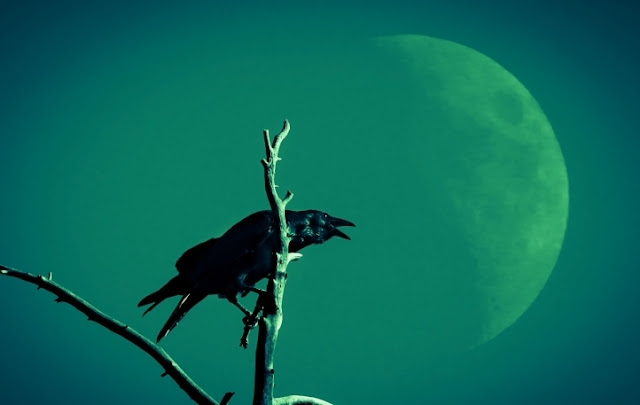
This full moon has many names: Worm, Crow, and Sap
But all resonate with the stirring new.
That even you, my Sleep-Eyed Bird, can feel between your blanketed breaths,
Time to rise from the cosy unrequiring sleep you use as junk, as proxy death.

Time to uncurdle your slumbering heart from the churning stories of the other time
That kept you safe from the wisdom of monotony.

Time to close the tales of how the wicked winds ripped your flesh ten thousand ways
How the bare trees mocked your paltry offerings.
How the ice curated your memories into exhibitions for all those frozen ghosts.
Time to join the living now; to leave hope and despair to the accountants; to stop being afraid of Nothing.

Rise to the Sap Moon, teasing gravity. That gleaming superfood surging in the veins of bark and leaf.

Rise with the call of the Crow Moon on your lips. Never mind how coarse and dry from seeping hours apart from all your kind.

Rise, rise the Worm Moon has risen.
Leave the castings of your bed behind, and in it all your plans for being good or useful, adventurous or sensible, courageous, wise and loved. Let them rot into fertilizer for the Harvest of the Real.

Step out of that tired old disguise of being someone. It never suited You.

Let the stirring mount your new Spring blood within that fuels the Planless Action, The Not Doing that effortlessly cares for every need.
Soak up the sun like photosynthesis, the offer yourself to the first worm-eaterS
See the Cycle pass again from tiny beaks, to rotting feathers, to worm soil feasts, to the Ever-Changing Changeless Vast Continuum.

Enough with not being Worthy. That’s just the snooze button. Take only Love, and leave the rest.

You don’t need to be Jesus to practice Resurrection.

Posted in epoche | Tagged , , | Leave a comment

My grandmother’s wallpaper as embedded wisdom code

It is like washing printed cloth. First, the design fades, then the background and in the end, the cloth is plain white. The personality gives place to the witness, then the witness goes and pure awareness remains. The cloth was white in the beginning and is white in the end; the patterns and colours just happened — for a time.

Sri Nisargadatta Maharaj

Like thousands of others, I keep a copy of Sri Nisargadatta’s I am That on my bedside table, along with whatever I’m actually ‘reading’ at the time. Because you don’t so much as ‘read’ I am That as you do swim in it from time to time.

After one dip into its waters, I sank into a momentary stillness. Trying to sponge up his words about the ‘witness consciousness’ – and knowing I’ve been here several times before.

All spiritual practice — he says, ‘consists in shifting the emphasis from the superficial and changeful person to the immutable and ever-present witness’. The witness is our deep-level awareness of what is—the continuum of consciousness that never changes — the quiet stillness of the land-far ocean — unaffected by the waves of thoughts and emotions churned up in the surf of memories.

I began to swim in the feeling behind the words, and entered a state that felt a bit like looking through a telescope at the stars, except that the stars were key moments in my life. I opened the breadth of my immediate experience to ‘a mind which is spread in time’. I felt a bit like the time traveler in H.G Well’s The Time Machine, with the dials of my invented contraption running — a mind spread in time — backwards through my personal history: 2020, 2010, 2000, 1990, 1980, 1970. 1970. The dial stopped here.

I am 8 years old. It’s night time. I am lying in my mother’s childhood room at my grandmother’s house. The bed is large and I am alone. It’s summer, so even though it’s 9 o’clock, it is not dark. In fact, the room is filled with that late summer glow that everyone born in the 60s and before remembers – before the sun changed. There’s the chest of drawers, the wardrobe with it’s oval mirror, the enormous armchair that no one ever sits in. But I am staring at the wallpaper. My grandmother’s wallpaper is a continuum for me. Because my parents were in the armed forces, and nothing stayed the same for very long. So this wallpaper already had significance in that it was emblematic of continuity; and for a child, continuity is security.

The picture I have of it in my mind’s eye is vague. There are flowers, of course, largish, Victorian-style on cream with blushing reds and pinks. I’m unsure of the exact design. It doesn’t seem to matter.


But then some more flotsam; a message in a bottle. That 8 year old girl distinctly recalling sensing a consciousness deeper than her thoughts. She went into it, further and further, remaining fixated on one spot on the wallpaper the whole time–through the corolla of a windblown rose, the floral equivalent of a black hole. Windblown. Mindblown. Like a recall to the fleshy secrets of the womb. And then a vast changeless continuum of absolute peace. And then the whole of space-time coalescing around a single thought.

You will remember this later.

And here I was, ‘later’ being a bit of an understatement, remembering it 52 years later. How odd. It was as if I’d planted that thought-seed back there in time and only now had it met the conditions to sprout.

And that peace returned, and I saw how it was impossible for the I to exist in the way it appears in the mind. Because the encounter with the witness consciousness was the same at 52 as it was at 8. Nothing, absolutely nothing had changed. So what about all those experiences that seemed to make up who I was? What were they? They were memories fabricated into emotions. They were unreal. The real was the continuum itself. At least, it was a whiff of the real.

I came out of this reverie and looked down at the open book in my hands. And this is what I read: ‘When questioned, they dissolve.’

Nisagardatta was referring to our prevailing sense of ‘I’ and ‘mine’ — our experience of our own identity as some distinct indisputable reality. The memory of what has happened to us, he says, remains after the event itself, and this memory takes the shape of our identity. When we recognize that ‘I’ and ‘mine’ is simply bundles of fears and desire based in memory, you will see that this ‘I’ and ‘mine’ has no foundation in reality. When questioned, they dissolve.

It is like washing printed cloth. First, the design fades, then the background and in the end, the cloth is plain white. The personality gives place to the witness, then the witness goes and pure awareness remains. The cloth was white in the beginning and is white in the end; the patterns and colours just happened — for a time.

All I have to do now is bring my grandmother’s wallpaper to mind, and the witness consciousness emerges naturally. A code. I spent a while on the internet later, looking up vintage wallpaper from the period (my grandmother was a frugal woman, not one to re-decorate on a whim, so I had to explore a wide time period). I couldn’t be sure. I kept thinking, yes, maybe, no. The one I attach to this post is very, very close. But the truth is I could have planted anything: a spiderweb, a passing cloud, a dandelion clock, the smell of apple crumble fresh from the oven. Of course, ‘I’ didn’t do anything at all, really. It’s all a trick of the light.

I like to imagine that millions of us in our childhoods planted such codes inside our software, secret lockets containing balms of wisdom ready to penetrate the pain of our limited selves. Or perhaps it is our evolved future selves leaning down to calm our burning foreheads. No matter. Here’s to this branch of magic, conspiring on behalf of our higher selves. Just when we need it the most.

Posted in epoche | Tagged , , , | Leave a comment