How the politicization of naturally acquired immunity to SARS-CoV-2 is a danger to the health of everyone on the planet–including you.
That’s right. Along with Justin Timberlake and Aunt Jemima pancake mix, you can now apparently add the human immune system to the list of canceled entities. Presumably chimpanzees still have one, but if I were them I wouldn’t get too comfortable. They could be next. The immune system has been called out for being “vaccine insensitive” just by the fact of its very existence and for “hurting the feelings of pharmaceutical companies”. In spite of this, scientists stubbornly continue to suggest that naturally acquired immunity to SARS-COV-2 is a key factor in the fight against Covid-19. The cheek. The Autonomic Nervous System should be nervous. It could be next for the chop at the hands of the Ministry of Truth. Je plaisante, of course, but not completely…
What is naturally acquired immunity? In a very small nutshell, it is the protection that our bodies acquire after becoming exposed to a pathogen. First, our innate immune system is triggered by the invading pathogen, and then we mount a response to fight the intruder through our adaptive immune system that includes B cells that produce the nAB’s (neutralizing antibodies) and helper and killer T cells. A heroic struggle ensues that results in the development of cellular memory that is able to mount a quicker defense the next time it encounters the same threat.
While discussion of the role of naturally acquired immunity (which for the sake of brevity I will shorten to NAI) to SARS-CoV-2 continues to be shared in the journals, reports and non-corporate platforms of the medical and scientific community, in the rhetoric of the political and medical establishment, and in the vast majority of the mainstream media, the natural immune response to SARS-CoV-2 is being treated with squinty-eyed suspicion, and is at best treated as irrelevant. We are being subjected to vaccine mandates that either stubbornly refuse to take NAI into account at all (the United States) or acknowledge it only marginally (France). Even in places where it is acknowledged to some degree, naturally acquired immunity is always obscured by the overriding commandment of vaccination at any cost regardless of previous infection. What can explain this?
One reason is that the discourse around Covid has become so restrictively narrowed to the vaccines that any discussion about natural immunity is regarded as a threat to vaccine confidence. This is very perverse logic. It completely misses the reality that vaccine confidence is no different than any other confidence – it deteriorates in a culture of distrust. Vaccine confidence is dependent on transparent and respectful dialogue between public officials and the people they are supposed to represent, not on censorship, lies and bullying. But this reason actually begs the question. Why would vaccine confidence become framed as the single most important factor, especially when increasingly we are seeing that the vaccines cannot–in any real-world scenario–be the single solution to the problem? And why do we see such division and hostility in the framing of the subject by our politicians when other framings are far more likely to encourage public unity and solidarity?
Another question worth asking is why aren’t the Covid-recovered being recruited into the global effort against the disease in a way that makes use of their defense capabilities?
In this landscape, with 225 million Covid-recovered globally, and with variants circumventing all available vaccines, the relevance of naturally acquired immunity sits front and centre.
There is a growing body of evidence that supports the following conclusions:
—Covid-recovered people are safe to be around.In fact, they are far less likely than those who are vaccinated to contract or spread the virus. If you are not vaccinated then you have more to fear from those who are vaccinated than from those who have recovered. In short, those who are Covid-recovered do not present anywhere near as much of a threat to others as those who have not been exposed to the virus.
—All of the SARS-CoV-2 vaccines are “leaky” a term used by scientists to describe vaccines that protect the host but do not prevent the spread of the pathogen other examples of which include the malaria vaccine. The smallpox vaccine, by contrast, completely blocks viral spread, and is referred to in virology as a “perfect” vaccine.
—Covid vaccine efficacy is decreasing at a rate that should have everyone – vaxxed or unvaxxed – concerned, lasting at best 6 to 8 months. If, as the science is telling us, Covid-19 is now endemic and emerging seasonally in the global population not unlike influenza, this means that the vaccinated are destined to become booster dependent to maintain variant-resistant antibody levels ad infinitum. By contrast, more and more studies are indicating that NAI is comparatively more robust, and durable up to a lifetime.
––Natural immunity provides a crucial protective buffer in exposed populations, particularly now that SARS-CoV-2 has entered the endemic phase and is, according to most scientists, going to be with us for the foreseeable future.
THERE IS NO COHESIVE STRATEGY FOR THE NATURALLY IMMUNE AND THIS BODES ILL FOR US ALL.
Even as evidence continues to mount that natural immunity provides robust protection against CV19, public health policy remains stuck in messaging loops that limit our ability to respond sensibly and effectively to the health threat that Covid-19 presents, especially as an endemic disease.
There appear to be several factors that can help explain how we got from there to here:
—as already noted natural immunity has been conflated by the media and by policymakers with vaccine hesitancyand herd immunity, a concept that has been repeatedly misrepresented in the media.
—public policy is running behind the science, what I’ve dubbed ‘data lag’.
—the subject is really, really complex and does not lend itself to bumper sticker style rhetoric.
— the media prefer stories that pitch one group against anothersuch as the vaxxed vs. un-vaxxed.
If the topic of natural immunity is discussed, especially in the American media, it is most often presented as a political rather than a biological issue. The predictable line up of talking heads — almost exclusively Republican – are trotted out to argue that natural immunity is better than vaccines. Then the equally predictable responders – almost exclusively Democrat – are dragged in to bang the vaccine drum and to label any talk of NAI as anti-vaxxer – a term that possibly eclipses ‘racist’ in the list of the worst things you can call someone (closely followed by ‘unvaccinated’).
The result is that we are being labeled as belonging to one of only two camps; those who mistrust the vaccines and the medical bodies that promote them and who see natural immunity as a support for their arguments against their use, and those who vigorously support the CV19 vaccines and associate discussion of natural immunity with vaccine hesitancy and conspiracy theory loons. This leaves out in the cold anyone – including scientists, health professionals, and ordinary citizens – who genuinely seek to understand the truth of the matter and who and would like to talk sensibly about both vaccines and natural immunity. These people – who I would argue are actually the majority – are not interested in arguments ‘for’ or ‘against’ bringing public health discussions to the level of a Saturday bar room soccer squabble. They simply want to be better informed. While politicians insist on the language of public compliance (the “vaccinated” vs. the “unvaccinated”), immunologists speak of individual resilience— the “immune” and the “non-immune”.
Can you imagine hearing Yonatan Grad, Associate Professor of Immunology and Infectious Diseases at Harvard on any hard-hitting news show as saying yawningly non-combative things like:
“Immunity conferred from natural infection and vaccines, patterns of social contact, and virus transmissibility will all play a role in what COVID-19 will look like as it continues to circulate in the months and years ahead.”
This kind of stuff is terrible for ratings. “Boring!!” you can hear the editorial team groan. “Bring on the anti-vaxxers and the vaccine evangelicals!!” Don’t worry, the producer has them on speed dial.
In September, the Doc Caucus, a group of healthcare professionals who are also members of Congress, called on the Centre for Disease Control (CDC) to acknowledge NAI when it comes to CV19 policy. Senator Marshall said in the letter.
“As members of the Doctors Caucus, we applaud vaccines’ role in preventing infectious diseases such as polio and measles, and now COVID-19. However, we must also acknowledge the need to develop patient-centered solutions that evidence medical necessity. To this end, we strongly urge the CDC to acknowledge infection-acquired immunity in addition to vaccine-acquired immunity.”
The issue is also being played out at the judicial level as US troops go to court to seek vaccine exemptions for those who’ve recovered from CV19.
“Service members that have natural immunity, developed from surviving the virus, should be granted a medical exception from compulsory vaccination because the DoD instruction policy reflects the well-established understanding that prior infection provides the immune system’s best possible response to the virus,” the lawsuit states.
How have we reached the point where healthcare professionals are reduced to lobbying the principal medical powers of the land to acknowledge a fundamental biological fact? Can you imagine a medical agency denying the reality of homeostasis because some people didn’t want to take a drug meant to keep us from dying of hypothermia?
Such Newthink is becoming increasingly infectious. It is worse than conspiracy theories since they tumble from the mouths who five minutes ago would have called you crazy if you told them they would arguing such things. On a Zoom call the other day, a friend from Colorado said, “I don’t believe in natural immunity”. I wanted to give him the benefit of the doubt and assume that he meant that he didn’t believe in natural immunity to Covid-19, not that he had just relegated an undisputed biological fact to the realm of Santa Claus and the Tooth Fairy. But any way you slice it, it was a very odd thing to say. My friend is, by the way, highly educated, a rational and thoughtful soul, and certainly not someone you would expect to fall prey to ideological possession. I could not have felt more perplexed than if he had announced his conversion to Creationism.
We need a vaccine against the pathogens of state-sponsored misinformation that are gradually airbrushing out our shared sense of valid cognition.
The irony is that those denying NAI are often the very same people who claim to be following “the science”. But denying NAI is even less scientific than denying evolution. At least evolution is still only a theory, which is why it is called ‘the theory of evolution’ even if that theory that is accepted by an overwhelming majority. Naturally acquired immunity is not a theory any more than is homeostasis.
Regardless of how either the media or our policymakers prefer to frame it, natural immunity is not a right-wing conspiracy. To deny or downplay its role in public health is not only idiotic, it is exceedingly dangerous. If natural immunity reminds us of anything it should remind us of who we are: intricate, unique and complex individuals with billions of years of highly sophisticated threat detection and resilience programmed into our cellular memories. We need to remember that we don’t need ratings, we don’t need to be re-elected, we don’t need endless zeros of profit margins, we just need some tools in survival. And one thing that the 225 million Covid-recovered know, deep in the annals of their cellular wisdom, is something about how to survive.
FOR REFERENCES for all the above SEE THESE PREVIOUS POSTS:
I sat alone with this giant heap of past, a groaning gunny bag, I sat alone, unpacked it piece by fragile piece, with bomb disposal care The childhood fears, the faces, feelings all, the leaps to trust, to pain, to shy away Faded postcards from brighter times. All the wish you were heres and glad you arents.
I took them out, piece by quiet piece, placed them in all the many corners of my life A mandala of tiny talismans. I could live like this, I thought. I moved within this mandala museum, as if it was the real world. I populated it with beings, with phantoms, with ideas, with plans, with flashes of beauty, with nostalgia and regrets, with slices of the View carved out and erected on perfect tiny altars of sense-making.
But then another – One – graced this grand museum of ‘I’ and gently removed each and every artifact from its carefully curated place. And in its place?
The terrifying replacement of nothing!
All that I thought I was now swirls in autumn winds about my head. Free from the informative dated labels and the sectioned glass protections They are leaves shedding in the wake of time. And I stand up, wearily, emptied of it all, a cold stark tree in barren space.
And yet, this pulse from somewhere in my groin, the beating of the never vanquished life Calls for it all to rise and grow again.
I know you care. It’s all over your face. Do you think I was born yesterday? I know you. You’re my friend. Remember? Knock, knock. I know you care.
I know you’re doing this for the ‘right’ reasons. I know you believe fully, in the ’cause’.
I’m here frying rice, making lunch as if it was yesterday, my heart skipping beats, Yearning to break bread with you, trying to find a way to you – to say “This is the wrong cause.”
We are on opposite sides of history now. My friends and I. Not all, but enough to pain me every time I think on it.
You say things that make me realize that you think I’ve been somehow duped by right wing fascists.
I think I give you more credit than that, and I try my level best not to take offense. Not to remind you of every bloody moment of truth we had together in the Great Before.
When we showed each other exactly who we were. And never distrusted like this.
I’m not trying to be right but damn it if it seems I’m the only one who remembers.
It’s the cheap shot, my friend, that stings the most.
So we eat this awkward lunch. You even compliment my cooking, while all the while an eye at me as if I were the one on the cusp of betrayal. But I don’t trust you, my friend. I think you’re selling out all over the place.
You want to teach me a lesson but instead you quote obscure philosophers on topics of social harmony and civic duty. O altruism. I think the point is that I care less about such things than you. Except that I now you don’t actually believe that. To me it seems like someone else is telling you so.
My friend, it is not easy to express what I want and need to say to you. Hurting you is the last thing I would ever want to do. You are good. I know that. I don’t anyone to explain you to me.
But it saddens me that you have forgotten who I am.
Over the main course we discuss many things, but none of them are the things we’re thinking of. You look at me as if I’m wrong. I wonder, am I looking at you like that?
By dessert, things are less sweet than I would have hoped. You have by now mentioned several philosophers, all of which I suspect you think I quietly despise. You end with something about how you pride yourself on being able to tolerate even those on the “far right”.
I reply that I don’t know any such people. You look at me, stunned. Where are we, I wonder? The field of Rumi comes to mind, you know, the one beyond knowing and not knowing or something. Didn’t we share that once one night when I came to you when you were tired and hurt? This is certainly not the field we’re in now while the coffee brews.
I’m sorry, my friend. I don’t believe in your Great Mission. It never spoke to me except as a twisted lie. You think we’re fighting a war between those who care and those who don’t. But you’re wrong.
We all care. The enemy is the one dividing us, chess gaming us out against each other. The binary.
Do you honestly believe that I woke up one morning not caring about the world. What is wrong with you?
You care, just as much as I.
I’ll pour the coffee while you check your watch, and I say the only thing on my mind.
“No matter what happens, we should not forget who we are”
“I don’t know what you mean,” you say. And I know that you are sincere. You want me to spell it out. You want me to tell you face to face that I think you are fighting the wrong fight, that your beauty and intelligence and compassion is being used against you, In the wrong and so well-intentioned fight.
You think I abandoned you. I didn’t. I never left you. Not for a moment. There is a crowd of people walking towards a cliff edge. There is a carrion cry of “onward march!” and everyone feels so wonderfully part of the same righteous story. Until….
I am in accord with your passion just not with your direction.
I want to take you back, by the hand, I want to show you that room where we talked like we owned the future. Before we bought into any of it. Don’t you remember? Before we got religious, before we got cynical, before we got full of idea fit to bursting. We had one truth, we had one single thing we could agree on. That each of us mattered. That each of our odd, and singular and right-angled light, was worth the skin it was printed on. We, at least we, in our lop-sided tribe could accept one another in all our odd and funny ways. Accept me now, my brother, my sister. This is what I want to say
That I believe as much as you in solidarity, in altruism and sacrifice for the greater good, which is exactly why I’m saying and doing what I am but….
But I don’t say that. Because I love you too much. So I just say, “Hey. Let’s not forget who we are, no matter what.” And you look at me over the rim of your cup and nod.
You pick up your coat and say something about somebody waiting and I want to hold you. Suddenly, I want to take you in my arms and hold you close. It’s protective. And I’m sorry for that, but it is. I worry for you so so much and you hate me for that, I know.
So I hand you your coat and you take it and tell me we’ll do this again sometime but something in me says no, we probably won’t, not yet, not yet.
We ate together, I can’t deny it, but we didn’t break bread. Not yet. Not yet.
Dr Grégory Pamart was the only doctor in Jenlain, a village of 1000 inhabitants in the North of France close to the Belgian border. On September 15, this 33 year old father of four was forced to resign over the vaccine mandates. He penned a farewell letter to his patients to explain his decision on his blog. The mayor has called his actions irresponsible and he has been widely condemned by the French media. Many others, however, read his letter in entirely different way — as a testament to his deep sense of responsibility to his patients. In his letter, he speaks of his determination to uphold the laws around medical integrity and to follow his own conscience as a protector of the Hippocratic Oath.
Dr. Pamart kindly gave his permission for me to translate and share his letter in English. In defending his position, he cites the Kouchner law of 2002 on the rights of patients according to which “no medical act, no treatment, can be carried out without the free and informed consent of the person”.
See here for the original French on Dr. Pamart’s blog.
My dear patients,
The past year and a half has seen many upheavals in our societies, in our behavior and in our interactions.
We quickly saw health authorities lose interest in health, in its highest sense of “state of complete physical, mental and social well-being, and not just the absence of disease or infirmity.”
On the contrary, in 2020, all so-called public health action ceased to focus on the health of individuals to focus solely on a particular disease, ignoring states of depression, discomfort, isolation, suicide, relapsing diabetes, worsening of obesity. Sadly, the list goes on.
Worse still, the whole of the so-called public health action in 2021 ceased to be interested in this single disease, and today vaccination, in itself questionable, seems to be an end in itself, a “necessity” to be procured “whatever the cost ”.
This logic completely abandons the major aspects of the fight against infections; namely, all the preventive and curative possibilities, in particular early treatment which can, as I have observed in treating my own patients, protect against hospitalization in the vast majority of cases.
Even more serious than the strategic error at the medical level, the new measures announced by the President of the Republic introduce a major departure from the conception of free and informed consent to treatment. These measures mean overriding free will, compelling consciences and ultimately violating the body.
I love my work. You who know me know that I have always tried to respect the choice of my patients. I am not asking you to understand or accept mine. Know in any case that each of my actions is carefully considered. I am not immune to errors of judgment, but you can be sure of my sincerity, especially when I tell you that, regardless of the health recommendations, I do not believe that I ever put you in danger.
I have never stopped thinking that the general practitioner has a role of companionship, support, and information. In this role, one should never try to impose one’s own ideas or try to convince one’s patients.
Because of this I do not accept the relinquishing of freedom over my body in order to continue my profession.
I do not accept the totalitarian idea of medicine that bypasses the free and informed consent of the patient.
I do not accept, either, that our health data are collected in large national files and used by the administrative authorities to place sanctions on those that the political authority has deemed undesirable.
It has been a few weeks since I made the firm and difficult decision not to give in to the obligation of vaccination. This means that I will no longer be able to exercise my profession as a general practitioner.
If you don’t understand this decision, I hope you will trust me enough to accept that I could be wrong, but to also accept that I could be right.
Some of you have told me of your dismay “all these studies for nothing? “. Know that, even if I never practice general medicine again, I absolutely do not regret my vocation. I had the extraordinary chance to discover my patients, as individuals, in the intimacy of a true and sincere relationship.
During my 9 years of study and 6 years of practice, of which almost 3 was with you in Jenlain, I discovered treasures of humanity that a whole life in another profession would not have allowed me to find.
I believe that one cannot practice medicine other than by loving. And the more I practiced the more I liked you. Each of you. As the unique and wonderful beings that you are.
I fear that medicine is becoming nothing but a set of algorithms and protocols.
Each of us will judge, as things come to pass, on what transgression of our humanity they do not accept. To hide our smiles, to stop kissing each other, to make granny eat alone in the kitchen, to sign a document to leave our house, to receive an injection to go to work, to flash a barcode to go to the restaurant, to have his child jabbed so that he has the right to go to the swimming pool… I hope that I don’t have to add to this list in a few months.
I am afraid as I watch the birth of this utopian society, “all together against a disease” which denies the self-worth and individuality of each of us; which imposes a single outcome, a single path; that wants to include each citizen in a single job description; a society marching against the vagaries of life, at the cost of difference, at the cost of freedom of conscience, at the cost of the free agency of our bodies…at the cost of love.
Today I leave my job. Yet I am not afraid. I surrender to providence with confidence, because I believe that we all have the possibility of changing the world, within our reach, according to our talents, our strength, our perseverance.
The ideal society is not built on a perfect social order, the ideal society begins simply, with a smile, the willingness to welcome others and take care of each other.
It is in order to take care of you that I regret that I must leave you.
Your always loyal,
Doctor Grégory Pamart
AUTHOR’S NOTE: I would like to thank Yannick Ramaekers for his help with the English translation.
The biggest story of the past six months in the world of CV-19 science is the declining protective properties of the vaccine, but you wouldn’t know it from watching the evening news.
I will never forget listening to a lecture by a psychologist who was talking about the challenges of adjusting our attitudes to adapt to new realities. He compared it to how the Apollo missions got to the moon. Nobody actually knew how to get to the moon because no one had ever been there before. All the scientists could do was to set a course for the moon and then correct it when it went wrong. Course. Correct. Course. Correct. Over and over again. That’s how we got to the moon. It is somewhat terrifying. All that unknown, all that uncertainty. But that is how we succeed in things as difficult as flying to moons; by remaining open and alert to newly emerging data. If we didn’t continue to correct our course — if we had simply stubbornly headed towards where we imagined the moon to be — we would never have made it.
Our covid policies are in danger of becoming like the rocket that has no hope of lading on the moon, and instead goes spiraling off into the void because the course was never corrected. We are becoming mired in ideologically-based rather than evidence-based positions which have less to do with controlling the virus and more to do with controlling ideas. The media is largely monolithic and seemingly incapable of creating space for any serious exchange of views. And as history has taught, when something becomes unsayable, it soon becomes something unthinkable. But we need to think, and hard. Because the decisions we make collectively from now on are going to affect the future of pretty much everyone on earth for generations to come.
IT’S NOT A PANDEMIC OF THE UNVACCINATED. IT’SA PANDEMIC OF DELTA
Since March, the highly transmissible delta variant has soared, from less than 5%, up 87% of US cases by the summer, up to almost 100%. The original Wuhan variant against which the vaccines were developed is no longer even detectable among the variants currently circulating in the United States. Whether you prefer to focus on the virility of the delta variant or the unreliability of the vaccines, it amounts to the same thing. The vaccines are less reliable because of delta, and delta is a problem because of its ability to bypass the vaccines.
The burden of the relative failure of the vaccines to protect vaccinated people from infection and others around them from getting infected by them has been almost magically transferred from the vaccine manufacturers to the unvaccinated. The fading dream of herd immunity is now the shame of those who didn’t get the vaccine, even though the primary reason is – as scientists continue to try to tell us — that vaccines have not been able to keep pace with the variants. A jab in every arm is a political goal, not a scientific one.
Most scientists seem to have no problem admitting when they are wrong. They don’t take it personally. They just go back to the drawing board and look for another approach. Politicians, on the other hand, prefer to move the goalposts rather than admit that the ball never actually made it into the back of the net. And so we saw the herd immunity threshold quietly go from 60-70% of the population functionally immune – either through the vaccine or through previous infection – to people losing their jobs, communities being torn apart, the bullying of concerned pregnant women, the immuno-compromised and complete disregard of the naturally immune, to achieve a shot in every arm. No questions asked.
When a population in crisis is offered a solution that doesn’t live up to expectations, people very soon look for someone to blame. And this is exactly what has happened with the CV-19 vaccines. Officials began targeting the unvaccinated rather than the inability of the vaccine technology to keep pace with viral mutations. For decades to come, social historians will be studying how the failures of a medical intervention was successfully blamed on those who didn’t take it.
THE DATA LAG PROBLEM
Perhaps the only dependable feature of the CV-19 pandemic is its continuously shifting nature. This creates an enormous challenge for the various organs of state to adjust systemic responses accordingly. In this environment of constant threat and constant change, new evidence struggles to find a foothold in the dominant narrative, which resists nuance or complexity for easy to digest one size fits all solutions.
Jet leg is when when our body clocks are operating on a former light/dark cycle than the one we find ourselves in after crossing several time zones. Data lag can be described as when our approach to a problem is based on information from a former scenario that has evolved, leaving us maladjusted to the new situation. This data lag has kept a great deal of the emerging science out of the mainstream news, even though much of it is hiding in plain sight — available on government agency websites.
THE HEADLINES WE SHOULD BE READING
The article published in Nature back in March has turned out to be prophetic in a number of ways. The general trends it pointed to have been gradually increasing over time. That herd immunity through vaccination is no longer possible is a view that is now widely held by scientists because of this single factor: the ability of the Delta variant to sidestep the vaccines so that the vaccinated can now become infected with the virus and transmit it to others. And yet our governments trudge on with draconian vaccine mandates that make little sense in light of what we now understand.
The most disturbing trend we are seeing is the declining efficacy of the vaccines against emerging variants and the increasing cases of covid among the vaccinated. This is happening particularly among the elderly – the very demographic prioritized for vaccination due to their significantly greater vulnerability to CV-19.
On the positive side, naturally acquired immunity from previous infection is proving to be far more robust and durable than previously thought. Another positive development is that we have improved our understanding of early-stage therapeutics for CV-19, even though there is woefully inadequate support for making these interventions available to patients.
We have to accept that things have not worked out the way we’d hoped and that 95% CV-19 vaccine efficacy is yesterday’s news. There is now a new reality. Drink a glass of wine, don’t answer the phone, go for a long hike, whatever it takes to get your head around the headlines that we should be reading.
THE VACCINES ARE LOSING THEIR EFFICACY. Data out of Israel and the UK reveals that the vaccines are losing ground against the virus at an alarming rate. Although the booster shots are being lauded as the answer to this, it is an open question whether either the medical technology or the vaccine supply chains can manage to keep even one step ahead of novel mutations.
THE VACCINATED CAN TRANSMIT THE VIRUS. We have now learned that vaccinated people who become infected with Delta SARS-CoV-2 can carry as much virus in their nose as do unvaccinated people, and can just as easily spread it to others.
ALMOST THREE-QUARTERS OF COVID CASES AMONG THE ELDERLY ARE AMONG THE FULLY VACCINATED according to a US Department of Defense (DoD) study called ‘Project Salus’ that looked at 5.6 million recipients of the RNA vaccines among the over 65s.
COVID DEATHS ARE MULTIPLYING IN THE VACCINATED. Since March, the percentage of CV-19 deaths among the fully vaccinated in the US has increased by over 10% in only 4 months according to a leaked CDC report. More recent evidence from Israel now shows that vaccine protection continues to decline in the months following the jab. This is the reason for the campaigns for ‘booster’ shots, but it is still unclear how protective they will be in the long term.
It is now clear that that this is not a pandemic of the unvaccinated. The virus is very busy circulating among the vaccinated.
NATURALLY ACQUIRED IMMUNITY THROUGH PREVIOUS INFECTION IS ROBUST AND DURABLE. Herd immunity is gained in only two ways; either by catching the infection and surviving it, or through vaccination. Naturally acquired immunity has been practically ignored by the current US administration, even though there are to date 45 million covid-recovered Americans potentially immune to the virus who can play a crucial role in any CV-19 exit strategy.
COURSE, CORRECT
Data lag is keeping us committed to strategies that were designed for a strain of the virus that is no longer among us. Statistics like 95% vaccine efficacy are yesterday’s news. Delta changed everything.
We have to accept that things have not worked out the way that many of us had hoped with the vaccines. Drink a glass of wine, go offline for a while, pack a tent for the mountains; whatever it takes to get your head and heart around this reality. Vaccines alone are not going to provide the solution. We have to think differently.
We need to consider CV-19 vaccines as part of a larger strategy.
We need to acknowledge the role of naturally acquired immunity and adjust public health policies accordingly.
We need to invest in research and faster pathways for early-stage CV-19 treatments and preventions that include diet, lifestyle and therapeutics.
Broad scale public health policy affecting the lives of billions is being based on old data. The emerging evidence for waning vaccine immunity in light of delta requires us to update our thinking about both the problem and potential solutions and to go beyond the single solution scenario. Government officials and the media must allow this information to become part of the public discourse — so we can decide on our response measures accordingly.
If we can correct the course we are on, we might just stand a chance of reaching the moon. Maybe this moon is not a covid-free world, but it could well be a world where we are free to live our lives beyond the fear of covid. And that would be a world worth living in.
THE POLITICS OF IMMUNITY PART ONE: THE SCIENCE THAT PASSES US BY
If you research naturally acquired immunity to SARS-CoV-2 you can’t help but be struck by a conspicuous disparity in how the subject is approached depending on who is talking about it. It is like two parallel universes that stubbornly maintain distinct and competing narratives. One universe is of science-based research. The other is the universe of public messaging. The two rarely cross except on occasion. When they do, for a short time, it seems like a light has been turned on somewhere, illuminating a fascinating and meaningful space, but that light then dims again as the universes re-divide and go their separate ways once more.
In the scientific universe, the evidence is considerable and mounting that natural immunity from previous infection is at least as good if not superior than the immunity provided by vaccines, even against variants of concern. But you wouldn’t know it by watching the news.
Dr. Marty Makary, a professor at Johns Hopkins University School of Medicine elaborates [1]: “…here we are now, over a year and a half into the clinical experience of observing patients who were infected, and natural immunity is effective and going strong. And that’s because with natural immunity, the body develops antibodies to the entire surface of the virus, not just a spike protein constructed from a vaccine.”
Initially, there were concerns that natural immunity would quickly fade, but more and more studies are revealing this not to be the case. Vaccines, however, have shown serious reductions in efficacy [10] after only a couple of months and, by some reports, even as little as a couple of weeks. [11]
A primary reason that naturally acquired immunity is showing such durability is because a person exposed to SARS-CoV-2 was exposed to the entire virus is a view shared by Matthew Memoli, director of the Laboratory of Infectious Diseases Clinical Studies at the NIH (National Institutes of Health)[2] While “vaccines are focused on only that tiny portion of immunity that can be induced” by the spike, he says. This broader exposure “would likely offer a broader based immunity” that is better at fighting off the variants.”
Studies that indicate natural immunity plays a significant role occasionally make it into online reports of major news outlets but rarely make headlines. And yet their sheer number and consistency raise serious questions about our current health strategies. They suggest that the CV19 recovered have little to gain from vaccination, and possibly some things to lose.[3]
The emerging science supports the prioritization of vaccination for those who have not yet developed an immune response, particularly in less developed countries that are struggling to make their vaccination targets. Perhaps most of all, they suggest that the covid-recovered have an important role to play in our long-term efforts to keep the virus at bay in the wider community. Ultimately, they reveal that the policy of a “shot in every arm” is not based on the current science.[4]
POLITICS FIRST, EVIDENCESECOND
When we do hear about natural immunity outside of the research field, the language is largely shaded in political tones. Who is talking about it and the nature of their political affiliations is given more weight than the evidence itself. This was not always the case. At the start of the pandemic, even in the US, public officials recognized the potential role of natural immunity. Anthony Fauci, director of the National Institute of Allergy and Infectious Diseases and Chief Medical Advisor to the President, was also in broad agreement. [5]
So what changed? In the scientific universe – nothing. The research continued and the studies kept coming, although it mostly remained shared between peers. But in the public space, radically dualistic politics began to divide people – and issues — into separate camps with their own armies of followers and their own credo. Group A was suspicious of government, medical agencies, and Big Pharma, they questioned certain public safety measures such as lockdowns, and was generally more afraid of the erosion of public liberty than the virus. Group B exhibited a high level of institutional trust, was willing to participate as a civic duty in all the health measures advised, and was generally more afraid of the virus than loss of civil liberties. In reality, these groups do not fall along sharply Republican and Democrat lines, and there are many sub-groups with less easily broad-brushed positions, but the media had little patience with such distinctions.
In this polarized space, while Republican politicians such as Kentucky senator and physician Rand Paul began to advocate for natural immunity in opposition to the government’s approach to the health crisis, Democrats recoiled from such associations practically by default. They became even more antagonistic when last October President Trump, never one to miss a bandwagon, tweeted that he was now “immune” to CV-19 (flagged by Twitter as “misleading and potentially harmful information”).
That same month saw the circulation of the Great Barrington declaration [6], which argued for replacing blanket lockdowns with measures to help protect the most vulnerable and build herd immunity through exposing the people least at risk. The declaration became a lightening rod for the debate on public health policy. Critics began referring to this strategy as “let it rip”, and natural immunity received another public shaming. If natural immunity had been a celebrity, its publicists would be starting to ignore their calls.
People began using language in entirely different ways. You had scientists using the term ‘herd immunity’ in a very positive sense, to mean the only way we would ever get ahead of the virus – either through vaccination or natural infection, and most likely a combination of the two. But in the public space, the term ‘herd immunity’ became saturated with a kind of recklessness or at least a contrarian position to lockdowns and mass vaccinations. While experts continued to calmly repeat to anyone who would listen that broad scale immunity to the virus was the only way to ultimately defeat it, politicians began to use this kind of language less and less. The UK government did a complete 180 after negative public reaction to the herd immunity concept back in March 2020, so much so that few can even remember it.
It was after the vaccine rollout that natural immunity was more or less cancelled in the public universe. Medical institutions went to the extreme of referring to natural immunity as a “myth”.[7]
By May 2021, Fauci had changed his tune, and was now rhapsodizing that CV-19 vaccines were “better than nature.” [8] He was basing this assessment on studies that show increased antibody levels from previous infection plus vaccination, not vaccination or previous infection alone.
As time went on, and the vaccination program herd immunity, natural immunity, all began to smell suspiciously like the same thing; anti-vaxxers. Even though the mass vaccination programs are aimed at exactly the same target—herd immunity, it was as if herd immunity and vaccine immunity became two competing products like Pepsi and Coca Cola, and then one day Coca Cola mysteriously disappears from all the stores and everyone suddenly is acting as if only Pepsi had existed all along. Coca what?
Some observers began to accuse officials and the media of trying to ‘memory hole’ natural immunity. This is a reference to George Orwell’s dystopian novel, 1984, where a small chute that led to an incinerator was used to disappear information deemed embarrassing, inconvenient or subversive to the State. Since naturally acquired immunity to CV-19 was deemed an obstacle to universal vaccination mandates, officials chose to side-stepping the topic and the media chose to either ignore the evidence around it or to disparage those who tried to bring that evidence to public attention.
Even before Delta began circulating in the United States in March this year, studies were demonstrating how memory B cells and memory T cells form in response to CV-19 infection and how the adaptive immune system was producing antibodies perfectly capable of taking on the variants.A number of experts openly questioned why this wasn’t being taken into account in terms of government vaccine mandates. Freelance journalist, Jennifer Block, wrote an article that was published September 13 in the British Medical Journal called, Vaccinating People who have had covid-19: Why doesn’t natural immunity count in the US? The article is notable for its scope and international perspective, being one of the first and most comprehensive overviews of the studies and discussion of the topic. Block reports on experts who are questioning the science and ethics of treating the recovered as being ‘equally vulnerable to the virus—or as equally threatening to those vulnerable to covid-19—and to what extent politics has played a role.’ [9]
“Many of us were saying let’s use [the vaccine] to save lives, not to vaccinate people already immune,” Marty Makary, a professor of health policy and management at Johns Hopkins University told the British Medical Journal (BMJ).
RECOGNITION OF NATURAL IMMUNITY IN NATIONAL HEALTH POLICIES
Some countries do acknowledge a window for the immune protected before vaccine recommendations. In Israel it is three months before one mRNA vaccine dose for the previously infected and a “green pass” (vaccine passport) to those with a positive serological results regardless of vaccination status. [12]
Within the European Union, people are eligible for the health pass if they’ve had a positive covid test within the past six months, which also allows for a single dose of an mRNA vaccine. [13] Although some Scandinavian countries appear set to repeal health pass requirements for everything except international flights. In the UK, the NHS (National Health Service) covid pass is valid if you have a positive PCR test result within the past six months. [14]
Jennifer
Block notes that not having a national health pass actually makes it harder for the US to factor naturally acquired immunity into its public health measures. Members of the medical community like Jeffrey Klausner, clinical professor of preventive medicine at the University of Southern California and former Center for Disease Control (CDC) medical officer, have been speaking out in favour of giving those with prior infection the “same social status” as those vaccinated. Various proposals have been made for how this could happen, yet at least some of the resistance to this idea is because of the additional logistical complications it creates in the implementation of universal health measures. [15] As Alfred Sommer, dean emeritus of the Johns Hopkins Bloomberg School of Public Health bluntly puts it, “It’s a lot easier to just give them the damn vaccine.”
Some experts and medical professionals question if it is only an issue of logistics, however. As the BMJ article states; ‘a recognition of existing immunity would have fundamentally changed the target vaccination calculations and would also affect the calculations on boosters’.
“There’s a very clear message out there that ‘OK, well natural infection does cause immunity but it’s still better to get vaccinated,’ and that message is not based on data,” says Monica Gandhi, an infectious disease specialist at University of California San Francisco,. “There’s something political going on around that.”
SO WHAT IS THE EVIDENCE FOR THE STRENGTH AND LONGEVITY OF NATURALLY ACQUIRED IMMUNITY TO SARS-COV-2?
There are literally dozens of studies to date on the role of natural immunity and CV-19 from several countries, but let’s look at a sample from Israel and the United States. Since it was such an early adopter of vaccines and orchestrated such a fast and broad scale distribution, Israel has always been a few months ahead of Europe and the Americas. Their past is in a very real sense our present, and their present is fast becoming our future. The Israeli studies have also been some of the most substantive, with scientists having access to a national database that contains the covid medical data of the entire population.
COVID-19IMMUNITY STUDIESOUT OF ISRAEL
Israel has been lauded with having pulled off one of the fastest and most efficient CV-19 vaccine programs in the world. Their campaign began as early as last December. They had 20% of the country single jabbed in only three weeks, and by March they had the highest global per capita vaccination, with 50% of the population having received both doses of the BioNTech/Pfizer.
In April this year, a three-month long nationwide study concluded that the vaccine provides slightly less protection than naturally acquired immunity. The evidence showed protection from vaccination was encouragingly high, at 92.8%. Protection from prior SARS-COV-2 infection, however, was 2% higher, at 94.8%. The researchers said that these results ‘question the need to vaccinate previously-infected individuals.’ [16]
Although this study suggested that natural immunity was more effective than vaccine immunity, the vaccine was still showing a high deal of protective strength. That was until the summer of 21, when data from several countries began to reveal an alarming rate of decline in vaccine generated immunity. Something had changed the game, and its name was Delta. The virus had mutated and was increasingly able to evade the vaccines that had been developed to block the original Wuhan strain. Immunity from previous infection, however, was discovered to remain comparatively more stable.
On July 23, the Israeli Health Ministry reported that another large study had found that a full course of the Pfizer-BioNTech vaccine, although 88% effective at preventing hospitalization, was only 40.5%effective at preventing symptomatic illness and only 39% effective at preventing infections. The Johnson & Johnson vaccine was found to be 33% effective against the Delta variant. Put another way, the Pfizer vaccine failed to prevent symptomatic illness 61% of the time and the J&J failed 67% of the time in preventing symptomatic CV-19 illness.[17] This was a decrease in vaccine effectiveness by 25% in only a fortnight. [18]
Another Israeli study published in August demonstrated that people who had already contracted SARS-CoV-2 were much less likely to become infected with Delta, develop symptoms or being hospitalized compared to those never infected who had two doses of the Pfizer vaccine. Individuals who were both previously infected with SARS-CoV-2 and given a single dose of the vaccine gained additional protection against the Delta variant.
Science Insider reported that this study reveals the ‘power of the human immune system’. Charlotte Thålin, physician and immunology researcher at Stockholm’s Danderyd Hospital and the Karolinska Institute who studies the immune responses to SARS-CoV-2 called it, “a textbook example of how natural immunity is really better than vaccination.” [19]
COVID-19 IMMUNITY STUDIES OUT OF THE UNITED STATES
One of the earliest studies into SARS-CoV-2 post-infection immunity was funded by The National Institutes of Health (NIH) from La Jolla Institute for Immunology [21]. It was the largest study at the time of all four major types of immune memory for viral infections: antibodies, memory B cells, and the two main types of memory T cells. It was published in January, right at the start of the national vaccination campaign.
Researchers discovered that ‘the immune systems of more than 95% of people who recovered from COVID-19 had durable memories of the virus up to eight months after infection.’ Although antibodies declined moderately after 8 months, memory B cells (the body’s antibody factories) actually increased over time. The researchers said that their results provided hope that the level of immunity developed by people who got the vaccines could be at least as good. An intriguing implication of this study was that antibody tests were not as predictive of T cell memory as previously thought and that ‘simple serological tests for SARS-CoV-2 antibodies do not reflect the richness and durability of immune memory to SARS-CoV-2’.[22]
Scientists like Monica Gandhi have been trying to divert reporters away from their single-minded focus on antibodies as the ‘defining measure’ of immunity since the evidence indicates that declining antibodies does not mean that the immune response has declined, just as a high presence of antibodies doesn’t guarantee protection. Antibody levels naturally decline after the body has successfully fought off a pathogen, but immune memory remains through other cellular mechanisms. “It is accurate that your antibodies will go down” after natural infection, says Gandhi. If they didn’t, “our blood would be thick as molasses.” It is the T and B cells that seem to hold the key to long-term immune memory.[23]
In May, researchers from Washington University School of Medicine, St Louis, observed that people who have recovered from mild cases of CV-19 are likely to have immunity for their lifetime. Lead researcher, Ali Ellebedy said that the media had misintepreted the data relating to decline in antibodies post-infection.
“It’s normal for antibody levels to go down after acute infection, but they don’t go down to zero; they plateau. Here, we found antibody-producing cells in people 11 months after first symptoms. These cells will live and produce antibodies for the rest of people’s lives. That’s strong evidence for long-lasting immunity.” [24]
THE SUMMER OF THE IMMUNIE SYSTEM
The summer of 2021 was notable for the extraordinary amount of research data and studies published on how the natural immune system responds to CV-19 infection. It was also when New York Times and The Washington Post both broke the story on a leaked Center for Disease Control (CDC) report [20] that had been presented on July 29th by Meredith McMorrow, the co-lead of the Vaccine Effectiveness Team Representing the EPI Task Force (expanded programme on immunization). The report contained some startling conclusions based on emerging evidence on the impact of the delta variant, and urged US officials to “acknowledge the war had changed.” Two of these conclusions stood out from the rest.
*Breakthrough infections could be just as transmissible as unvaccinated cases.
*There is no differences between vaccinated and unvaccinated people in terms of how much virus they harbour.
*Older vaccinated people are more at risk of hospitalization and death from CV-19than previously thought.
For reasons best known to itself, the New York Times ran a headline from the report’s least surprising (and least controversial) conclusion: that the Delta variant was more transmissible than chicken pox; a classic case of ‘burying the lead’ if ever there was one.
‘Individuals who have had SARS-COV-2 infection are unlikely to benefit from Covid-19 vaccination’ was the conclusion of a large study from Cleveland Clinic, Ohio, at the beginning of June. It showed significant protection among the those previously infected but unvaccinated against CV-19 infection. Not one of over 1300 unvaccinated employees who had been previously infected tested positive during the five months of the study.[24]
June also saw the publication of a study from the National Institutes of Health Clinical Center in Maryland that concluded that “immunological memory is acquired in most individuals infected with SARS-CoV-2 and is sustained in a majority of patients for up to 11 months.”[25]
In July, a comprehensive study from Emory Universityfound durable immunity in the covid-recovered as well as cross immunity with SARS-CoV-1. Antibody responses of those with pre-infection were seen to decay at a slower rate than previously thought and the immune response actually increased with the severity of the disease as well as with each decade of age. Emory Vaccine Center director Rafi Ahmed, a lead author on the paper said that these results suggest that “patients are generating longer-lived plasma cells that can neutralize the SARS-CoV-2 spike protein.” [26]
On August 13, Science published a study suggesting that people who had contracted and recovered from the original Wuhan virus produce antibodies that are also potent against the highly transmissible variants such as Delta and Lambda. This study, out of the Vaccine Research Center, National Institute of Allergy and Infectious Diseases, National Institutes of Health, Maryland, showed that antibodies developed in response to currently available CV-19 vaccines had less efficiency in neutralizing novel variants of concern (VOCs). [27]
A study published August 16 in the journal Immunity, [28] concluded that natural immunity confers longer lasting and stronger protection against infection, symptomatic disease and hospitalization caused by the Delta variant of SARS-CoV-2, compared to vaccine-induced immunity.[29]
There are many, many other studies from dozens of countries; far too many to mention here.
The ability of the immune system to adapt, learn, remember, and mount complex defenses and offensives against its attackers is a remarkable fact of biology. It is an extraordinary and dangerous hubris to suggest that our intellects are any match for its millions of years of evolutionary wisdom. Our bodies have developed immunity against numerous pathogens in the past such as measles, and those far more dangerous than SARS-CoV-2 such as smallpox with a whopping 30% infection mortality rate. We have developed natural immunity against SARS-CoV-1, SARS- CoV-2, and we will undoubtedly develop it against the next pathogen down the line. The human immune system does not give up its secrets easily. For all its terrible costs, CV-19 has presented scientists with a new opportunity to probe more of them.
Just as the virus is evolving, we also need to evolveas we enter the endemic phase of the virus. We need to evolve our ways of thinking about the problem we face, and how we can best come together and unite our strengths and capabilities. Immune responses have been found to be highly individual. Just as individual are how people respond to Covid, and also to the vaccines developed to protect us from it. Immunity testing will also need to develop far beyond simple calculations of antibody titers.
Complexity and public health policy are like oil and water, but it is perhaps time to begin to seriously consider imagining measures that are more targeted than the one size fits all versions that most countries have been applying to combat the virus.
We also need to change our language. And this might be the hardest of all to do. We have got used to mantras like ‘a pandemic of the unvaccinated.’ The science is showing us that talk of the vaccinated and the unvaccinated makes little sense in the context of immunity. “If we want to be scientific,” says Dr. Mart Makary, “we should talk about the immune and the non-immune.” Or perhaps ‘the naturally protected, the vaccine unprotected and the unprotected.’
But the change that will make the most difference of all is the end of the segregation of scientific and public discourse on matters that our governments find problematic. Scientists are not generally experienced in public policy and admittedly are short on answers in this domain, but denying the evidence in order to make the policy go down easier with the general public is not the way forward. It only creates more distrust of the very institutions that are asking people to put the health and lives of themselves and their loved ones so firmly in their hands.
The fact that I can write an article with a title this obscure and remain confident that most people will get the context, just goes to show the extent of meme warfare in the manipulation and management of public opinion. You can hardly find a mention of ivermectin in the American media these days without the words ‘horse de-wormer drug’ strapped in front of it like a security cordon, apparently to ensure that no common sense gets through. Because we all know by now that ivermectin is a completely unproven treatment for Covid-19 with a dodgy safety record that is only taken by science-hating Trump-loving Republicans. Right? If you didn’t know this, you are one of the lucky ones not to have become intellectually malnourished from the drama-fueled vacuity that has become the daily diet of public discourse.
In a nutshell, the drug Ivermectin, which, yes, is used to de-worm horses, has become a symbol in the media battleground between the left and the right in America. The drug has become inexorably tied to anti-vaxxers who tout Ivermectin as a miracle drug to both prevent and treat Covid-19. Pro-vaccine folks have responded with a campaign to make the people who advocate for Ivermectin seem deranged and to do whatever they can to discredit the science around its use in humans. Hence the horse memes. The FDA, who have not approved Ivermectin as a Covid-19 treatment, have joined the fray with a Tweet befitting of a federal agency intent on clarifying an important public health issue, “You are not a horse. You are not a cow.”
Some of these memes are undeniably funny but this one below is my personal favourite. I suspect it’s a rehash of an old ketamine meme (Ivermectin isn’t the only drug used by both animals and humans, far from it, in fact) but amusing nonetheless. I don’t know why talking horses are funnier than talking cows, but they are. I personally think that all talking horses should wear hats, but that’s just me.
These exchanges feel more like those in a gaming realm, with positions articulated in the spirit of blood feuds, rather than a debate arena. This gaming nature is dramatically illustrated by a curious series of events that took place on the social media site Reddit. According to the tech-focused gaming website, Stealth Optional, on Friday, August 27, a subreddit theme created by Ivermectin advocates was taken over and flooded with memes ridiculing “horse de-wormer lovers”.
Four days later, this same subreddit, initially set up to discuss the benefits of ivermectin to treat Covid but which had now been taken over by anti-ivermectin users, began to be spammed by explicit horse-themed content. You can imagine the kind of stuff. In a surreal karmic moment the memes promoting horse de-wormer Covid cures and those mocking them both became usurped by sites serving animal-themed porn. You couldn’t make it up.
Some of the memes, like the one below where a man seems repulsed by the offer of the Covid vaccine but happy at the prospect of a slurp of horse de-wormer paste, provide insight into how those opposed to Ivermectin use view the issue. It took me some time to understand why the anti-Ivermectin people were so, well, anti-Ivermectin. The reasons have less to do with Ivermectin itself and more to do with the kinds of people who advocate for its use. They are against Ivermectin largely because they can’t stand the people for Ivermectin. The anti-Ivermectin people are almost by definition very pro-vaccine and it is the anti-vaxxers who are calling the loudest for people to use Ivermectin. Most doctors and medical professionals, who support the use of Ivermectin as a Covid-19 treatment never position it as a replacement for the vaccines but as an adjunct, and struggle to comprehend this attitude of mutual exclusion.
About a month ago, I posted a story on Facebook about Ivermectin use in India to which someone replied, ‘Just take the vaccine! WTH!!’ This comment makes zero sense to the people of India who are falling over backwards to get the Covid shots. Vaccine hesitancy doesn’t exist in India. Such emotive outbursts find coherence only in the context of America’s political weaponization of pandemic policy. This is a person well and truly conditioned by the meme-war propagandists that sees Ivermectin only in the context of a competition between therapeutics and vaccinations, a position actually only held by a (very) vocal minority.
The sad truth is that arenas for the exchange of ideas have become increasingly perfomative spaces, where the emphasis is on entertainment rather than insight. The golden rule of this sport, and it is a sport, seems to be don’t let the facts get in the way of a good story. A case in point is a piece recently published in Rolling Stone Magazine, an adapted version of an original report by KFOR, a local Oklahoma news channel. The story was then picked up by several major news outlets including The Guardian, The Independent and the BBC, and quickly became choice laughtrack material for media and talk show personalities.
The story went that emergency rooms in Oklahoma were so clogged up with cases of Ivermectin poisoning from people who’d taken horse de-wormer to treat Covid-19, that gunshot victims were unable to get treated. Gun-toting mouth breathers bleeding to death in hospital hallways from gunshot wounds because other gun-toting mouth breathers have been chugging down tubes of horse de-wormer paste. Clickbait heaven. There was only thing wrong with it. It never happened. Rolling Stone published a reluctantly-worded retraction after the hospital in question issued a statement saying that the doctor, Jason McElyea, who had made the claims was only loosely affiliated with the hospital and hadn’t even worked there in months. The statement continued: “NHS Sequoyah has not treated any patients due to complications related to taking ivermectin….Our hospital has not had to turn away any patients seeking emergency care.” It was a story ‘too good to check’ as The Telegraph put it.
Let’s do something really unorthodox and take a look at the facts.
IS IVERMECTIN A HORSE DE-WORMER?
Yes and no. Ivermectin was first introduced as a broad-spectrum animal parasiticide in 1981, but for the past 40 years it has been used in humans to treat infections caused by some parasitic worms and head lice as well as skin conditions like rosacea and scabies. In addition to its anti-parasitic activity, in vitro studies have shown ivermectin to also have antiviral activity against many viruses such as human immunodeficiency virus, dengue virus and West Nile virus.
It is this anti-viral action of Ivermectin that’s the reason it was explored as a possible treatment protocol against the novel coronavirus. Ivermectin’s developers won the noble prize for medicine in 2015 because of the drug’s extraordinary efficacy against onchocerciasis or ‘river blindness’ a horrific and disabling disease that was devastating communities in Africa and South America. Over 4 billion doses of ivermectin (under the label Metzican) have been donated by the manufacturing company, Merck & Co. Inc., since 1987 to treat onchocerciasis in all endemic countries.
Like many other drugs, Ivermectin is used to treat both humans and animals albeit with different formulations and dosage guidelines. Horse de-wormer is a concentrated paste that unsurprisingly delivers very high doses of Ivermectin since it is meant for animals at least three times our weight. I should not have to say this but here I go. Eating horse de-wormer is a very bad idea. There, now that’s out of the way.
WHY ARE PEOPLE TAKING HORSE DE-WORMER?
Good question. If you ask Twitter it’s because they’re Republicans, ignorant and inbred. What they’re after with the horse de-wormer is its active ingredient: Ivermectin, and I would imagine this is because they have heard somewhere that this drug is effective against Covid-19. In the funhouse mirrors of social media facts become distorted and claims become wildly exaggerated. Doctors do not prescribe horse de-wormer for humans. They prescribe human use Ivermectin for various conditions and more recently as a prophylaxis and treatment for Covid-19.
IS IVERMECTIN A MIRACLE CURE FOR COVID-19?
While Ivermectin is most certainly a miracle cure for river blindness it is probably not a miracle cure for Covid-19. There are, however, to date 32 randomized control trials and several public distribution campaigns that suggest it does provide significant protection against the disease. Ivermectin has been part of treatment protocols in a number of countries since early on in the pandemic because of this benefit. There are some studies that do not support ivermectin for Covid, but the evidence is solid enough to justify more extensive clinical trials which is what Oxford University is doing. Just because a drug is not a miracle doesn’t mean it’s useless. Aspirin isn’t a miracle drug against heart disease, but doctors still prescribe it for people with high blood pressure to reduce the chance of a heart attack.
IS IVERMECTIN SAFE?
A safety analysis of over 350 articles published this May revealed ivermectin to have such an excellent safety profile that “no severe adverse event has been reported in dozens of completed or ongoing studies involving thousands of participants worldwide to evaluate the efficacy of ivermectin against COVID-19”. The author also notes that not a single death had every been reported from an accidental Ivermectin overdose. People do experience side effects though, the most commonly reported being fever, headache, dizziness, and rash.
Want to know the drug that causes the most cases of poisoning? Paracetamol, known as Tylenol in the United States. Surprisingly, it takes only sixteen 500 mg tablets to kill some people and anything over 4 grams is considered dangerous. Over 150 people die every year from accidentally taking too much of this everyday drug that millions keep in their medicine cabinet.
IF ALL THIS IS TRUE THENWHY HAS THE FDA NOT APPROVED IVERMECTIN?
The FDA has not approved any Covid-19 treatments outside of a hospital setting, providing another reason why desperate and gullible are turning to horse pastes. The only drug they have approved is Remdesivir which apart from being extortionately expensive has since been shown to have little clinical benefit. Although the FDA has not yet approved Ivermectin for use against Covid-19, they do mention on their website that the drug is currently being assessed in clinical trials, hinting at a possible turnaround. Why the agency approved the use of Remdesivir all the way back in October 2020 with relatively small trials and yet continue to refuse to approve Ivermectin with a much more significant body of positive data to its name is a question worth asking. Surely it could not have anything to do with expired patents, new therapeutics and profit margins. But I digress.
Through the conditioned parameters of digital media platforms, social discourse has become reduced to little more than Punch and Judy shows, with characters squealing and bashing their way through the topic while the rest munch popcorn, booing and cheering depending on their current chosen side. Although it is possible to disagree with someone without shouting at them or calling them names, it is not really considered acceptable. If you’re not willing to ridicule or be ridiculed, it’s best to stay out of it altogether.
And don’t mind that there is no actual substance to any of it. A virtual knock down drag out boxing match with amusing graphics has far more appeal for the critically challenged. Real science, the un-politicized kind, is kicked ringside since the insights that scientists provide are far too nuanced and take too long for the bite-sized sloganizing brawls of a Twitter feed, or even the average news program.
We are fast becoming incapable of grasping any truth that doesn’t fit on the side of a cereal box and at the same time curiously cocksure of things we only found out about five minutes ago. But at least we have the horse de-wormer memes to remind some of us how smart we are in relation to everyone else. At least we didn’t eat horse paste.
“The surest way to work up a crusade in favor of some good cause is to promise people they will have a chance of maltreating someone….to be able to behave badly and call your bad behavior ‘righteous indignation’ — this is the height of psychological luxury, the most delicious of moral treats.” Aldous Huxley
There is a trope so intrenched in the pandemic narrative that it has taken on the irrefutable scent of religious dogma. It seems impossible to argue with only because no one ever does. You see it everywhere, on every news program, in every newspaper and it is plastered over the walls of social media like some viral graffiti. The unvaccinated are selfish. They don’t care about their communities or the effects of their actions on others. The vaccinated, in contrast, are altruistic civic minded folks willing to make sacrifices for the greater good.
The Unvaccinated. It has the ring of cheap horror. Like the Undead. A faceless mob of science deniers and rabid individualists, ranting conspiracy-thumping loons from the screaming heart of MAGAstan. But does this trope really reflect reality? Or is it merely a caricature brutishly but effectively manufactured to foster a particular set of emotions and prejudices?
Let us imagine who some of these “unvaccinated” might be, since it is obvious that no human being can be summed up in a single adjective. We can draw some character sketches like we’re writing a play. Enter Paul, healthy, unmarried, and in his early 40s. He’s the kind of guy who would literally put down whatever he’s doing to go help a friend no matter how much it inconvenienced him. Paul is a bit of a geek, an avid reader of science journals. His reasons for not getting the jab, he says, are based on the latest medical evidence. He is generally pro-vaccine but he feels that he isn’t in a high-risk category for severe illness and death, and wants to wait until the next generation of vaccines that he hopes will be more effective against the new variants.
Now stage left comes Patricia. She runs a local alternative health association and is regarded as a pillar of the community. In her 60s she contracted Covid last Spring and was sick for a couple of weeks but managed it well. She has since been tested and found to still have lots of antibodies against the virus in her system. She plans to get the vaccine when her own immunity fades but she’s not “in a hurry” as she puts it since she believes her immunity protects her and those around her. I would classify Paul and Patricia among the low-motivated unvaccinated. They would rather not take it at present, but they are not fundamentally opposed to the idea.
Now meet Claire. Claire is a holistic health practitioner. She herself has a history of health issues that her doctors seemed never to be able to identify and she has developed a distrust of mainstream medicine as a result. Claire is more frightened of vaccine side effects than of Covid. She thinks that it might actually be better for her to get the disease while she is still relatively young so she can develop natural immunity. Claire is among the high-motivated unvaccinated in that she takes being unvaccinated very seriously. Another type of high-motivated unvaccinated is Tim. Tim is a black man edging towards 40. He has a deep distrust of government and its agencies. He finds it hard to articulate his resistance to the Covid-19 vaccine but he talks bitterly of the infamous Tuskegee study that ran for 40 years in Alabama in which 400 black men with syphilis were lured to participate with the false promise of treatment. Tim’s neighbour’s 27-year-old daughter was admitted to the hospital with temporary blindness and pains in the uterus after the first Pfizer jab. Tim follows several people on social media who spin out grand conspiracies about Covid19. Suffice it to say, he is quite a way down the rabbit hole.
None of these fictional (though believable) characters I’ve described are against vaccines in general, not even Tim. I’ve purposely left out the ideological ‘anti-vaxxer’ as they seem to be getting quite enough attention already. I’ve also left out the more sensationalistic characters, the notoriety of which is way out of proportion to their frequency (see, ‘anti-masker’ punches air stewardess). The positions of most unvaccinated people (how much more humane it sounds when you add the word “people”) like those described above are actually a complex of intuitions and rationales that involve all kinds of issues of security, trust, information pathways, risk assessment, cultural background, and interpretations of current events. Now, someone who disagrees with them, might argue that they have made the wrong decision. But being wrong doesn’t make someone selfish.
What about the low and high motivated vaccinated? Caroline enters stage left. Caroline is not against the Covid-19 vaccines either. She believes they are effective against severe illness and death but doesn’t feel personally at any great risk from Covid since she is only in her 40s with no underlying health conditions. She lives alone and isn’t very social. She has been vaccinated but left to her own devices she would probably not have made that choice on her own. She was persuaded to get the jab because it made her elderly father felt safer being around her. Caroline is what we could call low-motivated vaccinated. She got vaccinated primarily for someone else’s benefit and it required a bit of a sacrifice on her part but not much since her feelings about vaccines were generally ambivalent. If she’d had deep concerns about vaccine safety like Patricia, then her act of getting the vaccination would have been more admirable since she would have been sacrificing her own sense of safety for the sake of someone else, and this would be true regardless of whether her fears were grounded in reality or not. And let’s remember that the person whom Caroline got the vaccine for was a close family member. Low motivated vaccinated like her might get the vaccine to protect a loved one, or to get other people off their backs, or to be able to travel or have a generally less complicated easier life, but most wouldn’t be so grandiose as to imagine they were only thinking of the greater good.
Enter Peter. Peter is in his early 70s and has been managing his diabetes for thirty years. His brother and fellow diabetic died of Covid-19 after a horrific hospital stay, and Peter is understandably scared that he could suffer the same fate. He made his appointment to get the jab as soon as he could and feels safer for having it. He finds it hard to understand why anyone would refuse the vaccine. He could be described as high motivated vaccinated. There are many more variations, of course, in all four above categories.
The reality is that most people who get the vaccine do so because they believe it ‘works’ and are afraid of contracting Covid-19. They may feel an added sense of satisfaction to be told that being vaccinated is good for the community, but if they were honest they would admit that it was not a sacrifice for them to get the jab – they fully believed it would protect them from the disease. I’m not sure how a simple act of self-preservation has become re-packaged as an act of compassion, but it has, if only in contrast to the supposed self-serving attitudes of the Great Unvaxxed. People may well believe that their actions to protect themselves intersect with some greater good, but that’s a bonus consequence, not the underlying motive. On the other hand, someone who is very vaccine hesitant but who gets the vaccinated after having been convinced it is the right thing to do, against their beliefs or in spite of their fears, is a far more generous-spirited soul. I personally know one of them, actually. In the end he was persuaded by his physician, but it was a very difficult decision for him. The bullying, hectoring and shaming against people like him on social media had only made him double down.
Communication between these four main groups depends largely on their level of anxiety. The low-motivated vaccinated and low-motivated unvaccinated actually have the best chance of communicating with one another and finding common ground, even though they appear to have opposing positions, because they are less ideologically driven. The high-motivated unvaccinated and the high-motivated vaccinated are both highly motivated by the same impulse – FEAR. The object of the fear is different. Some people are more afraid of the virus, some are more afraid of the vaccine and the governments and agencies that promote them, but it is the same emotional driver. But their fears have morphed and twisted – thanks in large part to the media and government spokespeople – into distrust and resentment of one another. What is ironic is that the most unforgiving in both groups view each other exactly the same way; as deluded paranoiacs who couldn’t care less about the welfare of society.
A worryingly large proportion of the vaccinated, however, are fast distinguishing themselves by their astounding lack of compassion. They call for the unvaccinated to be denied medical care, even to be arrested and jailed. Their tactics are those of the schoolyard bully and the religious zealot. Their weapon of choice is shame. It is amazing that they can look at themselves in the mirror without being blinded by their own sanctity. But they shouldn’t look too long, because they may get disturbed by what they see gazing back. They even call those not yet vaccinated “plague-rats”, seemingly at ease with the foul alignments they are making by the use of such language towards fellow human beings.
I believe that most vaccinated people, even if they feel frustrated by those who resist the procedure, are deep down uncomfortable with this kind of behaviour even though it is being widely endorsed. They would prefer to make their case with reason and actual compassion which they understand has far more chance of persuasion. Such people realize that in reality, unvaccinated people are just as selfish or unselfish as the average human being; indeed as themselves. We are not cardboard cutouts, but complex squirrely creatures full of contradictions and surprises.
If someone got the vaccine to help their country reach herd immunity or to stem the mutation of variants or to stop the health services from being overwhelmed, then they perhaps deserve a memorial on the moral high ground. But the rest could do well to step into the real world and accept that it was primarily because they believed they had a better chance of avoiding severe sickness and death from a nasty virus. And what on earth is wrong with that? Self-preservation is a perfectly fine motivation for a medical intervention; at least it used to be.
The myth of the compassionate vaccinated and the selfish unvaccinated is one of the ugliest and most corrosive ever circulated in the public domain; reminiscent of some of the darkest and most shameful periods in history. It is as transparent as it is insufferable. It crumbles under even a cursory analysis. It is driven by people unable or unwilling to observe their own motivations and who have allowed their good natures to be hijacked by cheap shot politics and mob decree. It makes people act in ways they would have ashamed of only one season ago. It’s a really bad look. And it bodes ill for us all.
‘To be more safe, they at length become willing to run the risk of being less free.’
Alexander Hamilton, The Federalist Papers
What happens to a society when it prioritizes safety over freedom? We’re finding out.
Victoria Balutel “The fear”
Safety First is a slogan all schoolchildren learn. Kids are natural risk takers. We have to learn to be careful, it’s partly what our parents are for. I was not especially daring as a kid. I took ages to climb a tree compared to my sister who was up there in thirty seconds flat. But at least I was allowed to climb a tree; to discover the limits and strengths of my own body, to understand that to be afraid does not mean to die, to get down on my own albeit with bruised and quivering knees. When I think about what I was allowed to do, tearing around on my bike without a helmet, the scrapes I got into, the lack of safety features on pretty much anything, the “do what you want but be back by teatime”, my childhood must seem like the Twelve Labours of Hercules to most first world kids today.
The novel coronavirus is not a patch of wet leaves on a subway staircase. It is a worthy adversary. For me this is personal. I contracted Covid-19 last winter and was in bed for a month. It has taken the health of some of my dearest friends. We need to take action to protect ourselves and others. These actions can include many different features: social distancing, masks, vaccinations, being careful in crowded closed spaces, airing rooms, getting more sunlight, exercising, eating less carbohydrates, boosting our immune systems, exploring prophylaxis and therapeutics, keeping up with the latest science, and public messaging campaigns. All well and good.
But it has reached the point where our fears are driving policies that seem less and less about public health and more and more about social control. There is a question that each of us needs to ask ourselves, and we need to do it soon. Probably today. Where do you draw the line? Where is the point at which you would say, “enough”?
I do not believe in absolute liberty (except perhaps in a soteriological sense). There are times and circumstances when it is necessary to override liberty for the greater good. But such interventions must be used sparingly, like a very strong spice, or else it will ruin the dish. In our desire to create robust protections from the the virus, are we in danger of ruining the dish, of exposing ourselves to risks that in the long-term pose an even greater threat–that of unwittingly aiding and abetting the rise of authoritarianism?
We had already become so risk averse as a society, even before the latest pandemic, that we had become incapable of managing fear. Tolerating fear is an important survival mechanism. It allows us to keep our executive functions running while others panic. It allows us to discover what we’re capable of in challenging times. And it allows us mount a considered and reasonable response to threat. When a society tries to remove all risks, to codify and regulate every aspect of social intercourse, to strap our kids up like Michelin men so they don’t suffer a scratch, then we – as individuals and as societies – become chronically anxious and feebleminded, defining ourselves by our vulnerabilities instead of our abilities.
‘…the defining feature of the current Western 21st century version of personhood is its vulnerability. Although society still upholds the ideal of self-determination and autonomy, the values associated with them are increasingly over-ridden by a message that stresses the quality of human weakness. And if vulnerability is, indeed, the defining feature of the human condition, it follows that being fearful is the normal state.’
Frank Furedi, How Fear Works
It is helpful to consider the different ways in which the nervous system responds in the face of threat to better understand our own reactions to events around us. The job of our nervous systems is to keep us alive, to help us to avoid danger, or if faced with danger, to survive it. Our primary sympathetic response to danger is motivational, meaning that everything in our experience is telling us move; to fight off the threat before us or to flee from it. When the threat is overwhelming and we have no ability either to defend or escape, another more ancient fear response comes into place – freeze. We’ve all seen this on nature programs, when the gazelle goes limp after being attacked by a lion. A mouse does the same thing when attacked by a cat. We call it ‘playing dead’. It is actually a survival mechanism and humans do it too. Have you ever felt frozen in fear? I have. It is the strangest thing, like an out of body experience. You want to get away, but you can’t. Your body is rendered immobile. This is your nervous system trying to protect you from a threat that it has perceived as life-threatening. All the blood rushes to your vital organs to protect them, away from your legs. All your energy goes inside. You literally shut down.
Just as we experience two primary expressions of the motivational fear state — fight or flight –there are also two principle expressions of the freeze or demotivational fear state; withdrawal and fawn. During the course of the pandemic we have seen evidence of a mass freeze response event that has been triggered by sympathetic overload as our nervous systems struggle to manage the levels of stress from the constant signaling of danger coming from our surroundings. The withdrawal response manifests in depression, hopelessness, lack of motivation and lethargy. The fawn response to threat manifests in submission, appeasement and defeatism. It is what motivates people to try to make bargains with tyrants, or even to mimic them. It is the stuff of every dystopian novel ever written. It is also the stuff of our own not so distant past.
There are certain realities that we most likely need to at least begin to face. One is that the Covid-19 vaccines have not been the panacea we’d hoped they would be. Incredibly useful and important yes, protecting the medically vulnerable from serious illness and death, yes, but we know they are losing their efficacy. We also now know that vaccinated people can just as easily infect others as unvaccinated people, something that we didn’t expect. Another is that the emerging variants, even perhaps the Lamda or Mu, are likely to become vaccine resistant sooner or later or at least resistant to the vaccines currently available. Experts are increasingly talking about the unlikelihood of reaching herd immunity even in places with high vaccine uptake. It is also unlikely that we will be successful in eliminating the virus. We might need to learn to live alongside it, they say, like we have with the flu. For those who want them there will likely be shots available on a seasonal basis. Lastly, we can no longer afford (if indeed we ever could) to ignore serious investment in the study of repurposed and new prophylaxis and therapeutics alongside vaccination drives, that can both prevent and treat the illness at various stages of severity.
Facing such realities, if they turn out to the be case, will be an important part of our personal and collective development, and will require acceptance, courage and innovation. If we can adapt to this world without losing our heads and with a willingness to take more personal responsibility, we might have a chance to pass through this time with our agency and dignity more or less intact. We might even end up with a world worth handing over to the next generation. The alternative is to retreat even further into our tribes, our bubbles, our careless anomie.
What can be difficult to notice is that our habituation to fear is already creating a new world that is taking shape before our very eyes. It is a world that is aging us before our time, shrinking us down into hunchbacked mouth-breathers jumping at shadows. It is making us mean and bitter and cynical. And it is turning us slowly but surely mad, because deep down we know we have made a lousy bargain in giving up all that makes the life worth living for a level of security that doesn’t even do the job of making us feel safe. It is a world of ‘no’s’ and ‘don’ts and it is ruled by nannies in jackboots.
Every authoritarian government justifies its policies based on providing protection from the fears of the people it dominates. Fear encourages individual and group submission to authority which then encourages that authority to expand its scope of control in a feedback loop that can shift a society relatively quickly from one that is relatively liberal to a police state. In this cycle freedom loses its value and even can begin to be treated as a burden. As Frank Furedi observes, ‘Relieving people of the burden of freedom in order to help them feel safe is a recurring theme in the history of authoritarianism. We only have to look at the increasing levels of control enacted by governments during the pandemic. Censorship justified in the name of curbing misinformation, increased surveillance and monitoring in the name of protecting our health. Freedom of movement, freedom of speech, freedom of the press, the freedom to make our own health decisions. Where do we draw the line?
Perhaps you agree with Youtube and Facebook censoring content. Maybe you don’t care, you don’t watch Youtube anyway, or perhaps you trust them to make the ‘right’ decisions. Perhaps you don’t know how far the censorship has gone, and you only post photos of your pets on Facebook anyway. “Take that QAnon nutters,” you might think. But how do you feel about the police being able to change or delete your social media posts or alter your browsing history, or monitor all of your online activity? Less happy about this? Well, this law has just been passed in Australia. It’s called the Surveillance Legislation Amendment Bill of 2021. Still, you say, it’s not directed at me. It’s for other people. But who gets to decide who those ‘other people’ are? What if environmental activists or human rights activists are targeted with no recourse to appeal since the legal institutions that would have formerly provided democratic protections have all been bypassed?
I hear people say things like, “Now is not the time for freedom, it is the time for sacrifice.” This is a noble sentiment. Sacrifice is indeed required. But the phrasing implies that freedom will be there waiting for us when we’re ready to pick it up again. It is unlikely to be the case if history is anything to go by. Those of us who are concerned about the current erosion of civil liberties are not unconcerned about the pandemic. It is quite possible to be concerned with both. Try it and see! What evidence do we have that once these freedoms are taken away they they will be returned to us? What process do we have in mind for winning these freedoms back? Or do we think that governments and their agencies are simply going to hand back the freedoms they took as simply as replacing a faulty product on Amazon?
If you think that the people demonstrating against the Covid-19 restrictions passed by governments are misguided, then at least be honest and admit that you don’t care what the answers to any of these questions are. I hear people talking about human rights and democracy as if they were some luxury product, like an expensive French perfume, rather than the very foundation of any decent and worthwhile society. I’ve heard people complain about those who demonstrate for “their freedoms” as if such values were something irrelevant to them; freedoms for which their ancestors suffered and died to wrest out of the hands of those who would withhold them. Maybe they have become institutionalized, maybe freedom has become too much of a burden to bear. How annoying that we have to keep so vigilant, generation after generation. Why won’t it just stick like superglue instead of sliding all over the place. Wouldn’t it be easier to just let the whole thing slide? When I hear the resignation in people’s voices, I think, “It hasn’t become personal for you yet.” But by the time it comes knocking at any of our doors, it is already far too late.
The truth is there is no safety. It is a myth. There is always something to contest with, some level of threat. We may feel like gods but we are mortal, after all. It is how we manage danger that determines who we are, the values that we bring to bear in the struggle. What we become, what we refrain from becoming. It is our values that keep us tuned to something larger and more precious than our own personal concerns. The myth of safety has caused us to forget that death is part of life. It is the death of the spirit that we should fear more. But there is nothing more important right now than to keep that spirit alive.
This is a rather elaborate slug for a coming post.
Hua-Yen (sometimes spelled Huayan) is a form of Buddhism that emerged in China around the latter part of the 2nd century CE and came to its full flourishing in the 7th century through the works of the third patriarch, and the real founder, Fa-tsang. Despite its rather kitschy manifestations (temple walls with niches packed with hundreds of tiny light up Buddhas) Hua Yen represents a rigorously thought out and deeply profound development of the better known Madhyamika doctrine of Indian Buddhism. The difference is that while Madhyamika succeeds brilliantly in determining what ultimate reality is NOT, it doesn’t come anywhere close to illuminating what it IS. This is the gap that Hua-Yen attempts to fill. How it does it is the stuff of sci-fi fantasy, quantum physics, and psychedelic dreams rolled into one. Hua-Yen offers us a universe where the Matrix meets the Monk.
A peculiarity of Chinese Buddhism is how traditions of philosophical scholarship arose through the study of individual texts and their commentaries rather than through ‘schools’ with distinct groups of followers and doctrines. This allowed for more fluidity between Buddhist thoughts systems. There were many points of intersection between Hua-yen scholars and other forms of the Chinese Buddhist tradition. In fact, many Hua-Yen scholars were also Ch’an masters.
In the case of Hua-yen, this scripture was the Avatamsaka (Flower Garland) sutra. This is because Buddhism arrived in China in a piecemeal fashion and not necessarily in the order of its development on the subcontinent. Buddhist texts arrived in China primarily via the Silk Route, through the work of itinerant translators stationed along some of the great cities along that passage. Buddhism was absorbed into a system of though already profoundly influenced by Taoism which had emerged between about 500 years earlier.
As a result of these and other factors, there was not the history of philosophical competition and debate in Chinese Buddhism that so characterizes Indian Buddhism. In China, practitioners played on multiple teams. This is key in any comparison of Hua-yen to Madhyamika, where many treatises were written defensively, either to uphold a position or to negate another.
Although it may not appear so at first, Hua-Yen is firmly grounded in the philosophical position of Madhyamika (Middle Way) of Mahayana Buddhism, which became the ontological foundation for the Mahayana tradition. The apex of Madhyamika thought is widely accepted to be the Madhyamika Prasingka doctrine as espoused by the second century Indian master, Nagarjuna. But whereas the Indian Prasangika scholars focused on the epistemology of the path to enlightenment, the Chinese set about trying to describe what might be seen through an enlightened lens. In other words, while the Prasangikas focused on laying out the path up the mountain, the Chinese were more interested in the view from the peak itself. Indeed for them, the view was the path, and vice versa. Hence according to Hua-Yen, to enter the path towards final enlightenment is, in an important sense, to have already arrived at that destination.
This meant that the elucidators of sunyata in China had to find a way to describe how the world would be experienced from this point of realization. The Prasangika perspective, with its focus on the negative as a tool of comprehension of the doctrine of sunyata (‘not this, not that’), was not a major influence in China. The Chinese preferred the use of affirmative language. Rather than rejecting what was not true, they preferred to demonstrate the essence of reality itself. Tsing-mi was the fifth patriarch in the Ho-tse line of Southern Ch’an but he was well-versed in Hua Yen that he came to through Ch’an (Zen). He writes:
‘For example, in the case of salt, when one says that it is not tasteless, that is negation, and when one says that it is brackish, that is affirmation. Or, in the case of water, when one says that it is not dry, that is negation, and when one says that it is wet, that is affirmation.’
A very revealing passage by Tsung-mi is as follows, ‘Nowadays people say that negative speech is profound and affirmative speech is superficial. Therefore they just value expressions such as “neither mind nor Buddha,” “without conditions or characteristics,” “nothing whatsoever to be attained,” etc. Truly this is because they mistake negative speech for profundity and do not aspire after an intimate personal realization of the essence of the Truth.’ The supreme value accorded to the positive use of language (kataphasis) in the Chinese Buddhist tradition sits it in sharp contrast to the negative (apophasis) characteristic of Madhyamika in general and Prasangika in particular. The real difference between the two positions lies in the implications of the philosophy of Pratītyasamutpāda– interdependence or dependent origination.
Francis H. Cook, arguably the greatest modern commentator of the Hua-Yen masters, explains further. While both Indian and Chinese Buddhists understood emptiness as being synonymous with interdependence, the Indians emphasized the point that, because of this pervasive interdependence, things lack any ultimate reality and are unworthy of attachment. For the Indians, emptiness as the absence of any enduring permanence, substantiality, and value was of paramount importance. The Chinese chose to stress the point that emptiness is the interdependent relationship of real phenomenal events. The Indian view tends to be negative in its devaluation of events, and reduces them to the level of insignificance and triviality. The Chinese view tends to raise all events to a common level of supreme value by seeing their crucial roles in the nexus of interconditionality.
This is a difference in approach more than a fundamental departure from the Prasangika view, but it led to the accusation that the sunyata doctrine was misunderstood by Chinese Buddhist philosophers because they in some way objectified enlightenment. This may indeed be the case with individual masters, but it can also be argued that the Hua-yen vision of a universe of ‘infinitely repeated intercausality and identity’ (Cook, 1997: 23) finds its rational basis in the sunyata doctrine. Says Wright, ‘If…there is no object symbolizing ultimate truth, then that truth is not available to human experience.’ Hua-Yen did not objectify sunyata, therefore, it simply chose to present the unconditioned through the window of the conditioned. In this way, Fa-tsang explains, anything can become the “illuminating cause” (liao-yinu) of ultimate truth.
Hua-Yen also incorporated and developed the teachings on the “womb of Buddhahood” (tathagatagarbha) in a way previously unknown in the Buddhist world. The tathagatargarbha concept posits that living beings are imbued with the self-same nature as the enlightened buddha and as such are potential buddhas even in their ignorant state. Whereas the tathatagarbha teachings found expression in Madhyamika and Yogacara, and later in the Vajrayana tradition that was preserved in Tibet, in China it evolved from a note in the margins of Buddhist thought and practice to a full-blown exposition by the sixth century before the idea had even reached the Tibetan plateau.
For both the Prasangikas and Hua-yen practitioners, ultimate truth is ineffable. The Prasangikas responded to this ineffability by insisting on language of absolute negation that bent over backwards not to involve itself in implying anything other than the view itself (and engaged in all kinds of dizzying linguistic acrobatics in the process). The Hua-yen philosophers, however, took a different tack. If Buddha nature was empty of all defiled elements, they argued, this must mean that it was simultaneously replete with all positive Buddha-like elements. As the Ratnagotravibhnga states:
‘The Essence [of the Buddha] is [by nature] Devoid of the accidental [pollutions] which differ from it; But it is by no means devoid of the highest properties Which are, essentially, indivisible from it.’
Not only does this text commiserate with those who feel discouraged by the emptiness doctrine, it challenges the notion that the Bodhisattva vehicle elicits compassion at least in its earlier stages. The text refers to how the pride that aspiring bodhisattvas feel in having resolved to reach enlightenment for the sake of others, causes them to ‘deludedly cling to the faults of others, not realizing that they are only adventitious, and that…they are full of infinite excellent qualities. As a result, ‘he cannot generate the compassion which regards self and other as equal’ (Ratnamati: 480cl 1-22; cf. Takasaki, 1966:306-8). Gregory, 1983:237.
In Madhyamika there is much discussion on the Two Truths: the conventional truth (Skt. saṁvṛti-satya) and the ultimate truth (paramārtha-satya). Khenpo Tsultrim Gyamtso Rinpoche explains: ‘The conventional truth is the mode in which things appear, and the ultimate truth is the mode of being, or the way things really are’. This didactic leads to what Gregory calls the ‘Madhyamika Problematik’ since it leaves ‘unexplained the relationship between ignorance and enlightenment (1983: 237). The doctrine of the tathagatagarbha answered this question by saying that ignorance and enlightenment are essentially not distinct (Gregory, 1983: 237). This sat well with the Chinese who tended to evaluate the “truth” of any given teaching more on the basis of its behavioral implications than on its abstract merits as a philosophically convincing position’ (Gregory, 1983: 237).
But there are other reasons why Nagarjuna’s position never gained the prominence in China that it did elsewhere. It is worth remembering that the Buddhist anatman system derived from a denial of the Brahmanical atman view. In China, there was no such system to contend with. Nagarjuna’s teachings arrived in China not as the champion debate team winner but as just another interpretation of Buddha’s teachings on emptiness. As such, the Prasangika view, held in such high esteem, particularly in parts of the Tibetan tradition, that to question its philosophical hegemony is even today to border on heresy, was evaluated on its own merits by Chinese scholars and found wanting because for them it only presented half of the picture, and the lesser important half to boot.
From the point of view of Hua Yen, sunyata is not adequately described as a negation of the inherent existence of phenomena. It is rather the mutual interpenetration and non-obstruction of all events (shishi wu ai). Steve Odin puts it another way, as the ‘nonobstructive interpenetration of universal-principle with particular-phenomena.’
In this realm, everything is causally related to everything else. Hua-Yen illustrates this with the image of Indra’s net, a vast net that encompasses the universe. A special jewel is found at the intersection of every horizontal and vertical weave in the net, special because each jewel reflects every other jewel in the net, so that looking into any one jewel, one sees them all. Every event or thing can disclose the whole universe because all mutually interpenetrate each other without barriers or obstruction.
This form of nondualism is not monistic because shishi wu ai does not obliterate the distinctions between things, but rather insists that everything is connected to everything else without losing distinctiveness. Identity and difference, in this view, are merely two sides of the same coin, which, though a single coin, still has two distinct sides that should not be confused for each other. Mutual interpenetration is temporal as well as spatial; past, present and future mutually interpenetrate. This presentation of sunyata found its emblematic metaphor in Fa-tsang’s Essay on the Golden Lion in which we find this ‘realm-embracing realm’ of Indra’s Net (Odin).
‘In each and every hair [of the lion] there is the golden lion. All of the lions contained in each and every hair simultaneously and suddenly penetrate into one hair. [Therefore], within each and every hair there are unlimited lions.
Odin focuses on Korean Uisang’s ‘Ocean Seal’ of Hwaom rather than on the Chinese patriarchs, but the essence of these teachings is the same. Moving from lions to physics, he describes the Hua-Yen Via Positiva view as follows: ‘…since each atom is a refection of every other atom, and since each dharma is fully present in every other dharma, there is a perfect sameness between all things in the universe, negatively expressed as sunyata or emptiness, and positively expressed as alamacitta or purity.’
It is this doctrine that explains most satisfactorily presents a framework for ‘sudden enlightenment’. As Odin explains, from the perspective of Hua-Yen, ‘the 52 stages of the career of the bodhisattva also interpenetrate in the same way as everything else, so each stage is both cause and effect and each stage contains every other stage….Thus a first-stage bodhisattva and a final-stage buddha interpenetrate.’ Uisang’s Ocean Seal poem captures the fundamentals of such philosophical jujitsu.
‘In One is all In Many is One One is identical to All Many is identical to One’
Emptiness is thus regarded as a kind of meta-symbol of ultimate truth rather than an end in itself and as such it denies its own ultimacy. Even Madhyamika hints at this with the ’emptiness of emptiness’. This is why, in his commentary on the Heart Sutra, Fa-tsang says, “One cannot grasp emptiness by means of emptiness”.
What is so interesting about the Hua-Yen philosophers is that they were not bound by the conventions that had already constrained Buddhist discourse elsewhere by the time it arrived in China. They dared to attempt the impossible, that is, to try to describe the experience of an enlightenment mind. Nowhere in Madhyamika texts can such audacity be found and there is something essentially refreshing and tantalizing about the language used in the effort.
‘The experience is one of being grasped by or taken up into true emptiness. The Hua-yen patriarchs refer to this experience as the arising of nature (hsingba) or the tathagatagarbha (ju-lai tsangbb). This is the experience of the Buddha becoming manifest within oneself, breaking down the barriers and limitations of the self’.
As Wright puts it, it is only within the forms of experience that emptiness becomes available to us. ‘Ultimate truth, therefore, does not involve a set of propositions about reality but is an immediate awareness of reality itself.’ According to Nagarjuna, the manifestations of the phenomenal world exist dependent on causes and conditions and therefore have no self-supporting existence. Fa-Tsang seems to be suggesting a further development of Nagarjuna. He takes as read that the phenomenal world exists dependently but then suggests that it is dependent on emptiness itself as an immutability.
Fa-tsang uses the analogy of gold to explain this idea of the immutable and conditional. Gold retains the properties of gold no matter if it fashioned into a ring or a necklace or a cup. Its immutability is its ‘goldness’ but then in its various manifestations (ring, etc) its essential nature remains empty, so it’s essential nature remains immutable. Swop rings for living beings and the Buddha nature for the immutable and you have an outline of tathagatargarbha doctrine. The term ‘immutable’ has the connotation of a kind of permanent stasis but this is not what Fa-tsang had in mind. He seems to anticipate this critique when he adds the adjective ‘dynamic’ to immutable which he seems to have meant more as a kind of pervasiveness, an undifferentiation.
Chinese Buddhism developed with a markedly less sacerdotal flavour than did Tibetan Buddhism, where the guru (lama) was taken as a fourth object of refuge (along with the Buddha, Dharma and Sangha), and who achieves the same footing as the Buddha himself. In Tibet, it was almost as if the tathagatagarbha doctrine became subsumed within the context of ‘guru devotion’. Within the context of Vajrayana Buddhism, this doctrine became primarily relational in the sense that it was only through the guru/chela – teacher/student exchange that the student comes to realize his or her own inherent Buddhanature.
In Hua-Yen, however, although the teacher is far from unimportant in the process of spiritual development, the tathatagarbha is regarded more as an a priori doctrine that came to encompass the entire Buddhist path. All aspects of the path are contained within the Chinese interpretation of the tathagatagarbha view, like some Buddhist unified field theory. It is at once the fusion of all spiritual knowledge and action, along with its worldly counterpart, since one could not exist without the other. The ‘world’ then is not rejected as the stuff of desire, untrustworthy and inherently painful. The focus on renunciation of worldly concerns (Lama Tsong Khapa: Three Principles of the Path) in Tibetan Buddhism is not present in Chinese Buddhism, and non-existent in Hua Yen, except as a natural expression of embracing a way of being that is consistent with the inclinations of a person who is in touch with their enlightened essence.
It is in the Sakya school of Tibetan Buddhism that we find striking correlates with Hua-Yen but these are hard to identify because of the clandestine nature of Sakya teachings. Perhaps the only real difference between the philosophical basis of Hua-Yen (excepting the full-blown exegesis) and the esoteric teachings of the Sakya school, Jonang, and others, is that Hua-Yen was not kept a secret.
Hua-Yen has found some surprising elucidators out of the field of quantum physics, perhaps attracted to its doctrine of mutual identity (xiangji) and mutual inclusion (xiangru) which more than hints at a holographic universe. It is fascinating that Hua-Yen should develop in a society known for strict adherence to hierarchy, since it is ultimately the most soteriologically democratic and revolutionary of all Buddhist traditions. Enlightenment is not only possible for everyone, is not even just our birthright, it is our very state of being. In his Treatise on the Five Teachings, Fa-tsang lays out the famous metaphor of the building and the rafter to explain the relationship between part and whole in the Hua-Yen universe by which he is revealing the relationship between identity and interdependence (or in more Hua-Yen style language, interpenetration) . Cook explains.
‘[Fa-tsang] analyzes this relationship by means of six characteristics which are possessed by each part of the whole. The six are totality, particularity, identity, difference, integration, and non-integration. In terms of the rafter, this means that the rafter is the totality, a particular, identical with all other parts and consequently with the whole, different in form and function, integrated into, and thus part of, the whole, and non-integrated in the sense that the rafter remains an observable, removable part with its own nature. The rafter is all six simultaneously.’
Cook continues: ‘What do we mean first of all by ‘totality’! Fa-tsang answers, “It is the building.” But the building is just a number of conditions, such as a rafter. What is the building itself? Again Fa-tsang replies, “The rafter is the building. The reason is that this rafter itself completely creates the building. If you remove the rafter, there is no building. If you have a rafter, you have a building.” But how can a rafter all by itself wholly create the building if there are no roof tiles, nails, and other things?
It can not, says Fa-tsang, because if there are no roof tiles, nails, and the like, there is no such thing as a rafter. A real rafter is only a rafter in the context of the whole building, and therefore, when it is a real rafter, it wholly creates the building. A non- rafter can not do this.
One might argue that the rafter is only part of the building, but if you remove the parts you can never find the ‘building’. At what point does ‘buildingness’ cease? It is the parts together that constitute the building and in that sense the building is only an abstract idea. The rafter is also as Cook gently explains ‘only a rafter in the context of the building, and it is therefore itself the result of the causal building. In claiming that the rafter-part is the building whole, Fa-tsang is making the point that the two are completely interdependent, for there is no whole apart from parts and no part separate from the whole. Consequently, the parts which conjunctively make up the whole are not independently existing individuals at all; they are empty of independent being. The individual is simply a function of the whole environment and at the same time is the whole. We might note here that in physics, the Mach principle portrays a very similar situation.’
It is clear that Hua-Yen philosophy has enormous implications not only for helping us to imaginize the enlightened mind or to navigate quantum realities but for on the ground issues as well. It has implications as a thought-training guide for our emerging understanding of ecological systems. It also has implications for the development of social, economic and political perspectives that position the part, the individual, in relation to the whole (the ‘system’) in a way that emphasizes the interdependence of the two as opposed to a hierarchic tension.
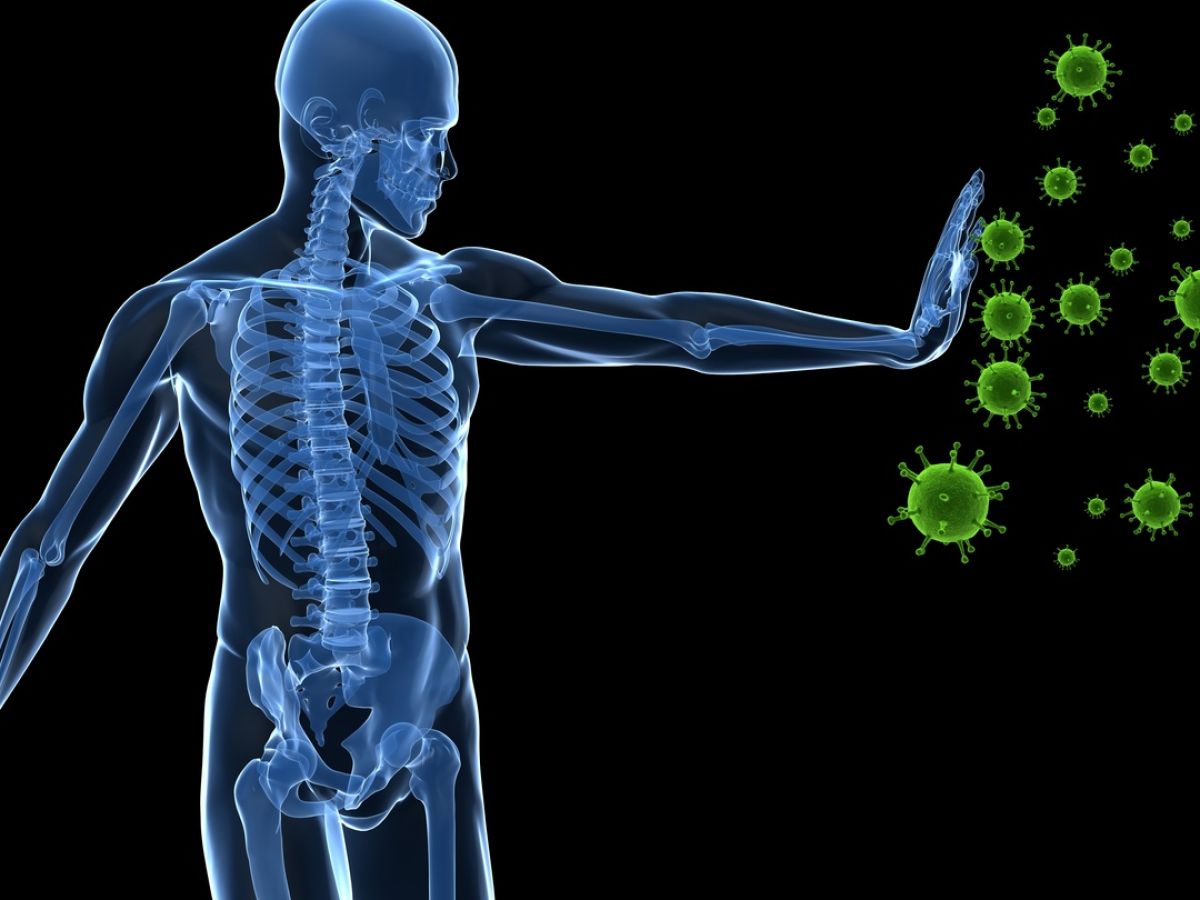


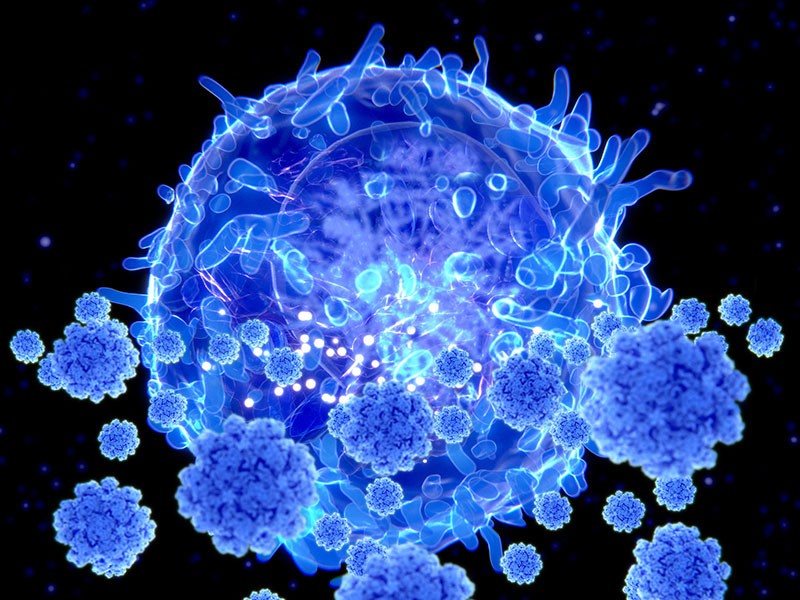
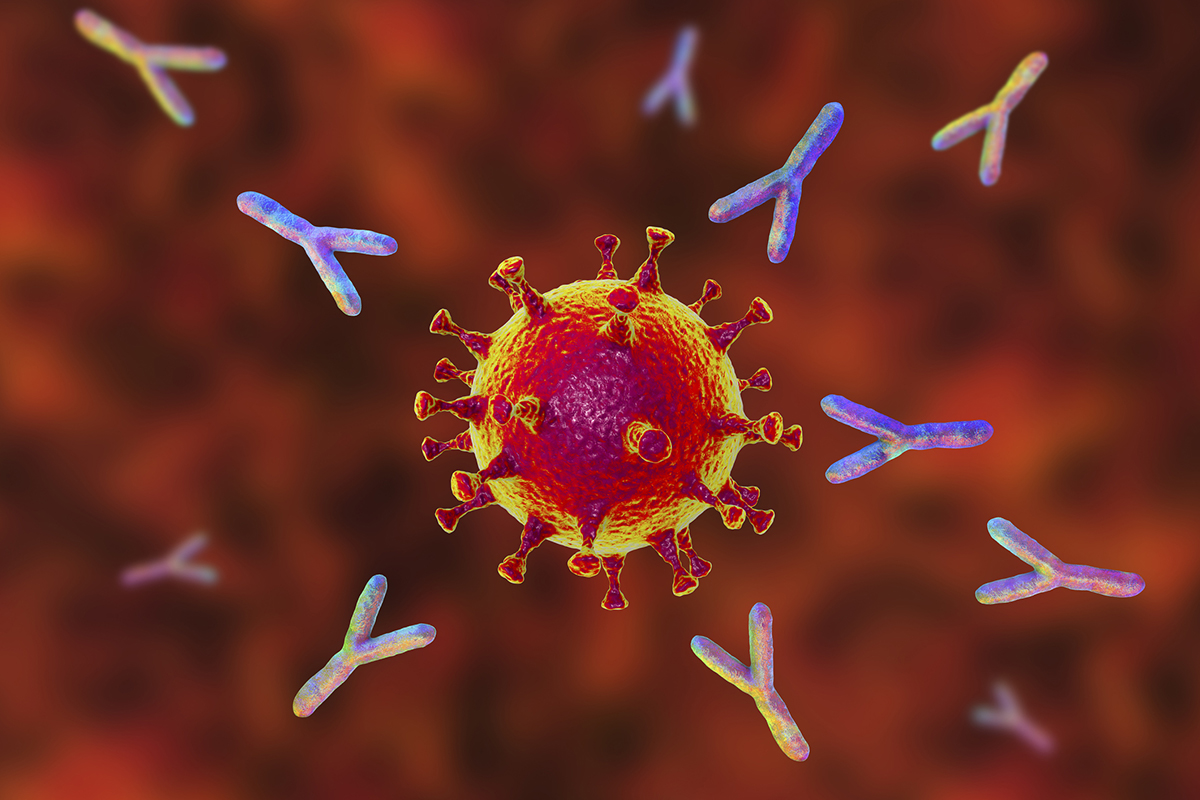 Jennifer

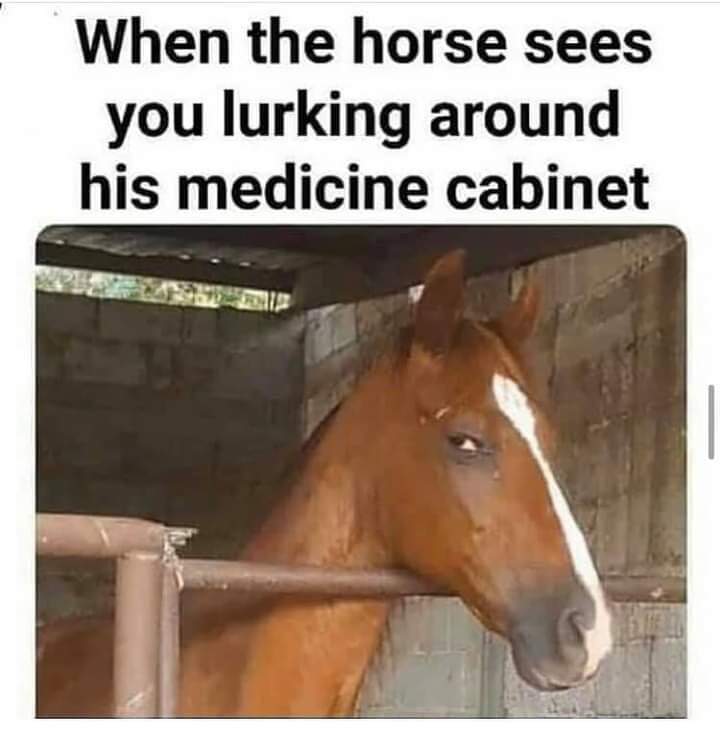


 subincontinentia