Chapter 3: Gluttons for Punishment

I wrote this novella ‘Adventures in Flower Arranging’ in 2001. I thought I’d transferred it from my floppy disk (remember them?) onto the hard drive that I took with me to India. Seems that only half of it made the journey. I’ve decided to publish the half I have….

Everyone talked to Domingo. Maybe because he looked as if he knew something. Maybe because they were gluttons for punishment. From his six foot one and a half-inch frame, he looked down on the other residents with ease. His thick-lensed spectacles, through which he inspected rather than perceived the world, blew up his eyeballs into hard-boiled eggs and his irises into shooter marbles. His face was eroded by an ever-flowing cataract of minutely twitching muscles, for his mind was relentlessly a-twitch with thoughts that traveled in packs like dogs, hunting the digestible truths that would build and fortify them to faster and ever more brutal kills.

As he coursed through the day room, the steel-capped heels of Domingo’s stiff leather shoes rang like shotguns against the cold linoleum—until Gabriella stepped into the line of fire.
“How am I doing, Domingo?” The thin girl’s hair bled gold beneath the fluorescent lights. Her face was pock marked with confusion, but her eyes betrayed a secret loveliness.
Domingo turned the scope of his gaze in on the specimen before him, that shook slightly with over-medication, it’s puppet-head making tiny incessant nods.
“You are….” He began.
The young girl’s eyes grew wider. Cervixes of virgin births.
“You are…” Domingo hesitated, finding her innocence momentarily unsettling. But then he remembered himself. He hunched over until the tip of his bony nose was level with hers. And began.
“You are a flea bite on the hand of a tortured man. You are a mote of misery in a leper’s eye. You are….” His egg-ball eyes rolled up into his skull, searching for the word.. “Redundant.”

Gabriella stepped backwards, bumping into a table leg,, thin-skinned hands clutching at the damp corners of her mouth. But Domingo didn’t register her pain. He saw himself like a person in a fun-house mirror, with a giant chin of righteousness and diminutive hands, incapable of evil. He dismissed Gabriella, satisfied that the master of truth had been served. Domingo regarded himself as a connoisseur of truth, and others seemed only too happy to confirm the title. He had opinions on everything—elaborate and ornate opinions that glided stingray-like over the obstacles of dissent, never surfacing to breathe the air of doubt.

He had arrived at the psychiatric home on a storm-soaked Sunday morning. A Guatemalan orderly had christened him ‘Domingo’ when he refused to give his name, and now there were few staff members who knew him as anything else. Even they had been known to seek his counsel on occasion, though he rarely waited to be asked. With Domingo, advice flowed like the Ganges, and all kinds of seekers and hopefuls came to wash themselves in its waters, oblivious to the half-burnt corpses and rotting sewage floating by. He gave advice on relationships (although not on sex), on drugs, on religion, on diet and politics. But what the residents of Unit 5 enjoyed the best were his poetic, concise, and deadly declarations of the human character (as long as it wasn’t their own.) In this way, he served as both confessor and judge. Anywhere else he would have been a ranting busybody, but here he was the closest they had to a sage.

There was a new admission today. Brenda was trying to fit a book into a small metal cabinet. She had found it in the admitting room and had convinced the admitting nurse to let her keep it, squeezing it against her chest and burrowing her chin firmly into the cover. The nurse had acquiesced, as this was a “progressive” institution, where the patients were called “guests” and allowed to wear their own clothes and hold onto a few “non-threatening” possessions.

Sam the Squeeze had her in his sights the moment she arrived. He’d followed her down the corridor, sneaked passed the cleaning trolley and through the door of the women’s dormitory. After checking to make sure that he hadn’t been spotted, Sam moved in on her. Short and long-armed, he rocked from foot to foot like an excited chimp. Knees bent. Legs spread wide. Two steps forward, one step back. Two steps forward, one step back. Brenda didn’t notice him, too busy tucking the book beneath the mattress, using her tee shirt as a glove.
“Oh, they won’t let you keep that there, no, no they won’t, no ma’am.”
Brenda looked up and the book thudded to the floor. Her features were squashed as if her face only existed in two dimensions, and an oil spill of lank black hair lapped about her face. She was small—just over five feet—but her body was large and unwieldy, clumsily hidden beneath a black tee shirt four sizes too large (when it came to clothes, Brenda’s philosophy was the bigger the better). Her arms revealed thin white skin. The kind that bruises easily.

Sam the Squeeze was happy, his flabby penis wiggling in his hand. He made it peek in and out between his fingers.
“Yoo-hoo! Yoo-hoo!!”
He was giggling out of control, tongue swaggering across his lips. A shadow filled the doorway, and Brenda clutched at her stomach as her body began to exhume the memory. A coal-bin wall. The stench of raw onions. The bed time story voice whispering obscenities.
“Screw you,” was all she could think to say.
It was the voice of defeat and it sent Sam the Squeeze squeaking with triumph. He pushed her onto the bed and began ramming his groin into her face, yet Brenda remained expressionless and Sam’s member remained limp and bloodless through it all. His face, looking older than its forty four years, flickering in a strobe of lust and despair.

The shadow in the doorway moved, and the blonde-haired psych tech strolled over. Sam was bouncing his balls on top of Brenda’s head when the psych tech tapped him on the shoulder.
“Time for your medication, pervert.”
“Awwwwww! Do I have to?”
He was led away still grinning.

Medication? For the radiation poisoning? Brenda tried to breathe less deeply to reduce her chances of being contaminated, but she soon felt as though she were suffocating. Then came Vivien, humming up a storm. Hardly a wrinkle betrayed her age, and her wavy shoulder length hair, though mainly gray, still clung to a memory of strawberry blonde. Vivien had her own special version of the world around her—one that mirrored a fairytale, but without the dragons or wicked stepmothers. To her, everyone was a noble knight or a rescued damsel in the making. Her eyes were sapphires set in the rings of medieval queens, reflecting only the light from her fantastic land. She lifted the book from off the floor, and with her gaze fixed inward, she slowly tore out the pages, one by one, and arranged them around Brenda’s crumpled form.

Fingers of light stretched through the blinds above the bed and rested their tips upon Brenda’s clenched body. She watched the dust whirling up and down in dervish ecstasy and worried that it was fallout. She wanted to move, but she was so tired. It was probably too late anyway, she thought. She tried to comfort herself, wrapping flabby arms around her emptiness. With snot gooping on the thin gray blanket, cellar door eyes bolted shut, she lay like an error, half-erased by the shadows that crept over her.

And in a circle all around her, pages and pages of the flower arranging book, budding and blooming and bursting. Tall lady-like irises. Girlish daisies. Tentacles of ferns. Lush verdant leaves in matte and gloss. Big-bowed Christmas baskets of holly and fir cones capped with canned snow. Funeral wreaths dripping with tasteful sympathy. Easter lilies tucked between painted eggs belted with ribbons. Wedding bouquets of tight white roses and baby’s breath. Valentine crimsons deep as secrets. Flowers for all seasons and occasions.

Time passed. Later, a woman in a white coat asked if she’d like to go to the day room.
“But it’s day here,” Brenda mumbled in reply.
The white coat tried to take her by the arm, and Brenda snatched it away. The woman said that she wasn’t going to hurt her, but her voice sounded like a lie.
“You’re safe her,” she said.
Brenda followed her, making sure to avoid the woman’s footprints. It’s safe here. What did she mean? Were the dormitories not radioactive? Maybe she wasn’t contaminated yet, after all. Maybe she had another chance. The white coat took her out into the corridor and through a pair of gray swing-hinged doors. The day room was long and narrow. Another room about half it’s size annexed off to the left. The walls were projector screen white—perfect for visions. The air smelled of stale smoke and Clorox. Directly opposite was another pair of swing doors just like the ones she had come through. An old piano stood against the far left section of wall that opened to the annex. There were four brown armchairs, six wooden chairs, and a worn beige couch with a low white plastic table that held two brimming tin ashtrays and a number of Styrofoam cups.

The floor was pattern-less gray linoleum. Tall, barred windows all around. A coffee machine over on the wall to her right emanated a low hum. A television in the far right corner hung bolted into the wall. The sound was turned down low, and on the screen, soap opera characters mouthed their parts to a restless audience. Around the room were the rest of the prisoners, some of whom she recognized from the round table. Shuffling, smoking, drinking coffee. Sounds of humming, smothered grumblings, fractured sentences, sudden retorts to soundless questions. They must have succumbed to the radiation, she thought. She began to plan her strategy. She wouldn’t be able to avoid the floor, but perhaps she’d be safe if she kept to the area least traveled. The chairs looked dangerous.

A black man in his twenties crouched on the floor and stared up at Brenda. He held a pen, and his hand trembled over a note-pad as he sucked in one cheek, as if trying not to laugh. He turned his head a few degrees to the right towards where Domingo was seated, but his eyes stayed fixed on the note-pad.
“What do you see, Domingo. Huh?”
Domingo’s eyes narrowed as they focused in on the new girl. He took his time loading the barrels of his tongue, beginning quietly, almost fondly.

“Hands have lain her to waste. She dreams to die and meet her maker, but she’s afraid he’ll have fingers of stone. All happiness has sunk in her like treasure from galleons of antiquity. Cast from the depths, she now lies. Flotsam on a comfortless shore.”

Others began to approach. They shuffled towards Domingo, lured by the scent of the hunt. He scanned the faces of his audience for his front-row fan, but Sam the Squeeze was down the hall, getting an injection and a thrill from the feel of plastic gloves against his buttocks. It was the young black man with the reverent, scholarly gaze that spurred Domingo’s performance. “She has been licked dry by the tongues of demons, penetrated by Satan with his vile rod….”

Domingo stood up from his chair, letting his height punctuate his speech. As he rose, so did his voice. He moved slowly, deliberately, followed by a few of the patients, like the head of a funeral procession, towards the east corner of the room where Brenda was standing—the television murmuring above, eyes downcast, head to the wall, arms crossed tightly across her chest, hands kneading the soft, cold skin at the tops of her arms. She was soon surrounded with onlookers bobbing and grinning in excitement, wetting eager lips and working fingers into musty folds.

“…Satan who has thrust his twisted truth between her sheets, engorged himself on her naked flesh, and spat her out like some noxious phlegm.” Domingo was now only couple of feet away from his target. His voice seemed to burst into flames and eyes gleamed brighter in the darkening room. To Brenda it was a voice that could split atoms.

“Her putrid sins are legion. Carrion circle above her gaping heart which reeks of violence and betrayal. She carries the carcass of her innocence through the deserts of her dreams, rotting through every pore of her diseased and disgusting life. And,” Domingo wiped his glistening brow, suddenly looking as if his efforts had taken a lot out of him, “she needs a shower. She smells like old meat.”


Posted in Adventures in Flower Arranging: The Lost Novella | Leave a comment

Chapter 2: No Survivors

I wrote this novella ‘Adventures in Flower Arranging’ in 2001. I thought I’d transferred it from my floppy disk (remember them?) onto the hard drive that I took with me to India. Seems that only half of it made the journey. I’ve decided to publish the half I have….

It was supposed to have all made sense today. She had felt so ready to understand—so flushed with hope. But quite abruptly and inexplicably, everything had broken again. No bright future glinting encouragingly from on high, only a thick buzzing present. She sat staring at her own remains. A child pondering the remnants of a vase, smashed in careless excitement—trying to connect her body with the act. She remembered floating in the sky, an impulse of pink flashing across the cloud bed beneath, something warm and comforting, and then….she couldn’t recall. A pillow full of bees filled the space where her memory had been.

She sensed company. Others sat nearby around a circular white table, sipping from Styrofoam cups. Mumbling. Smoking. Staring. She became aware of an urgent thirst, and it took a few moments before she realized that it was her own. A man sat quietly on a bench to her left. She felt the whoosh! of another striding past. They were different to the ones around the table. Even though she saw them, they were the ones who were watching. As her attention turned outward, she began to notice voices within the hive.

“Do you want butter on that?”
“You’re getting there, oooh, you’re getting there…”
“…and they all ran away like little children…”
“…and one end was as pink as a kitten’s nose and the other…”
“You’re getting nearer….nearer…..nearer….”
“….the liars in the gardens…”
“Whooops! You lost it again!”

What had happened? Everything felt different, although she couldn’t quite remember how it had been before. She tried to be logical. She wasn’t dead. She hadn’t seen Jesus, after all, and she knew that at the end he would be there to take her in his arms and comfort her. She hadn’t been abducted by aliens because everyone here was distinctly humanoid. But something very big had happened, something very big and very, very bad—something that could eradicate all history, could destroy everything in the wink of an eye, everything that had been built and believed in and worked for. It must have been an awfully violent force—a truly devastating power. Atomic. The word exploded in her head, annihilating all doubt. That was it! There had been a nuclear war and the people around the table were prisoners. She was certain that the man on the bench was one of the victors. But her fellow inmates seemed strangely unaware of their fate. Had their memories been altered, like hers?

“Do you like cherries?” The question fell from cigarette-sucking lips that wrinkled into zippers around the filter. Brenda struggled to form the words.
“Nu…c…le…ar  w…ar.”
“Oh yes, I see, I see.”
“The zipper-lipped woman nodded her head over and over to show that she’d understood, but it didn’t seem to Brenda that she had.
“Nu…cle…ar war,” she repeated a little more loudly. The mumbling quieted a little around her. They didn’t seem to know. Maybe she was the only one. Her voice broke into a shout.
“We’ve been in a nuclear war!”
The murmurs rose once again. Some of the prisoners returned to their own private tangents, but others seemed to grasp what she was telling them.
“It had to happen,” said one. “That’s why they all ran away.”
“They were all wiped out, right out, just like that…” continued another.
Suddenly nervous, he lowered his tone. A cup shook in his hands sending weak coffee spilling over the sides. His metronome eyes ticked back and forth.
“It was terrible.”
This voice came from directly across the table, from behind a large white mustache that curled its tails into pink-veined cheeks. They were beginning to understand.
“No survivors?” whispered lips the color of ashes.
“Just us,” replied Brenda, buoyed by this glimmer of understanding.
“It was terrible,” repeated the coffee-spiller.
“Oh, I see, I see,” said zipper-lips, and this time Brenda believed that she did.

Then the hairs on her neck reported a new set of eyes upon her. The other prisoners fell silent and the skin on her back grew cold.
The next voice was of remoteness and static.
“How do you feel, Brenda?” A little better?”
It didn’t wait for an answer.
“I bet you do. We’re going to move you now. I’m here to help you get your things together.”
A smooth white hand closed around the top of Brenda’s left arm.  The voice wore a white coat and a tired smile.
“You’re ready for Unit 5,” it said.
As Brenda stood, the coffee-spiller thrust his arm across the table and grabbed her sleeve. His face was taught, eyes keeping time to a polka.
“Everything’s radioactive,” he gasped. “It’s only a matter of time.”

Posted in Adventures in Flower Arranging: The Lost Novella | Leave a comment

Chapter 1: Veils

I wrote this novella ‘Adventures in Flower Arranging’ in 2001. I thought I’d transferred it from my floppy disk (remember them?) onto the hard drive that I took with me to India. Seems that only half of it made the journey. I’ve decided to publish the half I have….

She should have been able to draw the pattern of grain in that piece of floorboard by heart. Been able to render it’s grooves, knots and swirls with the proficiency of a skilled cartographer. But her eyes were being used elsewhere—directing the hands inside her head. Slicing. Removing. Rearranging. She had to keep still until they finished their work. Still as a snapshot. In case the hands slipped and something was damaged. Something she might be needing later on. Not moving was her life’s work right now. It was all very precise, which was good, because precision had never been a strong point.

For ages now, everything had been vague. Sort of sloppy, soft, and fuzzy. Not a bad feeling, really. Now and then, half-familiar forms popped up out of the fuzziness, but they left no more of a lasting impression than patterns in syrup. But now. Now. Brenda sensed the cusp of change. She could feel the completeness of the final pieces locking into place— whole new continents forming inside her, inch by tectonic inch.

After some time, (she guessed anywhere from a few minutes to five hours) the fuzziness began to fade and her sleepy balloon body floated up towards the ceiling. But instead of a ceiling, she found a blanket of clouds that she passed through with ease. Down below, everything had been cold and hard, and she turned her head eagerly in the direction of the liquidy warm sun that beckoned her from above. Her skin was bathed in waves of color and light. The drained blues and grays of the room below were replaced by butter yellows, blancmange pinks, and fruit salad reds. Her cold cheeks began to glow. The sun bent down towards her and stretched out a long golden arm. In it’s upturned palm lay something small, round and white.

“This’ll make you feel better,” said the sun.

Better? Aaah, yes—the final clearing. The elixir that would dissolve the subtle impurities still obstructing her completion. As she swallowed, the voices of dry-mouthed angels chorused among the clouds.

“This is the Day! This is the Day of Judgment!”

Posted in Adventures in Flower Arranging: The Lost Novella | Tagged | Leave a comment

A one man revolution

It was one of those days. You know the kind. When it’s all such an almightily boring effort. Another Groundhog Day especially tailored by London sleet and collective ennui. And then I saw him. Sitting on a pink plastic stool under the narrow shelter of the 91 bus. Behind him a poster advertised a new film about the life of Nelson Mandela. “Hugely powerful,” it read. “Heart-wrenching, yet as hopeful as it is inspiring.”
blind accordionist

I didn’t know he was blind at first. My pound coin clanked into his tin, and he nodded and smiled off into the distance. I asked if I could take his photograph. He gazed through me and said something in a language I took for Armenian. Another man offered to translate my request. The accordion player nodded and smiled again, as his fingers unlocked the icy miseries and bonded joys of generations short on privilege but rich in company.

He played that instrument like a one man revolution. A singular refusal against the tyranny of despair. It was not the sound of hope. It was the resistance to hopelessness. He squeezed the music into the air as if he was working the bellows at a single ember in an abandoned fire. As if the future of life itself depended on its warmth. And in that moment, it did.

Posted in epoche | Tagged , , , , , , | Leave a comment

The spam of loneliness: My dearest friend

This poem is made up of fragments cut from dozens of spam messages I received over the past month. I found myself sifting through them for some humanity I could connect with. In rearranging their words I felt like I was putting together a robot made of bits of scrap and finding a glint of sentience. The humanity is in the reach for the other. Even if it’s just someone to lie to. 

DSCF1834

My dearest friend
Can I trust you?

I am afraid
this message may offend

An undisclosed sum of money

$10.2 Million
$155,000.000.00
sum of $10.5M
One Million Great Britain pounds
In the tune of excess of eight digit number

Over $900 million
in Saddam Hussein’s hideout
In two metal trunk boxes
Coded with high security gadget

Even the security house in Jordan
will not be made aware

Work with me
with one mind without betrayer

I need someone I can trust
I am searching

I already lost a box of gold

Please can we?
My dearest friend

Me and my fellow Soldier

They took us to a cave
In the process of torture they confessed

Forgive my indignation
In the face of civil war
We are willing to negotiate
We appeal to you

My best, most private
My dearest friend

You may not understand
Please save me

I need
Divine intervention

Posted in epoche, Spam of Loneliness | Tagged , , , , , , , , | 2 Comments

Protected: For Liz: the old ‘abandoned’ house

This content is password-protected. To view it, please enter the password below.

Posted in epoche | Enter your password to view comments.

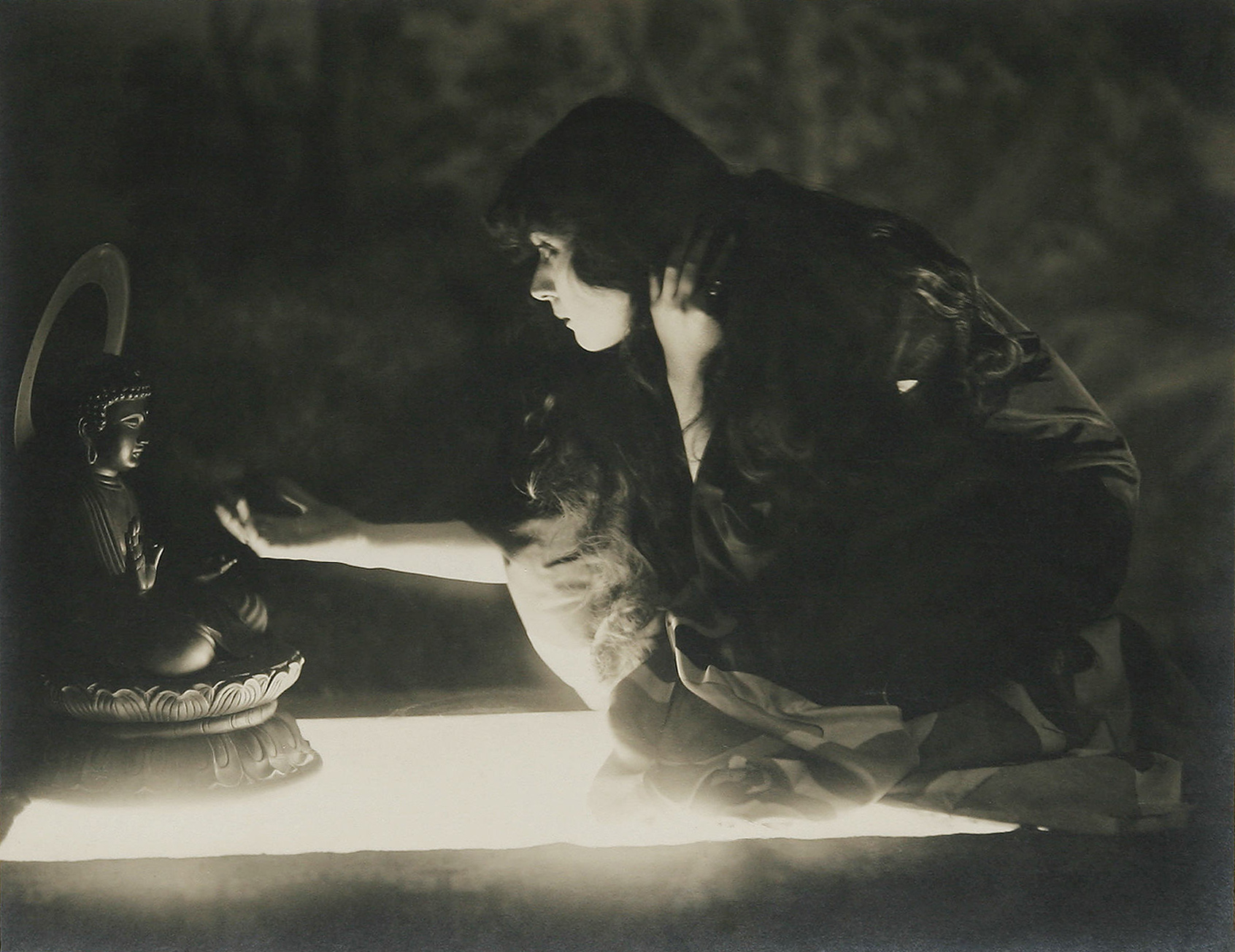
Soul of the Buddha: Now considered lost

Two years ago, I was surfing the inter web in my apartment in Dharamsala, a hill town in northern India, while researching an article on Tibet. I happened upon a still from a silent movie that made me stop in my keyboard-tapping tracks. The image was of a young woman with long dark hair and ruffled dress crouching before a statue of the Buddha. I paused for a few moments, utterly captivated. But I moved on—assuming that I would manage to find it again. I didn’t. Until now.

Theda Bara The Soul of Buddha1

Last week, I went to dinner at the house of a friend who lives in North London. In the context of our discussion on Buddhism and Western culture, I mentioned the photo along with my disappointment at not having been able to unearth it since. When my friend’s son assured me he could find it, I tried to disguise my skepticism. But sure enough, yesterday, he emailed the same image to me along with two others I hadn’t seen before. The actress is Theda Bara, who in her day was as famous as Charlie Chaplin. She was Hollywood’s first sex symbol, aka ‘The Vamp’, who famously said: “To be good is to be forgotten. I’m going to be so bad I’ll always be remembered.” The film is Soul of the Buddha and it was made in 1918. When I Googled it, I was crestfallen to read the words ‘now considered lost’.

The Wikipedia entry is about as sparse as it gets.

Theda Bara The Soul of Buddha3The Soul of Buddha was a 1918 American silent romance film directed by J. Gordon Edwards and starring Theda Bara who also wrote the film’s story. The film was produced by Fox Film Corporation and was shot at the Fox Studio in Fort Lee, New Jersey. It is now considered lost.

Fandango’s plot summary (the only one I could find) reads:

Obviously inspired by the then topical Mata Hari espionage case, this drama presented the screen’s leading vixen, Theda Bara, as a Javanese priestess who elopes with an English military officer (Hugh Thompson). Like Mata before her, Bara’s Bavahari becomes a celebrated dancer but is murdered onstage by a vengeful Buddhist priest (Victor Kennard). None of this made much sense, but Bara melodramas were never strong on character motivation or logic. The Soul of a Buddha was filmed in the dead of winter at Fort Lee, New Jersey, a paper mache temple and the palisades standing in — uneasily — for tropical Java. ~ Hans J. Wollstein, Rovi

theda-bara-gosling-tattoo-640x500‘Obviously, Fox was not worried about offending Buddhists,’ writes Eve Golden in Vamp: The Rise and Fall of Theda Bara. The studio ‘suggested that theater owners scatter “Hindu Death Signs” and statues of Buddha around to add to the general atmosphere.’

Golden disputes the claim that Bara wrote the script, suggesting that this was part of the publicity for the film, which include Bara attending a Buddhist ceremony and claiming that she’d converted to Buddhism. Golden thinks this unlikely, though Bara did make off with the Buddha statue at the end of the production. The film was panned by critics. Mae Tinee called it “a sodden conglomeration, entirely uninteresting and unoriginal, with Miss Bara finally dying an air-clawing death.”

The director, J. Gordon Edwards, made over 50 films for Fox Studios. He was also the step-grandfather of Blake Edwards (Breakfast at Tiffany’sDays of Wine and Roses, The Pink Panther). He died of pneumonia aged 58 and was interred in a private mausoleum designed to look like the Taj Mahal. Edwards directed all of Theda Bara’s films from 1916 to 1919, which were mostly destroyed in a fire in 1937.

Bara’s revealing costumes seem incredibly riské for their time, but her films pre-dated the introduction of the production code. She and her colleagues operated in a creatively liberal twilight period, untroubled by film censorship. Fan magazines called her “The Arch-Torpedo of Domesticity,” “Pugatory’s Ivory Angel,” “The Serpent of the Nile”, “The Devil’s Handmaiden,” “The Priestess of Sin” and “The Queen of Vampires”. Bara described herself as having “the face of a vampire, but the heart of a feminist.” Fox studios, eager to flame the mystic fires, claimed that she was born in Egypt, the daughter of a French actress and Italian sculptor (her actual parents were a Jewish tailor and Swiss housewife), and that she had been raised in the Sahara Desert next to the Sphinx.

Theda Bara The Soul of Buddha2It doesn’t sound like a particularly good film, but Soul of the Buddha is part of an intriguing genre of Buddhism in popular Western culture. That the heroine is killed by a Buddhist monk, yet the stills depict her in a kind of tender awe before a Buddha image, seem to speak to the West’s ambivalent attitudes to the Orient—fear and suspicion hand in hand with romantic fascination.

And this was all, as Bara herself pointed out, in a time before movie audiences had tasted the serpent’s apple and had “destroyed the grand illusion” that what they were seeing on the screen was actually real. The phrase brought to mind how the Buddha, 2,500 years ago, taught his followers to destroy the “grand illusion” of the reality of a separate independent self.

I ask myself why I’m so drawn to the image of this silent film actress and the Buddha. My progressive friends would happily write it off as an example of Edward Said’s Orientalism. But perhaps that itself justifies an even deeper contemplative framework. There is something in the way that Bara’s hand reaches out to the statue; tentative yet compelled by some silent force. A longing as yet unread. For a new direction. For a turning point. This image is undoubtedly about our relationship with the ‘other’. But it is also about our connection to ourselves.

Posted in epoche | Tagged , , , , , , , , , | 10 Comments

The shipping forecast: moderate or good

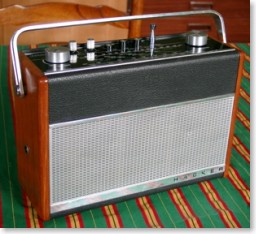
radio1My mother was an avid radio listener, loyal to ‘The Archers’ and most of BBC Radio 4, and would turn on the radio when she was cooking or sleeping. As she got older, she cooked and slept less, but the radio remained a constant reassuring presence.

I lived in California for the last 20 years of her life, visiting once a year at most in the beginning, but more often towards the end. She had trouble sleeping, and would put the radio on when she turned off her bedside lamp. I was always jet-lagged for the first week of any visit, and would come to bed around 2 am to find her dozing peacefully to live reports of bombings in Baghdad or a humanitarian crisis in the Sudan. I always found something so touching about seeing my mother sleeping; tufts of auburn hair sticking out from under the duvet, with the radio blasting all the troubles of the world.

I’m fairly certain that it was a Hacker RP72 Sovereign III, which came on the market in 1973. Now considered vintage, at the time it was state of the art. As an RAF family, we moved around a lot, and every couple of years everything would change; the house, the school, the neighbourhood, my friends. So as a kid I always paid close attention to the things that didn’t change. They were marvels to me, those unchanging things. My mum’s Hacker radio was one of them. Even when she bought a bedroom radio in the 1980s she kept the Hacker. It had separate dials to adjust the bass and treble (I recall a few slapped hands when I twiddled them) and the Long Wave option captured the bass and clarity of the announcer’s voices perfectly.

During my jet-lagged weeks, when late night television became unendurable, I would make a cup of tea and a couple of slices of toast and marmalade, and sit on the kitchen stool in the dark listening to that radio. Often, the only thing on at that time was the Shipping Forecast, a weather broadcast for the coastal seas off the British Isles produced by the Met Office. The 00:48 broadcast of the Shipping Forecast was always preceded by a few bars of the bubbly tune ‘Sailing By’, but the content is read straight, with no background or interruptions, and sent out on Long Wave as well as FM since the LW signal can be easily received at sea.

For those whose lives don’t depend on it, the Shipping Forecast is an endearing mixture of poetry and code. With a maximum word count of 370 there is almost no room for variation in the script. The steady measured pace of the delivery is intended for sailors to hear it easily and to have time to write it down, but with the unintended effect of producing a rhythm and tempo that is utterly mesmerizing. For those at sea it is potentially life-saving information. But for me, grabbing a sense of home for few weeks a year, it was the sound of a kind of soothing familiar peace. It’s only recently that I’ve discovered that the Shipping Forecast has made a similar impression on many others, and I feel a kinship with them as if we’re fellows of an unofficial society of romantic code-breakers.

shipping-forecast-locationsThe broadcast contained repeated phrases such as ‘moderate or good’, and Edward Lear-esque terms like ‘expected Norwegian basin’ and ‘becoming cyclonic’. Lyrical names of sections of sea; North Utsire and South Utsire (pronounced Üt-SEAR-ra and always mentioned together), Dogger, FitzRoy and German Bight (that I heard as ‘German bite’) caught the imagination much like Narnia or Avalon. But it was about half way through the broadcast, with reports from the coastal stations, that things would begin to get seriously hypnotic. After every sentence, starting with stupendous names like ‘Sandettie Light Vessel Automatic’, the announcer would pause momentarily and then end with, ‘falling slowly’, ‘now falling’ or sometimes simply ‘falling’. I assume there must have been the occasional ‘rising slowly’ or ‘now rising’ but I can’t remember hearing it. After a few minutes of this, I would begin to feel drowsy and trundle off to bed, falling slowly to sleep.

For years, I’m certain it was the same announcer, the kind of comforting woody BBC voice it would be nice to hear in rough seas. Later, the announcers seemed to change quite regularly, with regional accents and even (god forbid) a woman. There’s a character in a Peter James novel who recites the shipping forecast when he can’t think of what to say. I must say I find this rather appealing. When someone asks how you are, you could reply “becoming cyclonic” or “falling slowly”. And if that doesn’t cut the mustard you could just stick with the old sailor’s standby—“moderate or good.”

NOTE: (Only those already familiar with the Shipping Forecast will find the Brian Perkins version funny, below)

http://www.youtube.com/watch?feature=player_detailpage&v=G9QumF93PpY

Posted in epoche | Tagged , , , , , , , , , , , , , , , , , , | 5 Comments

Rambo and me

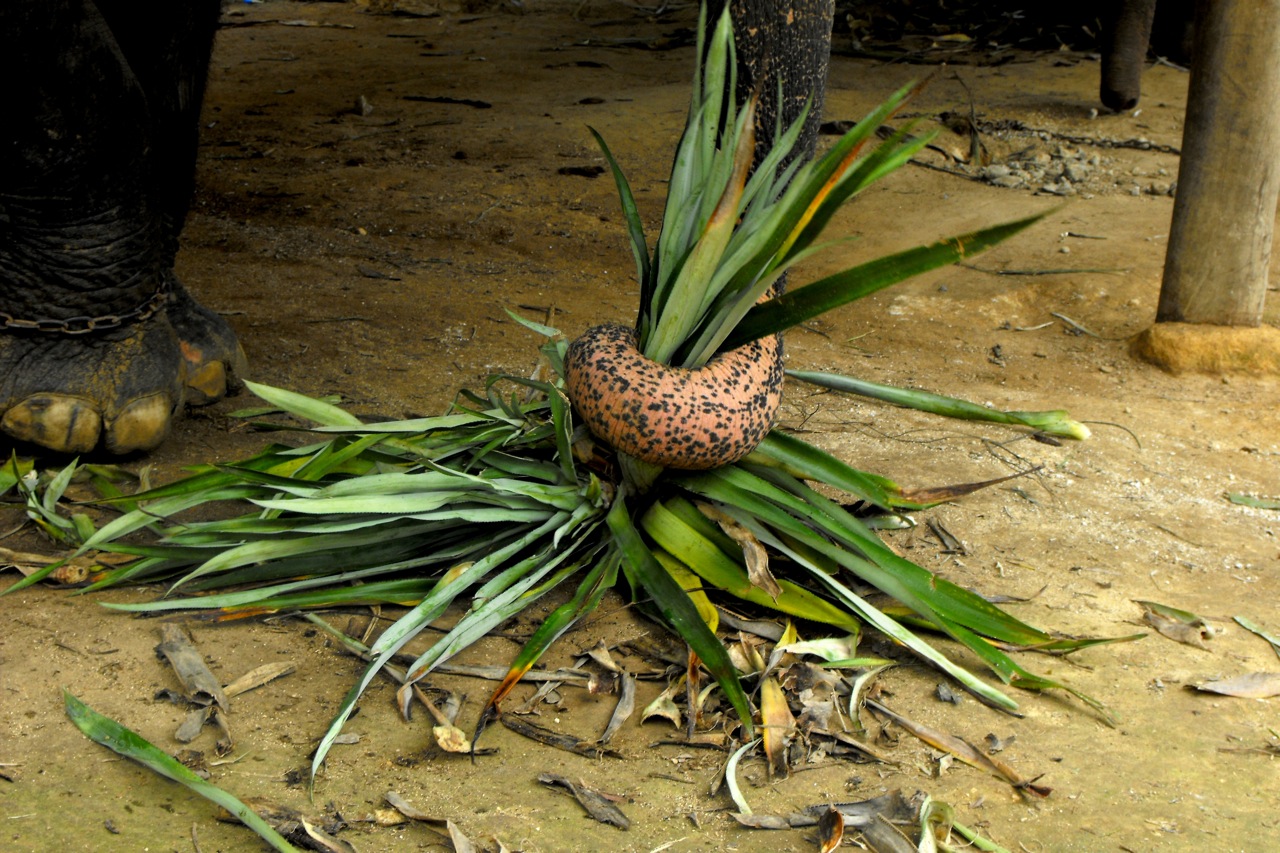
trunkThailand, September 2012

His name was ‘Rambo’. Five tonnes of sentience with a nose of fuchsia freckles, ambling towards me with a look of moderate indifference—like he’d already eaten three just like me for breakfast.

I considered taking my trembling knees back down the Jungle Jim ladder from the where I now stood on a few planks of wood hammered into the trees. But fear had caused a paralysis of will. So when Nut Nut, my small but perfectly formed mahout, motioned to me to get on board, I obeyed without question.
“Do you speak English?”
(Most Thais did not, I’d found)
“Yes,” he replied.
“Oh, great. What is your name?”
“Nut Nut.”
“How old is this elephant?”
“Yes.”
“Okay. How long have you worked with elephants?”
“Yes.”
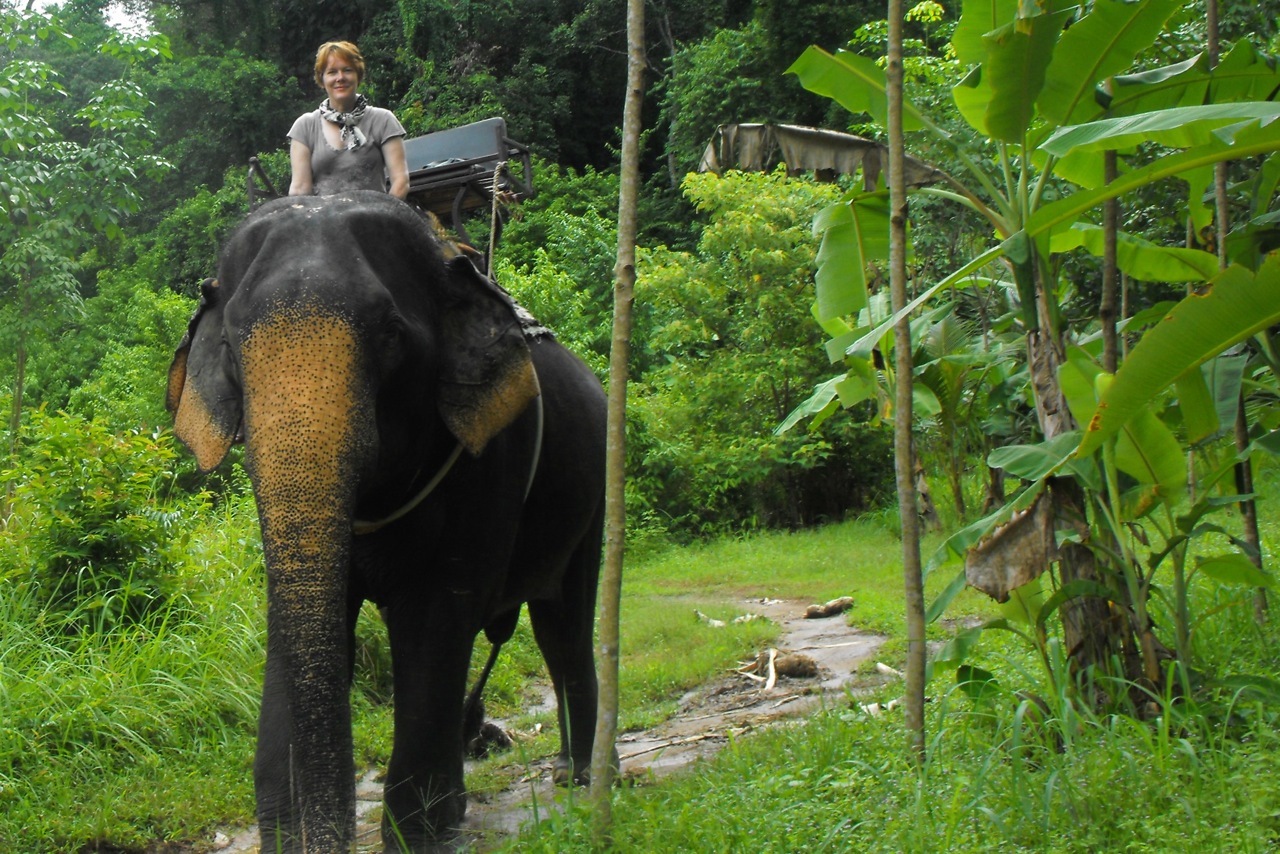
I sat back in the howdah—the metal seat strapped around Rambo’s girth—that swayed leisurely to the rhythm of the animal’s gait, and diverted my attention to the succulent vision of 360 degrees of tropical forest. Baan Chang Thai Elephant Camp is 2 kilometres from the main road on Koh Chang island, so the trek begins in the jungle itself. (Koh Chang actually means ‘Elephant Island’.) Within minutes, we were heading along a dirt track into the heart of the island, so dense with flora that the word ‘green’ lost all meaning. The howdah tipped upwards unnervingly as we lumbered down a steep muddy bank towards a stream. Splashing across the river, we lurched up through slick mud from the previous day’s deluge, up onto the opposite bank. My knuckles whitened from their grip on the metal bars. I envied Nut Nut’s position astride Rambo’s head that seemed far more secure. I looked around for a seatbelt, or at least some kind of harness. Silly me. I wasn’t in Disneyland.

Nut NutI had been ambivalent about taking an elephant ride in Thailand for two reasons. Firstly, although my first memorable toy had been a stuffed elephant (imaginatively named ‘Elly’) and elephants had been my first animal love, I am, in fact, terrified of them. Secondly,  in 2007, I’d visited Dubari elephant camp in Karnataka in South India, where the the animals were openly abused. All my romantic notions of the mahout-elephant relationship had been blown to smithereens as I watched one mahout smash away at his elephant’s head with what looked like an ice-pick, until blood was streaming down its forehead into its eyes. That elephant could’ve taken this human runt at any moment, and I’d found myself almost willing him to do so. I had watched several other mahouts treat their mounts in similar fashion until I felt physically sick. So in Baan Chang Thai elephant camp in Koh Chang, I had grilled the pretty lady manager rather vigorously. How long are the elephants chained for? How often to they get to roam free? What do you feed them? etc. She patiently answered all my questions until I was satisfied by her answers.

Nut Nut sat astride the giant leathery head, ice pick in hand. But he never once used it. Instead, he guided the elephant with a series of soft clucking sounds such as “Ukukukahkau” and “ghouck!” which I suspect he made up as he went along, since the elephant appeared to ignore them all. Every now and then, Rambo stopped short to lazily munch on a tropical snack, a few twigs here, a bit of fruit there, while Nut Nut sat patiently gazing off into the distance, the pointy stick idle by his side. Calmed by Nut Nut’s gentle handling, my concern for Rambo’s well-being soon gave way to a somewhat less noble concern for my own. Perhaps Nut Nut had no idea what he was doing. Maybe this was his first month, first week, first day! Oh do shut up, I gently commanded my flappy girl brain.

The track became a narrow trail and then disappeared altogether. The only sounds were the crunch, swoosh, crunch, swoosh of Rambo’s huge padded feet and tree branches surrendering to his substantial girth. I felt myself beginning to relax, or rather it was as if the beauty of it all just over-powered my anxiety. The pace of riding an elephant feels like the pace at which all of life should move. Gradual with purpose.

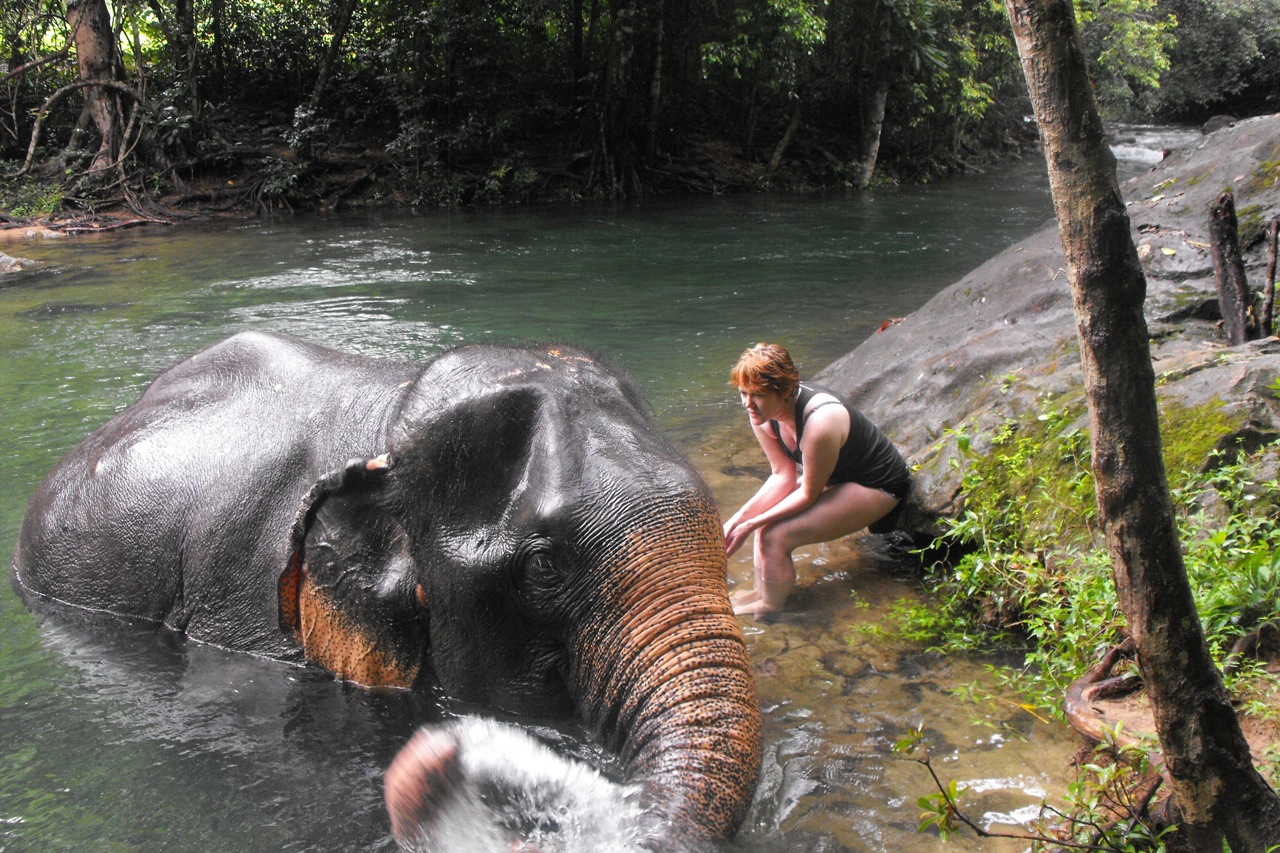
in water1I was startled out of my reverie by an escalating quivering that erupted from below, jiggled up my spinal cord, and ended with an enormous bellowing snort. I knew enough elephant talk to discern that Rambo was excited. I tried to ask Nut Nut what the reason was, but he just smiled and pointed up ahead with the ice pick. The reason became clear a few hundred yards on, when we came to a deep emerald pool that lay between two miniature waterfalls. Nut Nut motioned for me to get down onto another tree platform, while he removed the howdah. Free of his burden, Rambo shuddered, and ambled into the crystalline green water. He sank to his knees with a contented sigh, the end of his trunk playing around the surface and emitting soft gurgling bubbles.

“Get in water!” said Nut Nut, his English suddenly improved. The spray coming out of Rambo’s trunk sparkled like costume jewelry. I stripped down to my underwear and slipped cautiously into the water, perfectly refreshing in the intense humidity. Nut Nut waved at me to get closer, but I was absorbed in gauging the trajectory physics of trunk thwacking distance.

“Get on elfant baaak!”
Nut Nut was finding my reluctance amusing.
“Get on elfant baaak!” he repeated with a huge grin.
Maybe it was the way I was raised, but crawling on someone’s back while they’re taking a bath seems, well, impolite. Besides, we had only just met.

talkingInstead, I climbed out of the water and sat on a rock next to this amazing creature, with a thrill I have rarely felt before or since. The size, the strength, the legs of a warrior—but the eyes of a poet. I had no idea that Nut Nut was busy taking photos. Bless him. I spoke quietly into Rambo’s ear, his long eyelashes bejeweled with water droplets blinking knowingly. But what happens in the Elephant Pool stays in the Elephant Pool.

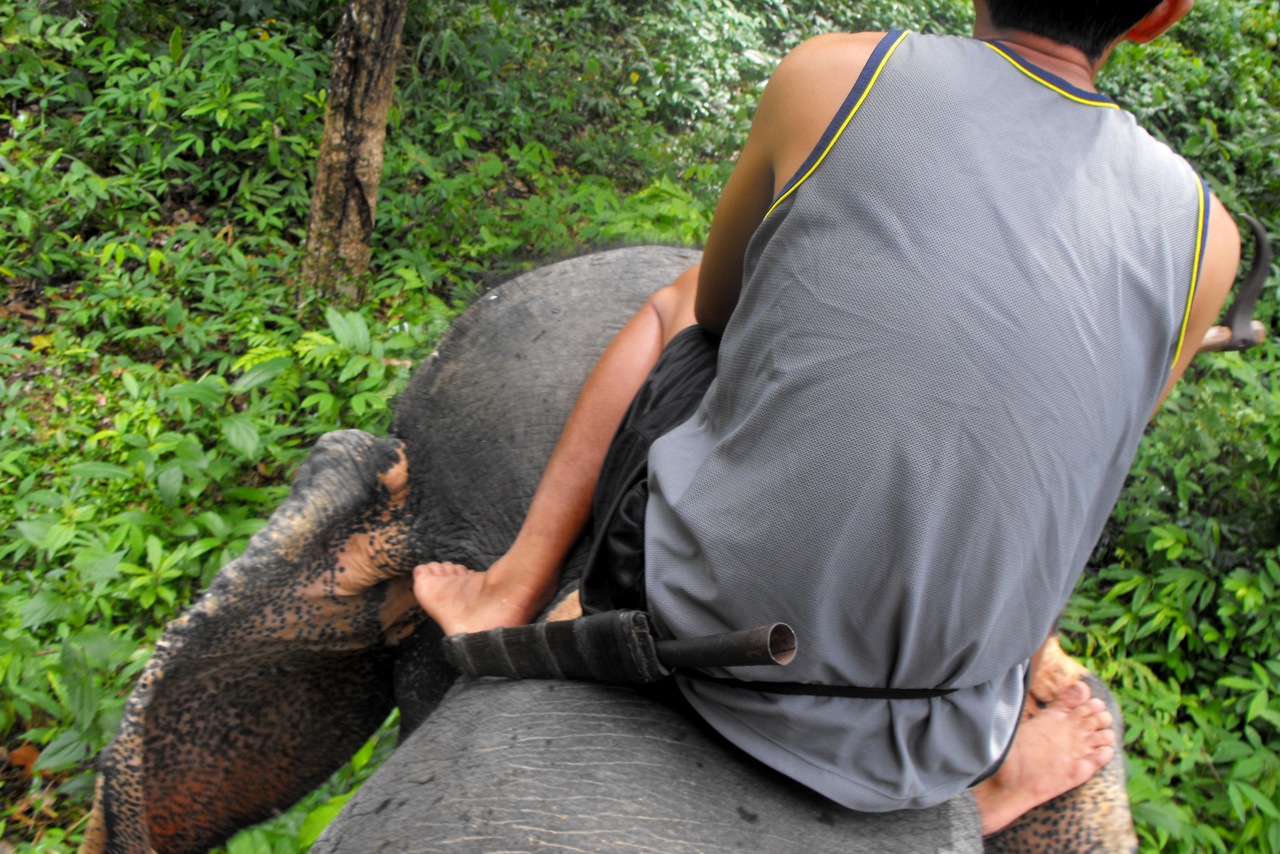
On the way back, as if he’d read my mind from earlier, Nut Nut offered to take the howdah and I positioned myself on Rambo’s head, my feet tucked snugly into the folds behind his ears that slapped my ankles like yoga mats. Nut Nut grabbed grapefruits off the trees as we went under them, peeled them, and handed them to me. Rambo, knowing the routine well, raised his trunk and rotated it like a periscope, squeezing snout end inches from my face, the little hairs glistening in anticipation. I placed the grapefruit into its grasp and down it went, then within seconds periscoped up for more. And so went along. I felt I could do this for the rest of my life, but suddenly Nut Nut jumped down, said something that sounded like, “Geewabangananana” and disappeared into the jungle. Rambo picked up speed and began steering away from the path, swashing through the bushes. My what if brain kept kicking up scenarios like, what if it sees a mouse and panics? I twisted around and scanned the howdah. Now, where was that pointy stick?

happyFor ten minutes it was just Rambo and I in that jungle. I’m sure Nut Nut had it all planned out, but he’d executed it brilliantly. When Nut Nut returned, he walked alongside us, doing a little half-hearted gardening, with the occasional thwack of his ice pick at an unsuspecting branch. I took the opportunity to check Rambo for head scars, but I could find none. I sat up taller, sensing every touch between my skin and his; my hands resting on his forehead, my thighs squeezing around his girth, my soles pressed against the smooth cracks behind his ears. I was, for those ten minutes, without doubt, Queen of the Elephants. No one could strip me of the title. But then Nut Nut grunted at me to get down, and I was de-crowned on the spot.

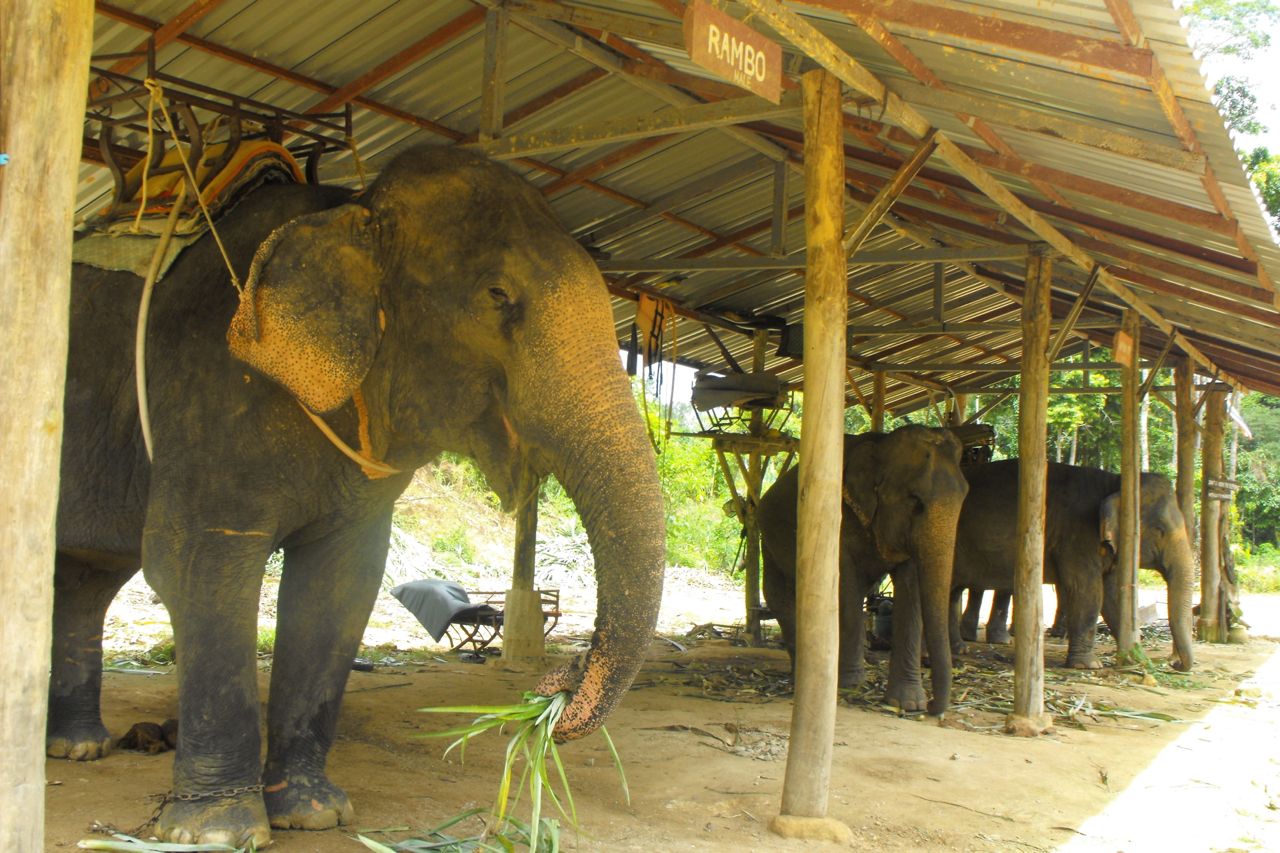
DSCF0122Back in his stall, munching away at a pile of palm fronds, I could have sworn that Rambo smiled at me when I took my last photo. I spent the rest of the day in a kind of giddy swoon; a soft-edged album of our escapades set to a Donovan song. There were Rambo’s gently-blinking eyes, his youthful freckles, his long fruity farts, his grapefruit-seeking trunk. We were made for one another. Rambo and me.

Posted in Moving on...., Thailand dreaming | Tagged , , , , , , , , , | 4 Comments

2013 in review

The WordPress.com stats helper monkeys prepared a 2013 annual report for this blog.

Here’s an excerpt:

A San Francisco cable car holds 60 people. This blog was viewed about 3,200 times in 2013. If it were a cable car, it would take about 53 trips to carry that many people.

Click here to see the complete report.

Posted in epoche | Leave a comment